
24/7 Customer Support

Free returns

Same-day & Next-day Delivery

Quality Guaranteed

Unlock Your Welcome Offers: FREE Delivery | Up to 80% OFF | Free 30-day JoyPlus trial
Download the APP
Tinned fruit is a useful cupboard staple for UK households: it stores at ambient temperature, needs little preparation and can be served straight from the tin. It also suits lunchboxes, quick desserts, baking, smoothies and international recipes.
However, attractive packaging can make similar products appear more alike than they are. Before choosing tinned fruit, check what liquid it contains, how much fruit remains after draining and whether the format suits your intended recipe. These details can affect taste, sugar intake, portion value and food waste.
Fruit in juice and fruit in syrup are not interchangeable. Juice-packed products may contain fruit juice from concentrate, while syrup-packed products contain added sugar in addition to the fruit’s naturally occurring sugars. Compare the “of which sugars” value per 100g on the nutrition panel rather than relying only on front-of-pack wording.
For example, Del Monte Peach Halves in Juice lists 50 kcal and 11g of sugars per 100g. Princes Pear Halves in Syrup lists 65 kcal and 15g of sugars per 100g. These figures are product-specific, so always check the current packaging before buying.
The headline tin size includes the liquid. Drained weight tells you approximately how much fruit you will actually use. A 415g tin of peach halves has a stated drained weight of 235g, while a 435g tin of pineapple slices has a drained weight of 260g.
If you are buying for a dessert, cake or family serving, calculate the cost based on the drained fruit quantity, not the total weight printed on the front.
Soft fruit in juice may be suitable for eating directly, but speciality ingredients can have different uses. Jamaican ackee, for example, is intended for culinary use and should be consumed after cooking according to the product information. Bamboo shoots are savoury ingredients that should generally be rinsed before use, while sugar palm, lychees and longan are commonly used in desserts and drinks.
Also inspect tins and jars before opening. Avoid swollen, leaking or badly damaged packaging, and follow the storage instructions after opening.
Draining the liquid can reduce the sweetness of the serving, but it does not remove all the sugars listed for the fruit. Use the nutrition panel as your reference.
Halves are convenient for plating and baking, slices work well on cakes and pizzas, and chunks are practical for fruit salads or mixed desserts. Smaller segments, such as mandarins, can be easier for children to portion, although young children should always be supervised when eating pieces of food.
For larger households, compare the drained weight and the number of likely servings. A 432g tin of Princes Pineapple Chunks With Juice is described as approximately two servings, while a 326g tin of D’Aucy Sweetcorn provides approximately three 80g drained servings.
The UK label should provide ingredients in descending order by weight, nutrition information, net quantity and date information. Check for declared allergens, especially when buying world food ingredients made in shared facilities.
Once opened, transfer unused contents to a suitable sealed, non-metallic container and refrigerate. Use the stated timeframe on the label: several fruit products specify two to four days, while some jars specify up to seven days. Do not store opened food in the original can unless the packaging instructions specifically allow it.

Why This Fits Their Persona: A mixed-fruit option for households wanting one ready-to-eat tin for snacks, fruit salads and simple desserts.
It is packed in clarified pineapple juice rather than syrup, with the fruit mix and 415g net quantity clearly stated.
Ready to eat; contains peaches, pears, pineapple, grapes and cherries in variable proportions.

Why This Fits Their Persona: Suitable for breakfast bowls, casual snacking and baking when recognisable peach halves are more useful than small pieces.
The product page states the 235g drained weight, helping shoppers compare usable fruit rather than liquid-filled pack size.
Peach halves; 50 kcal and 11g sugars per 100g as listed; refrigerate leftovers and use within 3–4 days.
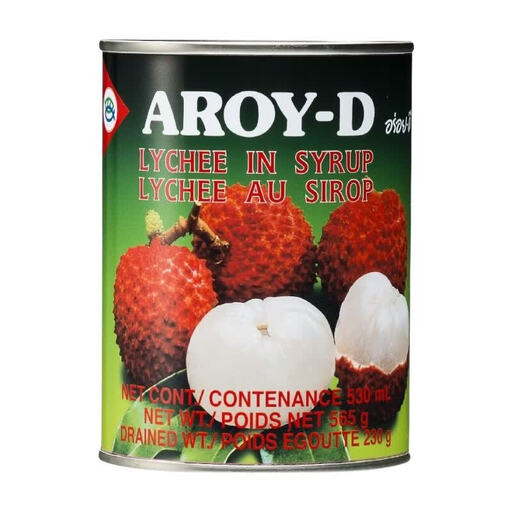
Why This Fits Their Persona: A practical world-food ingredient for chilled desserts, fruit salads, drinks and Asian-inspired recipes.
The syrup format is explicit, so it is easier to plan for added sweetness and decide whether to drain before serving.
565g pack; ready to eat; ingredients list lychees, water, sugar and citric acid.
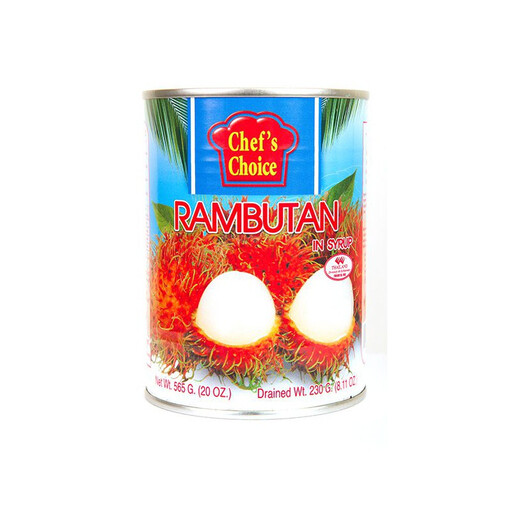
Why This Fits Their Persona: A larger tropical fruit format for cocktails, mocktails, dessert toppings and fruit bowls.
The label states rambutan at 41%, making the fruit proportion visible rather than leaving the shopper to infer it from the pack size.
565g pack; ready to eat; suitable for desserts, yoghurt, fruit salads and drinks.
We have compiled a complete, real-time list of products that fully satisfy these strict selection criteria and UK safety regulations.
Yes. Unopened ambient fruit can generally be stored in a cool, dry place, away from direct sunlight and heat. Always follow the date and storage instructions on the specific product. Do not use tins that are swollen, leaking or severely damaged.
It can be, but this varies by product. Fruit in syrup normally contains added sugar, while fruit in juice uses fruit juice as the packing liquid. Compare the sugars per 100g and ingredients list on each label rather than assuming all juice-packed products have the same nutritional profile.
It depends on the product. Many tins specify refrigeration and use within two to four days; some jars specify a different period. Transfer leftovers to a sealed, non-metallic container, refrigerate promptly and follow the label. Discard the contents if the smell, colour or texture appears unusual.