What matters when choosing?
Decide first whether guests will see individual fruit pieces or fruit folded into a dessert. Then compare the exact tins that fit that serving plan.
| Concern |
What to check |
Who this matters to |
| Fruit shape and presentation |
Look at the cut and drained quantity, and read warnings on pitted fruit. |
If fruit will be a visible topping, I want pieces that work with the planned dessert rather than an unpredictable mix. About 40% of consumers put presentation first. |
| Batch assembly |
Compare sliced and mixed formats, then try a tin in the intended serving dish before planning quantities. |
When preparing many trifles or dessert cups, I need fruit I can portion without arranging every piece. Fast assembly is the primary concern for about 30% of consumers. |
| Packing liquid and ingredients |
Read the ingredients and nutrition panel for the chosen variant; compare juice and syrup using their exact labels. |
If fruit is going into a dessert with cake or cream, I want to know what liquid and other ingredients it brings. Roughly 20% of consumers make those label details their main concern. |
| Catered-buffet information |
Confirm who supplies the food and how ingredients, allergens and serving arrangements will be communicated. |
With a commercially supplied buffet, I need the caterer and serving team to have dependable ingredient information. For about 10% of consumers, that coordination comes first. |
Brands and ranges to consider
A brand name alone does not settle the choice: compare the fruit, cut, packing liquid and label of the particular tin.
Del Monte
Del Monte appears across several fruit types in the supermarket ranges described by Sainsbury's and Tesco.
- Its range offers a starting point for comparing single-fruit formats and packing liquids.
- Check each tin separately: Sainsbury's lists 415 g peach slices with 250 g drained fruit, so net weight alone will not tell you the usable quantity.
Princes
Princes lists peach slices and fruit cocktail with juice on its product pages.
- The peach-slice page lists 410 g and 220 g formats, which gives shoppers different tin sizes to consider for preparation.
- Princes says the fruits in its cocktail are in variable proportions; check whether that suits a dessert needing a consistent appearance.
Tesco
Tesco Groceries groups tinned fruit by types including pineapple, peaches, apricots, pears and citrus.
- Browsing by fruit type can help match tins to different desserts on one buffet.
- Use the individual product listing and tin label to check the cut, packing liquid and drained weight rather than assuming they are consistent across a category.
Sainsbury's
Sainsbury's lists tinned fruit across own-label and branded products.
- Individual listings can give useful portion-planning details, such as the drained weight of its listed Del Monte peach slices.
- Read the label on the tin received, including product-specific warnings: its pitted-black-cherry listing warns about possible stones or fragments.
M&S
The M&S tinned-fruit page describes grapefruit segments and rhubarb chunks as options with sharper flavours.
- Those fruits are worth considering when their flavour fits a planned dessert rather than a general mixed-fruit serving.
- Check the exact format and ingredients before building a menu around either fruit.
Tinned fruit on Joybuy
These tins cover defined fruit shapes for visible desserts, a mixed format for batch assembly, and both juice-packed and syrup-packed choices. Select by the dessert you plan to serve, then check the exact tin before setting portions or sharing ingredient information.
 Image unavailable
Del Monte Pineapple Slices in Juice 435g
Consider the slice format when pineapple will be visible on a dessert rather than mixed through it. Compare the drained quantity on the tin with the portions you intend to serve, and follow its after-opening storage directions.
View on Joybuy
 Image unavailable
Del Monte Peach Halves in Juice 415g
Peach halves give you a defined shape to work into a plated or individual dessert. The product information describes clarified pineapple juice from concentrate, so check the exact ingredients and nutrition panel when pairing it with other components.
View on Joybuy
 Image unavailable
Del Monte Pear Halves in Juice 415g
Choose pear halves if a single-fruit format fits the dessert you are assembling. Check the drained weight before calculating portions; the product information also identifies clarified pineapple juice from concentrate, making the exact ingredient label important.
View on Joybuy
 Image unavailable
Del Monte Fruit Cocktail in Juice 415g
A mixed-fruit tin is an option for trifles or dessert cups where arranging individual fruits is less important. Fruit proportions can vary, so trial a tin if the appearance of each serving matters, and check its drained weight when planning quantities.
View on Joybuy
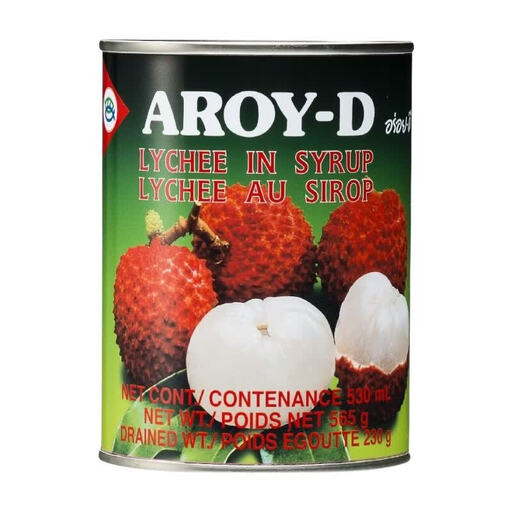 Image unavailable
AROY-D Lychees in Syrup 565g
Consider lychees when their fruit type fits a dessert planned around something other than peaches or mixed fruit. This tin is packed in syrup; check how that works with the other components, confirm its drained quantity, and read the product's warning about possible traces of tree nuts before service.
View on Joybuy
Wedding buffet questions
Should I always choose tinned fruit in juice rather than syrup?
No: choose the packing liquid to suit the particular dessert, and compare the labels of the tins you are considering. Princes lists grape juice made from concentrate in its peach slices with juice, so the phrase “in juice” is not a substitute for reading the ingredients and nutrition panel.
Can opened tins be displayed on the dessert table?
For a prepared buffet display, drain and transfer the fruit into clean serving dishes instead. Follow the after-opening directions on each tin; storage instructions for one product should not be assumed to apply to another.
What allergen information does a catered buffet need?
When a food business supplies the buffet, allergen information must be available to consumers, including for food served without packaging. GOV.UK and Food Standards Scotland provide guidance for food businesses; give the caterer the labels for the exact fruit tins and every added ingredient, and agree how staff will communicate that information.
Are pitted cherries completely free of stones?
Do not assume so. Sainsbury's warns on a pitted-black-cherry listing that stones or fragments may be present. Keep the warning with the serving information and consider whether that product suits your guests and service style.
Does a privately hosted wedding buffet need food-business registration?
A wedding being held at home does not, by itself, establish that the host is operating a food business. If food is being supplied as a business, confirm who is responsible and seek local-authority advice where the position is unclear. The Food Standards Agency says food businesses must register at least 28 days before trading; Food Standards Scotland specifies at least 28 days before opening.


