Campers without reliable chilling
Unopened tins can simplify packing where their labels specify ambient storage. Once opened, the meal plan must account for any contents that need refrigeration.


Choose a tinned-pasta multipack if several campers will eat the same recipe and you can carry and use all the tins. Individual tins offer more choice between meals; dried pasta with sauce is another option if you have water, cookware and fuel. Whichever you pack, check the storage and heating instructions, allergens and your plan for any leftovers.
Unopened tins can simplify packing where their labels specify ambient storage. Once opened, the meal plan must account for any contents that need refrigeration.
A multipack brings several tins into one purchase. Compare its can count and total weight with the meals your group expects to eat and the load you can carry.
Tomato spaghetti, bolognese and ravioli are not interchangeable for every camper. Check each recipe’s current ingredients and allergen declaration rather than relying on the pack format.
Decide whether you need a complete tinned pasta meal or have the equipment to cook dried pasta. Then choose a pack size that fits both your carrying plans and the number of meals.
Choose when: Several campers want the same tinned recipe across multiple meals.
Trade-off: Check the total weight and whether you will use every tin.
Choose when: Campers need different recipes or you are packing for fewer meals.
Trade-off: Each recipe needs its own ingredient and allergen check.
Choose when: You can boil pasta at camp and want to plan meals around dry ingredients.
Trade-off: You need water, cookware and fuel; a sauce jar alone is not a complete pasta meal.
| Concern | What to check | Who this matters to |
|---|---|---|
| Storage and leftovers | Check unopened storage instructions and what the label requires after opening. For the cited Heinz tins, unused contents must go into a covered container, be refrigerated and be used within two days. | Without a way to chill leftovers, I need tins we can finish at one meal. About 40% of consumers would put storage and leftover control first. |
| Pack size and carrying load | Compare can count and net weight with your meal plan; a 4 x 400 g pack contains 1.6 kg of food. | For a group trip, I want enough tins for several meals without carrying food we will not use. For about 30% of consumers, bulk planning would be the main concern. |
| Recipe and allergens | Read the current ingredients, dietary information and allergen declaration on each recipe’s pack. | If campers need different recipes or must avoid particular ingredients, I cannot assume every tin suits them. Recipe and dietary fit would come first for about 30% of consumers. |
Ambient storage before opening does not cover leftovers. The cited Heinz bolognese and ravioli instructions require unused contents to be transferred to a covered container, refrigerated and used within two days.
Plan to finish the tin at one meal if you cannot refrigerate what remains.
Dolmio sauce multipacks and Barilla sauces serve a different cooking plan from tinned pasta. A jar of sauce does not supply the pasta or cook it.
Before packing sauce, make sure you also have pasta and a workable supply of water, cookware and fuel.
The Heinz tomato-spaghetti multipack is listed as suitable for vegetarians, while the cited bolognese and beef-ravioli recipes contain meat. Their allergen declarations also differ.
Check the current label for each recipe you buy, especially when packing meals for more than one camper.
The cited range includes a 4 x 400 g tomato-spaghetti pack and individual bolognese and ravioli tins.
Its tinned-pasta range lists own-label single tins, including spaghetti in tomato sauce.
The cited products are a pasta-sauce multipack and a microwave ready meal, rather than a bulk multipack of tinned pasta.
Its cited products cover dried pasta and jarred pasta sauce, relevant to a camp setup where pasta can be boiled.
These multipacks and individual tins fit camping plans built around tinned pasta. Check each product’s current storage and heating instructions before relying on it at camp.
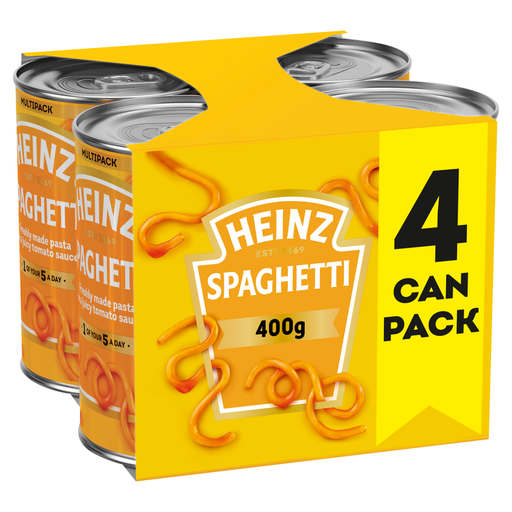 Image unavailable
For several meals using the same tomato-spaghetti recipe, this pack contains four 400 g tins. The cited product information marks it suitable for vegetarians; check the current allergen declaration. Refrigerate any unused contents according to the tin’s instructions.
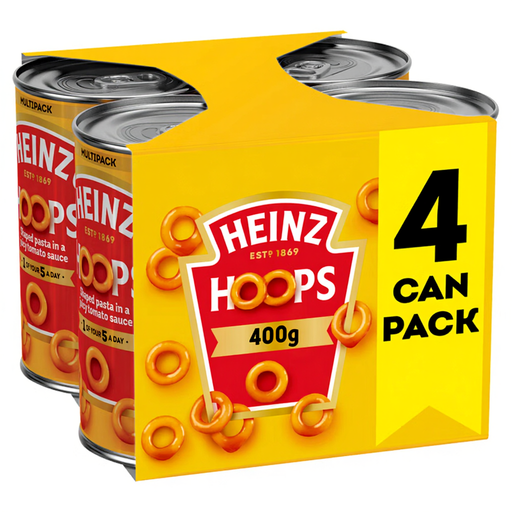 Image unavailable
For a group that wants several tins of spaghetti hoops, this pack contains four 400 g tins. Check the pack’s unopened storage and allergen instructions for your trip, and plan to refrigerate any unused contents as directed.
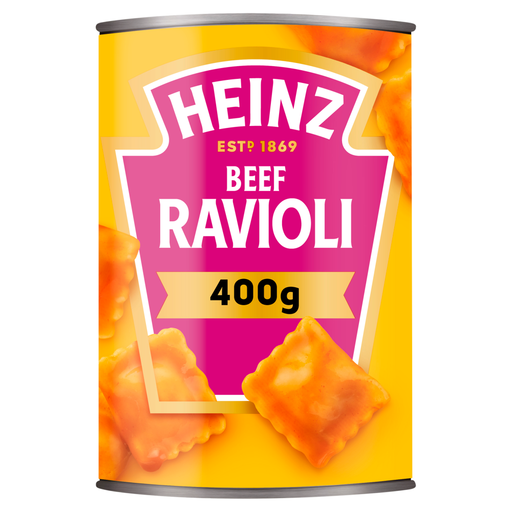 Image unavailable
For a camper choosing one ravioli tin rather than a multipack, this is a 400 g option. Check its current ingredients, unopened storage and heating instructions. Joybuy’s cited product instructions say to refrigerate unused contents in a covered container and use them within two days.
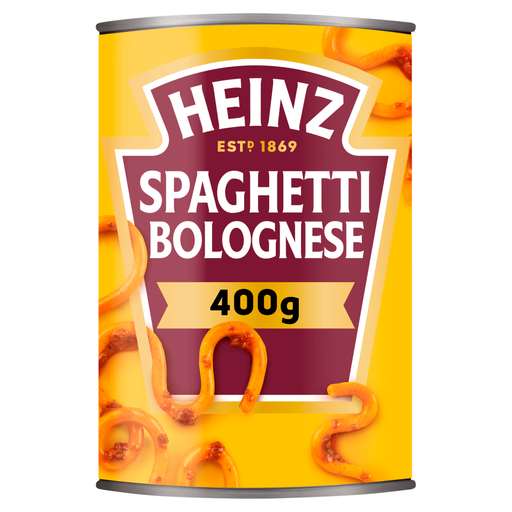 Image unavailable
For a camper considering an individual bolognese tin, this is a 400 g option. Check the current ingredients and allergen declaration, as well as storage and heating instructions. The cited opened-tin instructions require unused contents to be covered, refrigerated and used within two days.
Yes, if that tin’s label specifies ambient storage before opening and the packaging is intact. Check each product’s label rather than applying the rule to every camping food; the Food Standards Agency advises care with foods that need chilling during a trip.
Follow that product’s opened-tin instructions. The cited Heinz bolognese and ravioli instructions say to transfer unused contents to a suitable covered container, refrigerate them and use them within two days. If you cannot refrigerate leftovers, plan a meal that finishes the tin.
Consider dried pasta when you can carry enough water, cookware and fuel to prepare it. The Food Standards Agency advises considering predominantly dry foods if you cannot store foods sufficiently throughout a camping trip; a jar of sauce does not remove the need to cook the pasta.