Nutrition-conscious lunch shoppers
You want a convenient cupboard lunch and prefer to compare salt, sugars, fat, fibre and protein on the label rather than rely on a general description of the meal.


Choose a tinned pasta multipack if you need several ready-to-heat lunches; compare nutrition using the same serving size rather than treating the pack format as a sign of nutritional suitability. A single tin lets you try the format without buying several, while cooking pasta with a separate sauce gives you a choice of pasta and other ingredients but takes preparation.
You want a convenient cupboard lunch and prefer to compare salt, sugars, fat, fibre and protein on the label rather than rely on a general description of the meal.
You expect to use several tins and want to distinguish a genuine multipack from an individual can before stocking up.
You have time to prepare pasta and would rather choose the pasta, sauce and other ingredients separately than use a ready-to-heat tin.
Decide whether lunch needs to be ready to heat, then compare pack format, the stated portion and the nutrition label. A cooking sauce and a tin containing pasta are different starting points.
| Concern | What to check | Who this matters to |
|---|---|---|
| Nutrition per portion | Compare salt and other nutrition values per 100g and for the same stated portion. Sainsbury's lists 0.7g salt per half can for Heinz tomato spaghetti and 0.8g for Heinz hoops, both in 4 x 400g packs. | If lunch is meant to fit alongside the rest of my food for the day, I want to see what a portion contains before choosing a pack. About 36% of consumers put nutrition-label comparison first. |
| Multipack format | Confirm the number of tins and each tin's net weight; distinguish a 4 x 400g pack from a single 400g tin. | When I am stocking the cupboard for several lunches, the number of usable tins matters more than a listing's bulk wording. For about 29% of consumers, pack format is the primary concern. |
| Portions and leftovers | Check the stated serving size and the exact tin's instructions for storing any unused contents. | On a short lunch break, I need to know whether I will use the whole tin or have leftovers to store. Portion convenience comes first for about 21% of consumers. |
| Ingredients and meal format | Read the exact pack's ingredient and allergen information, and check whether it contains pasta or is a sauce for cooking with separate pasta. | If I need to check an allergen or prepare lunch without cooking pasta, the product type changes my choice. About 14% of consumers prioritise dietary and format fit. |
The Dolmio and Barilla sauces described here are for preparing a pasta dish. Unlike tinned spaghetti or hoops, they do not provide a ready-to-heat pasta lunch on their own.
Choose the meal format first, then compare labels within that format.
A sauce-based lunch also requires separate pasta and cooking time.
Sainsbury's labels the sugars in the two Heinz 4 x 400g products as low, but lists medium salt per half-can serving. One label value does not describe everything eaten at lunch.
Compare the full nutrition panel on a consistent portion basis. The NHS Eatwell Guide considers food balance across a day or week, not necessarily within every meal.
Sainsbury's states that its own-label 400g spaghetti tin contains two servings; the Heinz multipack nutrition figures are also given per half can.
Check how much you expect to eat and follow the storage instructions on the tin if you keep the remainder.
Opening more than you need leaves a portion that must be stored or used.
Dolmio Low Fat Bolognese Sauce is a 450g vegetarian cooking sauce for making a pasta meal.
Barilla Bolognese Base Sauce is a 400g sauce intended for pasta or as a base for a ragù.
Tesco Groceries lists tinned pasta products, including Heinz four-packs and a Tesco macaroni cheese in sauce tin.
Sainsbury's lists Heinz 4 x 400g tomato-pasta multipacks alongside its own-label 400g spaghetti tin.
M&S lists a 410g Spaghetti Loops tin as well as pasta sauces for cooking.
These Heinz spaghetti and hoops multipacks suit shoppers planning several ready-to-heat tinned pasta lunches. Compare their pack counts and the nutrition label for the portion you intend to eat.
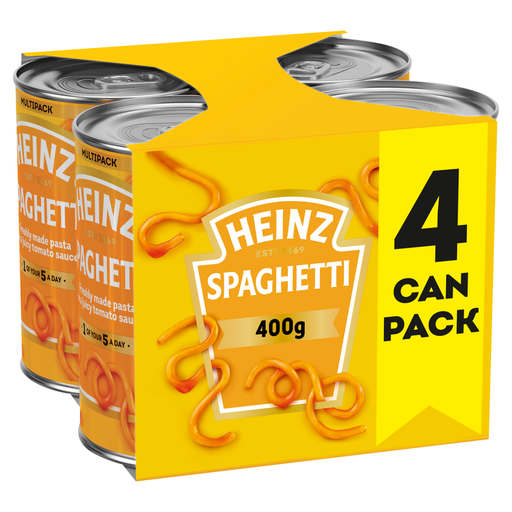 Image unavailable
A four-tin option for ready-to-heat spaghetti lunches. Sainsbury's lists 0.7g salt per half-can serving for this pack; check the current label when comparing it with a different portion or product.
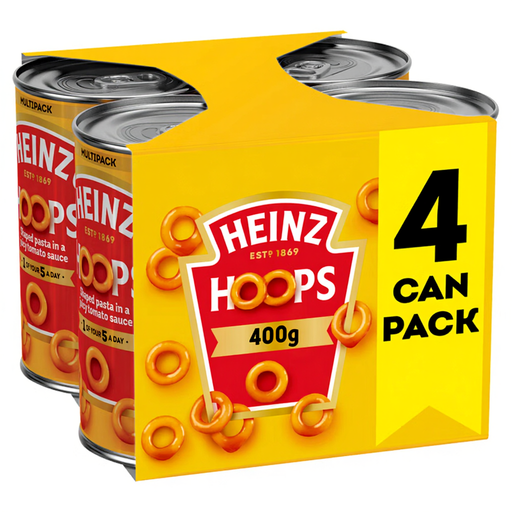 Image unavailable
A four-tin option if you prefer hoops to spaghetti for a ready-to-heat lunch. Sainsbury's lists 0.8g salt per half-can serving for this pack; use the same portion basis when comparing labels.
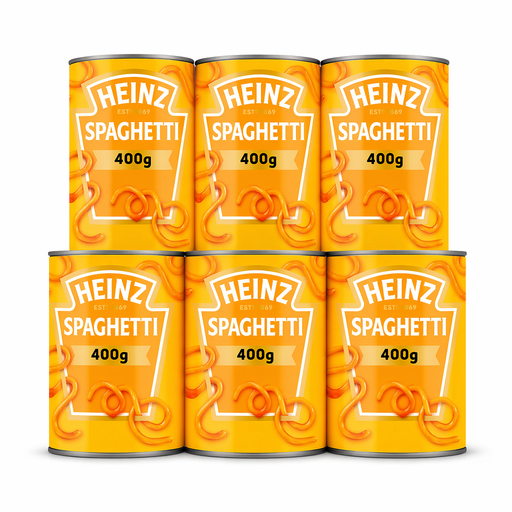 Image unavailable
A six-tin pack for shoppers who expect to use more ready-to-heat spaghetti lunches. Check this pack's current nutrition label for your intended serving before comparing it with the four-tin products.
Read the nutrition values per 100g, then compare the amount you would actually eat using the same portion basis. For the cited 4 x 400g Heinz packs, Sainsbury's lists 0.7g salt per half can for tomato spaghetti and 0.8g for hoops; check the current labels for the rest of their nutrition information.
No. A five-a-day statement addresses a fruit or vegetable contribution, not everything in the meal. The NHS Eatwell Guide describes balance across a day or week and includes starchy foods, fruit and vegetables, and protein foods.
For Sainsbury's own-label 400g spaghetti, transfer unused contents to a non-metallic container, refrigerate and use within two days. Follow the instructions on the exact tin you open, as they may differ.