Pie and mash planners watching salt
You want to consider the whole plate, including the pie, mash seasoning, gravy and any pasta side. The NHS notes that salt already present in food counts alongside salt added during cooking or at the table.


Choose by the salt declared for the portion you will serve, not by whether a product is called pasta or reduced salt. A reduced-salt tin offers a quick tomato-pasta side; dry pasta gives you control over salt added during cooking, while a separate sauce needs its own label check. Include the pie, gravy and other additions when assessing the plate.
You want to consider the whole plate, including the pie, mash seasoning, gravy and any pasta side. The NHS notes that salt already present in food counts alongside salt added during cooking or at the table.
You want tomato pasta that is quick to prepare, but need to compare the salt in the amount you will actually serve. Tesco’s reduced sugar and salt spaghetti letters and rings provide examples with both per-100g and half-can figures.
You would rather decide how much salt goes into the cooking water and sauce. Check the dry pasta’s own nutrition panel separately from any seasonings or accompaniments you add.
For pie and mash night, compare similar products per 100g, then work out the salt in your intended portion. Dry pasta’s as-sold figure does not include cooking-water salt or sauce.
| Concern | What to check | Who this matters to |
|---|---|---|
| Salt across the plate | Read salt per 100g and for the portion you will serve; account for pie, gravy and seasonings. | If I am watching the salt in pie and mash, changing the pasta alone does not tell me what is in the whole meal. About 46% of consumers put meal-wide salt first. |
| A quick tinned side | Check the tin’s salt declaration, labelled portion and heating instructions. | When I need a ready-to-heat tomato-pasta side, the amount in my bowl matters more than a claim on the front of the tin. For about 36% of consumers, a quick tinned side is the primary need. |
| Control while cooking | Check the dry pasta’s as-sold label and decide whether to salt the water or add a sauce. | If I am cooking pasta myself, I want to choose how it is seasoned rather than rely on a prepared tin. Cooking control comes first for about 18% of consumers. |
Tesco lists 0.2g salt per 100g for its reduced sugar and salt spaghetti letters and rings, and 0.5g for a labelled 205g half-can serving. Barilla lists 0.013g per 100g for its Whole Wheat Penne Rigate as sold, but its cooking guidance suggests adding salt to the water. Those figures describe different products at different stages of preparation; use the serving you plan to eat when considering the meal.
“No added sugar” does not describe a sauce’s salt content. Tesco lists 0.64g salt per 100g and 0.80g per 125g portion for its No Added Sugar Bolognese Pasta Sauce.
Read the salt line for each sauce and compare similar sauces per 100g before checking your portion.
The NHS explains that an adult’s salt intake includes salt already in foods as well as salt added during cooking and eating. Pie, gravy and condiments can therefore affect the same meal.
Consider the full plate before adding salt to pasta water, mash or gravy.
Tesco’s reduced sugar and salt spaghetti examples declare 0.5g salt for a 205g half-can serving. A larger serving contributes more than that labelled portion.
Use the per-100g figure or adjust the serving figure to match the amount you expect to eat.
A product’s ingredients and nutrition details can change, which matters when you are choosing it for its salt declaration or checking allergens.
Check the current pack for salt, ingredients, allergens and storage instructions before using it.
Its reduced sugar and salt tinned spaghetti offers a ready-sauced example for comparing salt per 100g and per serving.
Its Whole Wheat Penne Rigate is a dry-pasta example for shoppers who want to decide how much salt to add while cooking.
Its pasta-sauce range and fresh tomato sauce recipe illustrate ready-made and cook-from-scratch routes.
These Morrisons wholewheat fusilli listings suit the dry-pasta route, where you can decide how to season the cooking water and what to serve alongside the pasta. Check the current pack’s numerical salt declaration when comparing them with ready-sauced tins.
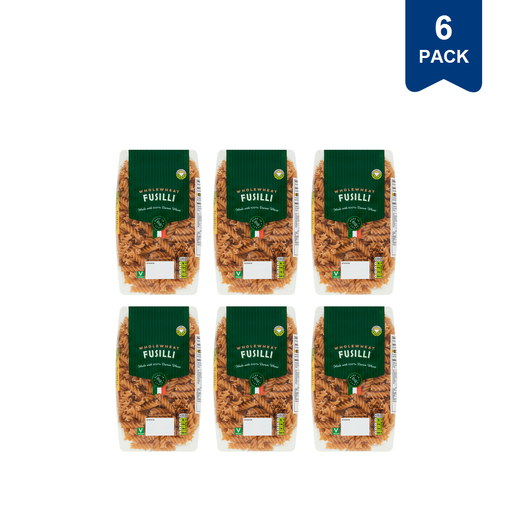 Image unavailable
A dry-pasta option if you want to control salt added during cooking. The listing names 500g packs and a six-pack bundle, but confirm the pack count and total quantity before buying. Its cooking directions suggest slightly salted water; check the current pack for a numerical salt value per 100g.
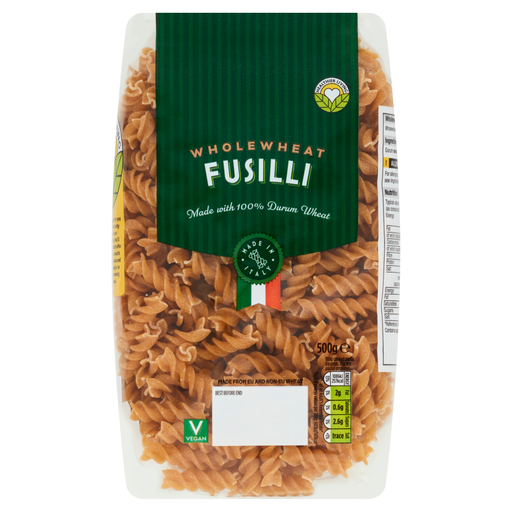 Image unavailable
A 500g dry-pasta listing for a side you season yourself. Its cooking directions suggest slightly salted water, so decide how to season the water and any sauce together. Check the current pack’s numerical salt value per 100g rather than treating a description of “trace” salt as a measured amount.
No. “Reduced salt” is a comparative description, so read the numerical declaration for the tin you are considering. Bristol City Council’s label guidance describes 0.3g salt or less per 100g as low and more than 1.5g per 100g as high; also check the amount in your intended serving.
Not necessarily. Barilla lists 0.013g salt per 100g for its Whole Wheat Penne Rigate as sold, but its cooking guidance suggests adding salt to the water. Sauce, pie and gravy also affect what is served, so a dry-pasta label cannot stand in for the whole plate.
Follow the instructions on the tin you have bought. Tesco’s reduced sugar and salt spaghetti examples instruct shoppers to transfer unused contents to a non-metallic container, cover and refrigerate them, and consume them within two days.
Yes. Check the current ingredients and allergen information for the exact product, rather than relying on another pasta’s label or an older online listing. Tesco’s tinned spaghetti examples identify cereals containing gluten in their allergen information.