Weeknight shortcut shoppers
If you want pasta that is already combined with sauce for a busy evening, look for a prepared pasta tin rather than a separate sauce. Check its heating directions before relying on it for a low-preparation meal.


Choose a tin with pasta already in sauce when you want a low-preparation cupboard meal and its contents suit the meal you have planned. Choose dry pasta and a separate sauce when you want to plan several servings or select the pasta and sauce independently; a sauce jar alone is not a complete pasta meal. Check the exact pack for ingredients, heating directions and storage after opening.
If you want pasta that is already combined with sauce for a busy evening, look for a prepared pasta tin rather than a separate sauce. Check its heating directions before relying on it for a low-preparation meal.
If several pasta meals are on the weekly menu, dry pasta lets you choose the shape and sauce separately and plan how much to cook each time. Check whether your chosen sauce calls for other ingredients.
If wheat, milk, meat content or other ingredients affect your choice, inspect the label of the exact product and variant. Nutrition information and instructions for opened packs also differ between recipes.
Decide whether the pack must contain the pasta itself, then check that its size and label suit the meals you intend to make.
| Concern | What to check | Who this matters to |
|---|---|---|
| Meal readiness | Check that pasta is already in the pack, not just sauce, and read its heating instructions. | When an evening meal needs few cooking steps, prepared pasta in sauce takes priority over a sauce that still needs pasta. About 44% of consumers put meal readiness first. |
| Portion planning | Compare net weight and stated servings; distinguish a single can from a multipack. | If several meals are planned, the amount in each pack and the option to cook dry pasta as needed matter more than having one prepared tin. For about 33% of consumers, portion flexibility is the primary concern. |
| Label details | Read the exact ingredients and allergen statement, plus the instructions for storage after opening. | Where an ingredient must be avoided or leftovers need managing, the particular recipe and pack instructions drive the choice. Label certainty comes first for about 23% of consumers. |
A sauce jar may still require dry pasta and other ingredients. Dolmio's instructions for its Original Sauce for Bolognese call for mince as well as pasta.
For a ready pasta meal, check that the pack contains pasta. For a planned sauce-based meal, check the preparation instructions before writing the shopping list.
Can sizes and serving presentations vary. Sainsbury's lists a 205 g Heinz pasta-shape can, but that weight alone does not determine whether it fits your meal.
Check the net weight and serving information on the exact pack before deciding how many cans to buy.
Opened-pack directions are product-specific. Marks & Spencer instructs shoppers to transfer unused Rich Beef Bolognese to a non-metallic container, refrigerate it and eat it within three days.
Follow the storage instructions on the pack you open rather than transferring a time limit from another recipe.
Recipes sold as tinned pasta or pasta sauce do not have identical ingredients. The Heinz pasta shapes listed by Sainsbury's contain durum wheat semolina, while Dolmio identifies milk in its Carbonara Pasta Bake sauce.
Read the current label of the exact variant, including its ingredients, allergens and any precautionary statements.
A reference point for prepared tinned pasta, including pasta shapes and other pasta-in-sauce formats.
Its grocery ranges distinguish tinned spaghetti and pasta from dry pasta.
Relevant when choosing dry pasta or a canned accompaniment to serve with pasta already at home.
A separate-sauce option for a planned pasta meal rather than a ready-to-heat pasta tin.
These selections cover pasta already combined with sauce: individual cans, four-can packs and a prepared macaroni cheese jar. If your weekly shop calls for exactly one tin, check the pack format before choosing.
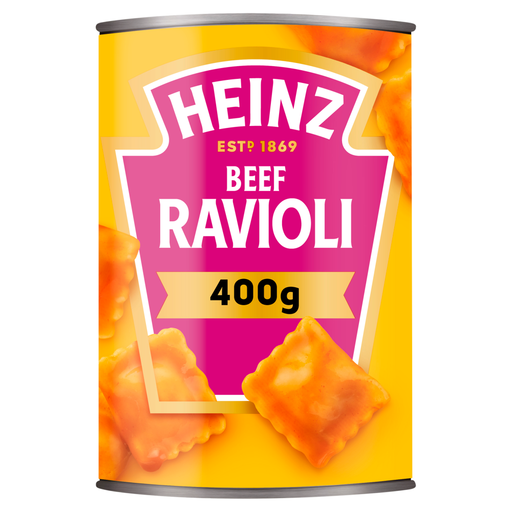 Image unavailable
Consider this when you want ravioli already in tomato sauce rather than pasta and sauce to combine yourself. It is a 400 g can; check the current label for ingredients, heating and leftover-storage directions.
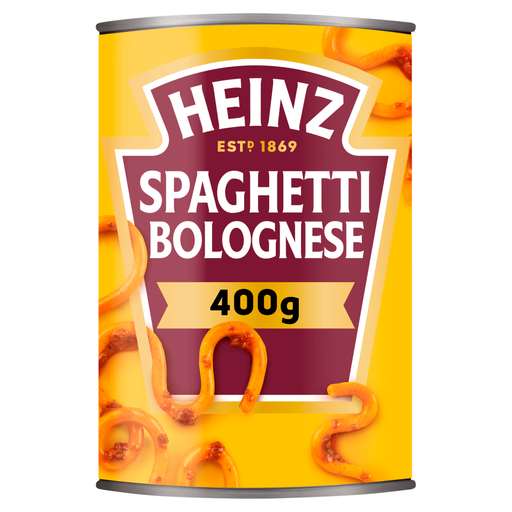 Image unavailable
This 400 g prepared spaghetti Bolognese suits a shop that calls for pasta and sauce in one can. Check the exact pack for its ingredients and heating instructions rather than assuming they match another tinned spaghetti product.
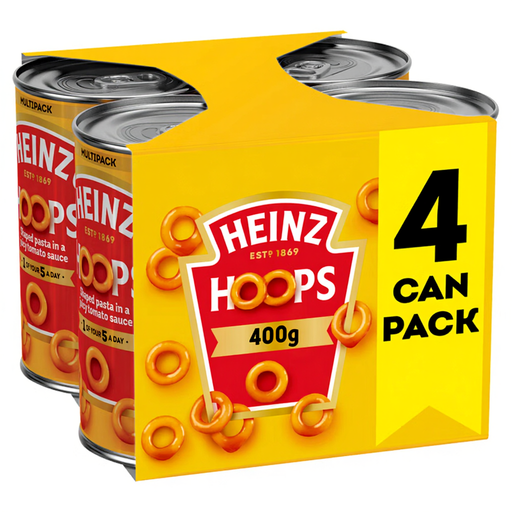 Image unavailable
Choose this format only if several cans of prepared spaghetti hoops fit your weekly plan. The SKU contains four 400 g cans, not one can; follow each can's label for heating and storage after opening.
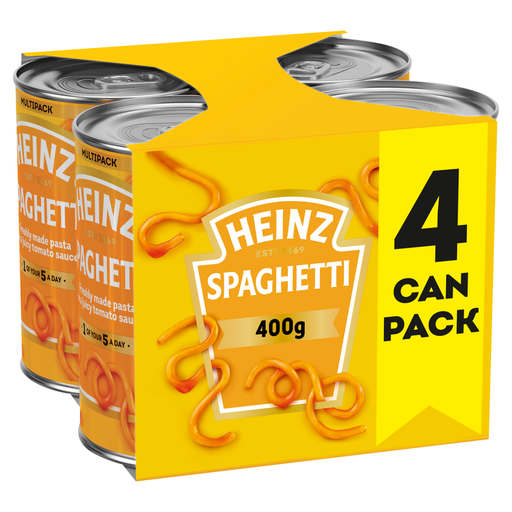 Image unavailable
This is an option when you plan to keep more than one can of spaghetti in tomato sauce. The pack contains four 400 g cans, so it does not meet a shopping list that calls for just one tin; check the can for preparation directions.
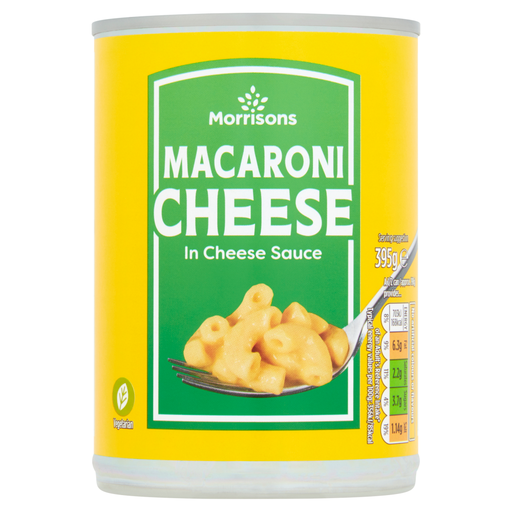 Image unavailable
Consider this prepared macaroni cheese if a single pack matters more than tin packaging. It is a 395 g jar, not a tin; check its label for heating, ingredients and opened-pack storage.
No. Prepared tinned pasta contains the pasta itself, while a separate sauce needs pasta to be supplied and cooked. Dolmio's Original Sauce for Bolognese also calls for mince in its preparation directions.
Check the exact can's net weight and serving information rather than relying on the word 'single'. Sainsbury's lists a 205 g Heinz pasta-shape can, but the amount that suits your planned meal is a separate decision.
Follow the storage directions on that product's label, including any instructions to transfer and refrigerate unused contents. Food Standards Scotland advises checking whether a food needs refrigeration after opening and following its stated storage instructions.
Read the current ingredients and allergen information for the exact product before choosing it and again before eating it. The Heinz pasta shapes listed by Sainsbury's contain durum wheat semolina, while Dolmio identifies milk in its Carbonara Pasta Bake sauce; neither example establishes the ingredients of another variant.