First-shop cupboard planners
If you are stocking a cupboard for the first time, compare the number and size of tins with the meals you expect to make. Sainsbury's lists both single tins and multipacks in its canned-pasta range.


Choose a tinned-pasta multipack if you want prepared cupboard meals and expect to use every tin. Dry pasta is a more flexible starting point if you have a pan and time to cook it; check pack quantities before committing cupboard space, and do not confuse sauce multipacks or microwave pouches with tins of prepared pasta.
If you are stocking a cupboard for the first time, compare the number and size of tins with the meals you expect to make. Sainsbury's lists both single tins and multipacks in its canned-pasta range.
Prepared tinned pasta may suit you if you want fewer cooking steps. Check that a product contains pasta rather than sauce alone; a microwave pasta pouch is another, differently sized format.
If you can cook pasta in a pan, dry pasta lets you choose the sauce and portion for each meal. The dry spaghetti examples from M&S and Barilla each state an 11-minute cooking time.
For a first food shop, start with the preparation you can manage, then choose a format and pack quantity that fit your meals and storage space.
| Concern | What to check | Who this matters to |
|---|---|---|
| Usable pack quantity | Check the number of tins and weight per tin against the meals you plan to make. | If I am filling a cupboard for the first time, I want a pack I will use without crowding the shelves. About 36% of consumers put usable pack quantity first. |
| Preparation | Confirm whether the pack contains prepared pasta, dry pasta or sauce only, and check its cooking instructions. | When cooking equipment or time is limited, I need to know what it takes to get a meal ready. About 29% of consumers make ease of preparation their primary concern. |
| Portions and flexibility | Consider can size and cupboard room, or whether dry pasta would suit different portions and sauces. | I may be cooking for one or changing meal plans, so committing to several tins of one recipe matters to me. About 21% of consumers prioritise portion fit and meal flexibility. |
| Ingredients and leftovers | Read the current label for allergens and instructions for storing food after opening. | If an ingredient matters to me or I may leave part of a tin unused, I need a suitable product and a way to store the remainder. About 14% of consumers put dietary suitability and avoiding waste first. |
Four or six tins are useful only if the can size and recipe fit the meals you expect to make. Extra tins also need cupboard space.
Check the total quantity and decide whether you are likely to use every tin before choosing a pack.
A sauce multipack does not contain pasta. A prepared microwave pouch is also a different format from several tins for the cupboard.
Read the product description to confirm what is in the pack and how it needs to be prepared.
A tin that can be kept in the cupboard before opening needs different handling once opened.
Follow the pack instructions. Zero Waste Scotland advises transferring leftovers from an opened tin to another container and refrigerating them.
Recipes and product listings can change, which matters when you need to avoid a particular ingredient.
Check the current pack label for allergens and dietary suitability each time you buy.
An own-label tinned-pasta option: Sainsbury's lists 400 g spaghetti rings in tomato sauce.
Sainsbury's lists Heinz spaghetti and spaghetti-hoops multipacks containing four 400 g tins.
M&S describes its 410 g spaghetti loops as pasta in tomato sauce; it also lists dry spaghetti as a separate product.
A dry-pasta alternative if you have cooking equipment. Barilla states that its 500 g Spaghettoni N°7 cooks in 11 minutes.
A sauce or microwave-pasta alternative rather than a tinned-pasta multipack in the products described here.
These Heinz multipacks contain prepared pasta in tomato sauce for stocking a first-shop cupboard. Choose by pasta shape and the number of 400 g tins you expect to use; check the current pack label for ingredients and preparation instructions.
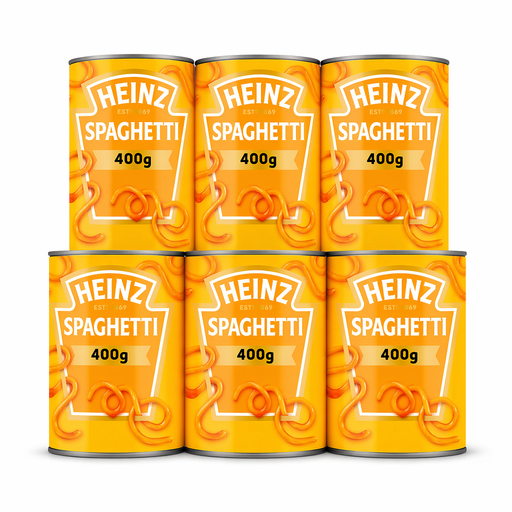 Image unavailable
Consider this pack if you expect to use six tins of prepared spaghetti in tomato sauce. Check that the quantity fits your cupboard and meal plans, and read the current can label for allergens and preparation instructions.
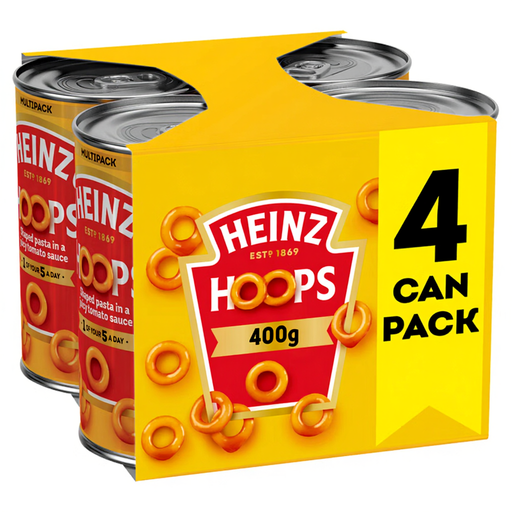 Image unavailable
Choose this four-tin pack if you want hoops rather than straight spaghetti and expect to use that quantity. Check the current label for allergens, preparation and storage after opening.
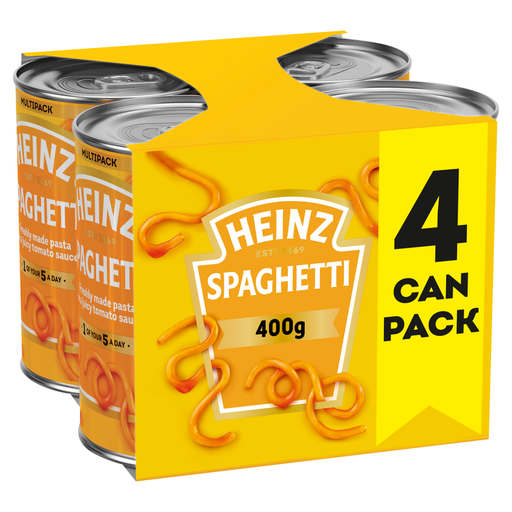 Image unavailable
This pack suits a cupboard plan built around four tins of prepared spaghetti in tomato sauce. Compare its tin count with the six-tin option, and follow the current label for ingredients and preparation.
Yes, if you have a pan, water and time to cook it, but it does not replace the convenience of prepared pasta in a tin. Barilla and M&S each state an 11-minute cooking time for the dry spaghetti examples described here.
Many tinned foods do not need refrigeration before opening, according to Food Standards Scotland. Follow the storage instructions on the particular tin you buy.
Transfer the leftovers to another container and refrigerate them, as Zero Waste Scotland advises. Follow the product label's instructions for using the remainder.
No. GOV.UK explains that a best-before date concerns quality rather than safety. Read the date marking and storage instructions on the food you buy.
Use the current on-pack label when an allergen or dietary requirement matters to you. Ingredients and product information can change, so check the specific pasta or sauce you are buying.