Salt-first breakfast shoppers
If reducing the salt in breakfast is your main concern, you may prefer a no-added-salt tomato base when you have time to cook, or a reduced-salt tin when you need a prepared meal.


For a fast weekday breakfast, choose a reduced-salt tinned pasta when its current label and availability suit you; Tesco’s reduced-sugar-and-salt letters and rings list 0.2g salt per 100g, although Tesco listed both as out of stock on 3 October 2026. If you have time to make a sauce, Mr Organic no-added-salt chopped tomatoes list 0.03g per 100g on Ocado, but they are an ingredient rather than a ready-to-heat meal. For any tin or sauce, compare salt per 100g and in the amount you intend to eat.
If reducing the salt in breakfast is your main concern, you may prefer a no-added-salt tomato base when you have time to cook, or a reduced-salt tin when you need a prepared meal.
A ready-to-heat tin keeps preparation short and can be served on toast. Check the salt in the portion you will eat, not just the figure per 100g.
Familiar pasta shapes or a smooth sauce may matter alongside the salt figure. Vegetable-focused wording or other claims do not replace a check of the nutrition and allergen labels.
Decide whether breakfast needs to be ready to heat or whether you can make a sauce, then compare the salt figures for the exact product and portion.
Choose when: You want a prepared pasta breakfast with a product-specific lower salt figure.
Trade-off: Tesco’s reduced-sugar-and-salt letters and rings were out of stock when checked on 3 October 2026, so confirm availability before planning around either tin.
Choose when: A ready-to-heat, toast-friendly format is your priority.
Trade-off: Ocado lists Heinz Spaghetti in Tomato Sauce at 0.7g salt per half can, compared with Tesco’s 0.5g per half can for its checked reduced-sugar-and-salt variants.
Choose when: You can cook briefly and want to control what goes into a tomato-based breakfast.
Trade-off: Chopped tomatoes need preparation and something to serve them with; they are not a complete tinned pasta meal.
Choose when: You already have cooked pasta and want a prepared sauce rather than starting with chopped tomatoes.
Trade-off: The checked Tesco and Sainsbury’s tomato-and-basil stir-in sauces list 0.69g and 0.82g salt per 100g respectively, so compare the sauce portion as well as the tin or pot size.
| Concern | What to check | Who this matters to |
|---|---|---|
| Salt in breakfast | Compare salt per 100g and per intended portion. The NHS describes 0.3g salt or less per 100g as low. | If keeping the salt contribution down comes before convenience, a no-added-salt tomato base may be worth cooking. About 36% of consumers put this need first. |
| Speed and portion fit | Check the heating directions, declared serving size and salt in the amount you will eat. | On a rushed morning, I may need a tin I can heat and serve on toast rather than make a sauce. That ready-to-heat need comes first for about 29% of consumers. |
| Familiarity and dietary fit | Check the allergen declaration and suitability label, then choose a texture and pasta format the household will use. | When choosing for the household, familiar shapes or a smooth texture may determine whether breakfast works, while salt still needs checking. About 21% of consumers prioritise that fit. |
| Availability and flexibility | Confirm stock for the exact variant and check the replacement format’s own nutrition label. | If my usual reduced-salt tin is unavailable, I need another workable breakfast without assuming a similar-looking product has the same salt content. Roughly 14% of consumers put that flexibility first. |
Ocado lists 0.67g salt per 100g for the checked Dolmio Smooth Tomato Bolognese and 0.85g per 100g for M&S Classic Tomato Everything Pasta Sauce. The tomato-based positioning does not tell you the salt figure.
Compare the salt line per 100g, then check how much sauce your breakfast will use.
Tesco lists 0.5g salt per half can for its checked reduced-sugar-and-salt pasta; Ocado lists 0.7g per half can for Heinz Spaghetti in Tomato Sauce. The portion matters alongside the like-for-like figure.
Use per 100g to compare products and per-serving salt to assess your intended breakfast.
Tesco listed its reduced-sugar-and-salt letters and rings as out of stock on 3 October 2026. A different pasta shape or sauce should not be assumed to have the same nutrition figures.
Confirm current stock, pack size and the salt declaration for the exact replacement.
Mr Organic Italian Chopped Tomatoes state no added salt, while the nutrition information displayed by Ocado lists 0.03g salt per 100g.
Read the nutrition declaration even when the front of the pack says no added salt, and consider what you add while cooking.
Its checked range includes reduced-sugar-and-salt tinned pasta as well as prepared tomato sauces.
Its checked 150g Tomato & Basil Stir In Sauce is an option when cooked pasta is already available.
The checked Smooth Tomato Bolognese is a prepared, smooth tomato sauce.
The checked Classic Tomato Everything Pasta Sauce is positioned for pasta and other dishes, including baked eggs.
Its checked Italian Chopped Tomatoes are a cooking base, not a ready-to-heat pasta meal.
These Heinz spaghetti multipacks represent the standard ready-to-heat tin route for a quick tomato-pasta breakfast. They are not labelled as specifically reduced-salt products; compare the exact pack’s salt figures with any reduced-salt alternative.
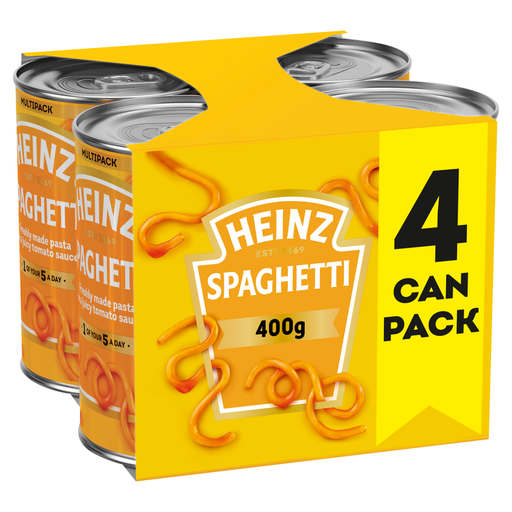 Image unavailable
This four-tin pack suits a ready-to-heat breakfast or a serving on toast. It is standard tinned spaghetti rather than a specifically reduced-salt variant; check the exact pack’s salt per 100g and per intended serving before choosing it for that purpose.
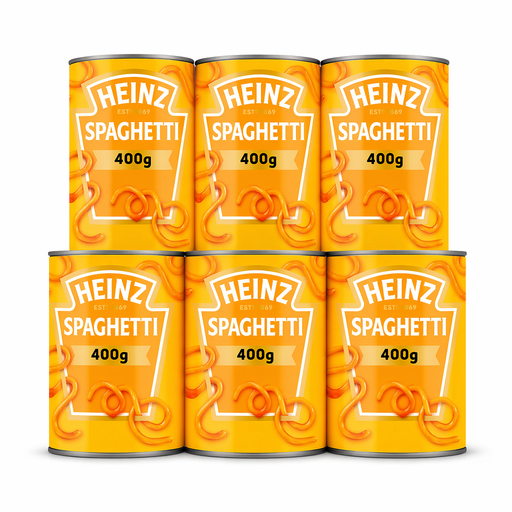 Image unavailable
This six-tin pack is another ready-to-heat option for weekday breakfasts. It is not identified as reduced salt; use the exact pack label to check both salt per 100g and the amount in your intended portion.
The NHS describes 0.3g salt or less per 100g as low and more than 1.5g per 100g as high. Compare products per 100g, then read the salt figure for the amount you expect to eat.
Not necessarily: read the nutrition declaration rather than relying on the wording alone. Tesco’s checked reduced-sugar-and-salt spaghetti tins list 0.2g salt per 100g and 0.5g per half can; those figures apply to those products, not to a similarly named sauce or replacement tin.
They can provide a tomato base if you have time to prepare the rest of breakfast, but they do not replace a complete heat-and-eat pasta meal. Mr Organic Italian Chopped Tomatoes state no added salt and list 0.03g salt per 100g on Ocado; check anything you add to the finished dish too.
Use salt per 100g for a like-for-like product comparison and salt per serving for the breakfast you intend to make. Check the physical pack for the exact variant, particularly if you switch between a tin, a sauce pot and a cooking ingredient.
Follow the directions on your exact tin. Tesco’s checked reduced-sugar-and-salt spaghetti instructions say to empty it into a non-metallic bowl before microwaving or heat it gently on the hob; they direct shoppers to transfer unused contents to a non-metallic container, refrigerate them and consume them within two days. Do not microwave a metal can.