Who is this for?

Adults who prefer softer everyday meals

This is for someone who can chew soft, tender food without tiring but finds firmer foods harder work. The Dudley Group NHS Foundation Trust describes that chewing ability in its easier-to-chew guidance; a swallowing problem calls for individual clinical advice.

Solo eaters who want fewer leftovers

A smaller can may fit one modest meal more closely. Sainsbury's lists Heinz pasta shapes in a 205g can and Heinz Spaghetti Bolognese in a 400g can, giving shoppers two different portion sizes to consider.

Carers following a prescribed texture plan

Choose according to the person's written care plan, not the appearance of a tin. The International Dysphagia Diet Standardisation Initiative (IDDSI) sets texture requirements for Level 7 Regular Easy to Chew food; an ordinary canned product is not automatically suitable.

What should you check?

For a personal preference, portion size can guide the choice. Where a texture level has been prescribed, follow the clinician's instructions before selecting or serving any tin.

Concern What to check Who this matters to
Served texture For a prescribed IDDSI Level 7 plan, follow the clinician's advice and assess the food at serving temperature using the relevant fork or spoon checks. When firmer food takes effort to chew, I want to know how the heated pasta actually breaks apart; about 46% of consumers would put served texture first.
Portion and leftovers Compare the stated can weight with the intended portion. Check the storage directions if some will remain. If I am eating alone, I want a tin that fits my meal rather than an opened can to store; about 27% of consumers would prioritise portion size and leftovers.
Label and heating Read the current ingredients and allergen statement, then follow that can's heating instructions. When ingredients or preparation affect my choice, I need the current label before serving; about 27% of consumers would make those checks their primary concern.

Mistakes to avoid

  • Assuming tomato sauce proves a suitable texture

    Sauce and small pasta pieces do not establish how the food behaves when served. IDDSI specifies fork or spoon separation and pressure checks for Level 7 Regular Easy to Chew food, which is not intended for people with an identified increased choking risk.

    For a prescribed diet, follow the clinician's plan and assess the served food as directed rather than relying on its name or photograph.

  • Opening a 400g tin without a leftover plan

    A 400g can may exceed one person's intended portion. Sainsbury's instructions for Heinz Spaghetti Bolognese say to transfer unused contents to a covered container, refrigerate them and use them within 2 days.

    Choose a smaller can if it fits the meal, or check the larger tin's storage directions before opening it.

    Unused pasta may go to waste if it cannot be stored and used as directed.

  • Relying on a familiar product name instead of its label

    The checked Heinz Spaghetti Bolognese information identifies wheat and soya. Ingredients and preparation directions need to be checked for the particular variety being served.

    Read the current can's allergen, ingredient and heating information, especially when an ingredient must be avoided.

Relevant brands and retailers

Heinz

The Heinz listings considered here include a 205g pasta-shapes can and a 400g Spaghetti Bolognese can.

  • The listed sizes let shoppers compare a modest can with a larger meal-style tin.
  • Neither listing establishes that the served food meets a prescribed IDDSI texture level; other Heinz varieties need checking separately.

Tesco

Tesco's canned-pasta category lists own-label meal formats, including Macaroni Cheese In Sauce 385G and Spaghetti Rings Sausages In Tomato Sauce 410G.

  • These formats provide further can sizes and recipes to compare.
  • A category listing does not establish the served texture or the complete ingredient details of an individual tin.

Sainsbury's

Sainsbury's is the retailer for the Heinz 205g pasta-shapes and 400g Spaghetti Bolognese listings discussed here, not the maker of those products.

  • Its product listings give pack-size and preparation or storage details for these examples.
  • Those details do not confirm that either product meets a prescribed easy-chew texture level.

Joybuy product selection

This 400g sauced spaghetti tin is a format to consider for a larger portion or sharing. It is not established as suitable for a prescribed texture-modified diet.
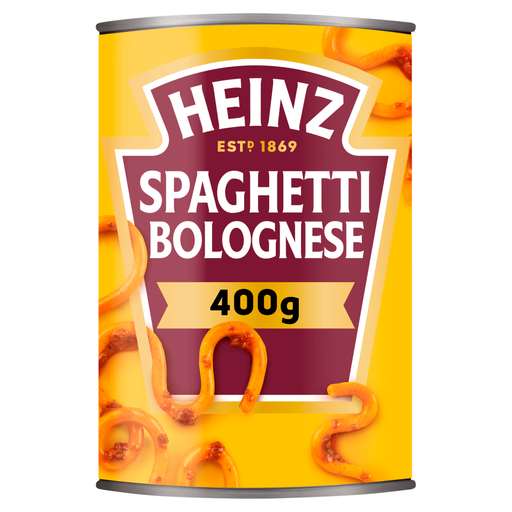
Heinz Spaghetti Bolognese 400g tin

Heinz Spaghetti Bolognese 400g

Consider this tin when a 400g portion will be shared or leftovers can be stored. The listed allergens are wheat and soya; check the current can before serving. The product information says to transfer unused contents to a covered container, refrigerate and use within 2 days. Follow the can's heating instructions, and do not assume its served texture meets a prescribed easy-chew level.

Purchase link unavailable

Frequently asked questions

Is tinned pasta automatically suitable for an IDDSI Level 7 Regular Easy to Chew diet?

No. IDDSI's Level 7 requirements concern the texture of the food as served, including relevant fork or spoon checks; a tin's sauce or pasta shape does not establish that it meets them. Follow the individual clinical plan, particularly where choking risk or swallowing problems are involved.

When might a 205g tin make more sense than a 400g tin?

A 205g tin may suit someone wanting a modest meal without an opened can left over. A 400g tin may suit a larger portion or sharing; for the listed Heinz Spaghetti Bolognese, Sainsbury's says unused contents should be covered, refrigerated and used within 2 days.

How should I heat and check a single tin before serving?

Follow the directions on that can. For the listed 205g Heinz pasta shapes, Sainsbury's gives instructions for a covered microwaveable container at 850W: heat for one minute, stir, then heat for a further 30 seconds. If a texture plan applies, assess the food at the temperature at which it will be served, as the plan directs.

Which ingredient details should I check?

Read the current can's ingredient and allergen statement for the person eating it. The listed Heinz Spaghetti Bolognese identifies wheat and soya, while the listed Heinz pasta shapes identify wheat; those details should not be assumed to apply to every variety.