What matters when choosing?
Start with salt per 100g, then consider the portion you will serve, the rest of the nutrition panel and what will happen to any opened tin.
| Concern |
What to check |
Who this matters to |
| Salt declaration |
Compare salt per 100g and the amount in the intended portion. A reduced-fat label does not establish salt reduction. |
For a child's lunch, I want to compare tins and pots on the same salt basis before choosing a serving. About 39% of consumers put that salt comparison first. |
| Portion and pack |
Check pack weight, suggested servings and whether the pudding can be eaten cold. |
If I am packing one lunch, a separate portion may be simpler than opening a 400g tin. For about 23% of consumers, portioning and portability are the main concern. |
| Fat and sugars |
Read fat and sugars per 100g alongside salt; do not treat a reduced-fat name as a statement about either of the other values. |
I may want to compare recipes beyond their salt figures, especially when choosing between standard and reduced-fat tins. About 23% of consumers make that wider nutrition comparison their priority. |
| Sharing and leftovers |
Check how many servings you will use and follow the opened-pack storage instructions. |
When a tin is shared across lunches, I need a plan for the remainder rather than leaving an opened portion unused. Managing servings and leftovers comes first for about 15% of consumers. |
Brands to consider
These examples show how particular rice pudding recipes and formats differ; check the current pack before buying.
Tesco
Its standard and Reduced Fat 400g tins offer a direct comparison between two Tesco recipes.
- Both declare 0.10g salt per 100g. Tesco says the Reduced Fat recipe has 58% less fat than its standard rice pudding.
- Reduced fat does not distinguish the two tins on their declared salt value.
Sainsbury's
Its Be Good To Yourself Low Fat Rice Pudding is a 400g tin with two stated servings.
- The product declares 0.10g salt, 0.8g fat and 7.0g sugars per 100g.
- It contains milk and whey, so it is not suitable for someone with a milk allergy.
Asda
Just Essentials Rice Pudding is a 400g tin suggested as two servings.
- Its declaration lists 0.10g salt and 5.8g sugars per 100g.
- Asda directs shoppers to refrigerate the pudding after opening and consume it within two days.
Ambrosia
Alongside cans, Ambrosia offers an individual 150g rice pudding pot that it describes as suitable for lunchboxes and for eating hot or cold.
- The separate pot provides a ready-to-eat portion without opening a 400g tin.
- It declares 0.15g salt and 9.2g sugars per 100g; compare those figures with the tin you are considering.
M&S
Its 400g Creamy Rice Pudding is an option for shoppers comparing recipes rather than looking only at a reduced-fat name.
- The product declares 0.10g salt per 100g.
- It also declares 5.6g fat and 3.7g saturates per 100g, which matter if fat is part of your comparison.
Joybuy product selection
This individual-pot rice pudding is a portion-format alternative for the lunch occasion, not a tinned option. Its age designation needs particular attention when choosing food for an older child.
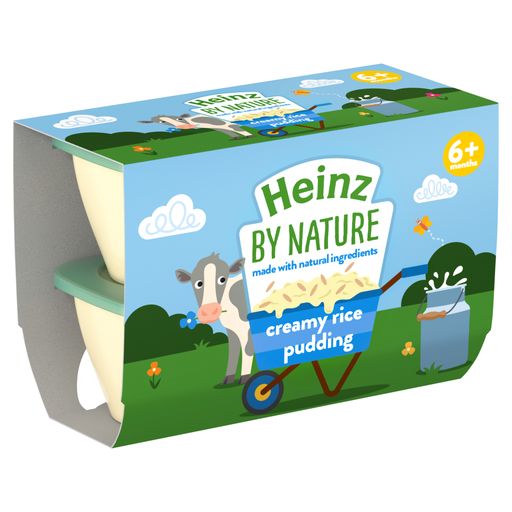 Image unavailable
Heinz Creamy Rice Pudding 6+ Months, 4 x 100g
The four separate 100g pots offer a way to serve one portion without opening a tin. This is a 6+ Months product, and its stated intended age range is 6–36 months; do not assume it is the right choice for an older schoolchild. Check the current pack for its salt declaration, ingredients and allergen information rather than treating it as a reduced-salt tin.
View on Joybuy
Questions about rice pudding
Does reduced fat mean reduced salt?
No. Tesco's Reduced Fat Rice Pudding and its standard rice pudding both declare 0.10g salt per 100g. Check salt separately and do not describe a product as reduced salt unless its current label makes that claim.
What salt figure should I compare on the label?
Start with salt per 100g so that different pack sizes can be compared on the same basis, then consider the portion served. The NHS describes 0.3g salt or less per 100g as low salt; the cited Asda Just Essentials, Tesco Reduced Fat and Sainsbury's Be Good To Yourself tins each declare 0.10g per 100g.
Can rice pudding be packed cold for lunch?
Ambrosia describes its 150g pot as suitable for lunchboxes and says it can be eaten hot or cold. If serving from a tin instead, portion the pudding and follow that product's storage instructions.
What should I do with pudding left in an opened tin?
For the cited Asda, Tesco and Sainsbury's 400g tins, refrigerate leftovers and use them within two days of opening, following any instructions to transfer the contents to another container. Check the directions on the particular tin you buy.
Is rice pudding suitable for someone with a milk allergy?
Do not assume so because the dessert is rice-based. The cited Sainsbury's product contains milk and whey, while M&S lists milk ingredients in its Creamy Rice Pudding; check the current allergen statement of any product before serving it.


