No-cook breakfast planners
A tin suits you if you want to assemble toast, a sandwich or another cold breakfast without fitting fish cooking into the morning.


Choose tinned salmon if breakfast needs a cupboard-stored ingredient you can add to toast, eggs or a sandwich without cooking fish. Choose a chilled or frozen fillet if you want an intact, cooked portion and can make time for storage, thawing where needed and cooking. For tins, check the exact pack for bones, portion size and instructions for leftovers.
A tin suits you if you want to assemble toast, a sandwich or another cold breakfast without fitting fish cooking into the morning.
A fillet suits you if its cooked texture and intact portion matter more than immediate preparation, and you can plan for chilled or frozen storage.
Compare conventional tins, packs labelled skinless and boneless, and fillets by their bone warnings and the amount you are likely to use at breakfast.
Decide whether breakfast calls for a ready-to-assemble ingredient or a cooked fillet, then check the pack details that affect how you will use it.
| Concern | What to check | Who this matters to |
|---|---|---|
| Preparation time | Choose between a tin for an assembled breakfast and a fillet that needs cooking; check frozen-pack thawing instructions. | If I have little time before work, I want to assemble breakfast without cooking fish. About 36% of consumers put minimal preparation first. |
| Cooked-fillet texture | Check whether fillets are chilled or frozen and read their cooking instructions. | For a hot breakfast, I would rather serve an intact cooked fillet than flaked salmon from a tin. A cooked fillet is the primary need for about 29% of consumers. |
| Storage and portions | Compare pack size and servings, then read the instructions for storing any leftovers. | When breakfasts vary from day to day, I want a cupboard option without opening more than I can use. Around 21% of consumers prioritise storage and portion fit. |
| Bones and labels | Read bone warnings and ingredients on the exact pack; a skinless-and-boneless label does not rule out occasional small bones. | If handling bones would disrupt breakfast, I need to know what the particular pack warns about before serving it. Bone and label checks come first for about 14% of consumers. |
M&S and Sainsbury's warn that bones are present in their conventional red-salmon tins. Joybuy's John West skinless-and-boneless pink-salmon listing also says small bones may remain.
If avoiding bones matters to you, look for an explicitly skinless-and-boneless pack and read its own warning before serving.
A larger tin may leave salmon for another meal, while a smaller pack may fit one breakfast more closely. Opened contents need different handling from an unopened cupboard tin.
Check the pack size, serving information and post-opening instructions against how much you expect to use.
Tinned-salmon figures can be stated per 100g drained, while fillet figures may refer to fish cooked as instructed. Species and added ingredients can differ too.
Check the stated basis and serving size on each product before comparing its protein, salt or other declared values.
Post-opening instructions differ: M&S specifies use within 24 hours for its Wild Alaskan Red Salmon, while Joybuy's Morrisons Pink Salmon listing specifies two days.
Transfer leftovers to a non-metallic container and refrigerate them where your pack instructs you to do so; follow that pack's stated time limit.
Its Wild Pacific red salmon and skinless-and-boneless pink-salmon packs offer different approaches to bone handling.
Its Wild Pacific red salmon comes in smaller and larger tin formats.
Its tinned red-salmon range includes conventional packs and a skinless-and-boneless format.
Its tinned red salmon and chilled Scottish fillets provide examples of both breakfast routes.
Its 213g Wild Alaskan Red Salmon is another conventional tinned option.
These selections show a tinned pink salmon for an assembled breakfast and frozen sockeye fillet steaks for a breakfast you plan to cook.
 Image unavailable
A tinned option if you want salmon to add to an assembled breakfast rather than cook a fillet. The pack is 213g; Joybuy's product information instructs you to transfer opened contents to a non-metallic container, refrigerate them and use them within two days. Check the current pack if bones are a concern.
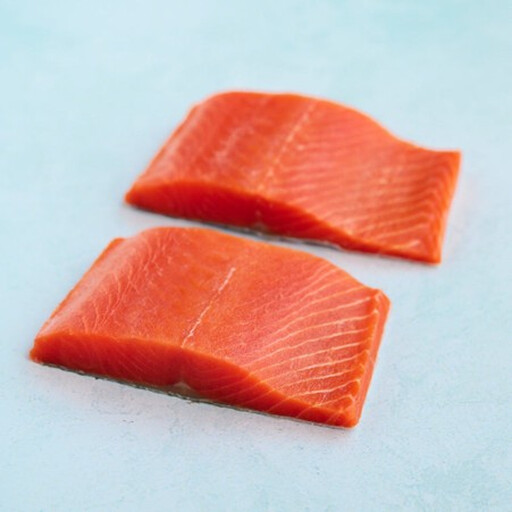 Image unavailable
A frozen fillet-steak option if you want a cooked salmon breakfast and can plan for thawing and cooking. The pack is 220g; check its preparation instructions and bone information before use rather than treating it as a ready-to-eat substitute for a tin.
Yes, if you want flaked salmon for toast, eggs or a sandwich rather than an intact cooked fillet. A chilled or frozen fillet remains the route to consider when that cooked presentation matters more than quick assembly.
Do not assume so. Joybuy's listing for John West skinless-and-boneless pink salmon says small bones may still be present, so read the warning on the particular pack.
Follow that tin's instructions for transferring, refrigerating and using the contents. For example, M&S specifies use within 24 hours for its Wild Alaskan Red Salmon, whereas Joybuy's Morrisons Pink Salmon listing specifies two days.
Salmon is fish, regardless of whether it comes in a tin or as a fillet. Read the ingredients and allergen information on the exact pack each time; a skinless-and-boneless label describes the format, not allergen suitability.