What matters when buying?
Compare carbohydrate and ingredients for the exact product first. Salt, storage and eating format can then change which salmon works for the meal you have in mind.
| Concern |
What to check |
Who this matters to |
| Carbohydrate and ingredients |
Read carbohydrate per 100g and the ingredients on the exact pack; count sauces and other meal components separately. |
If I am counting carbohydrate across a keto-friendly meal, I need the salmon’s labelled value before adding anything else. About 36% of consumers put carbohydrate certainty first. |
| Salt and fresh-fillet handling |
Compare salt per 100g on the packs you are considering; for fresh fish, check its use-by date and chilled-storage and cooking instructions. |
A cooked fillet appeals when I can plan the refrigeration and preparation, particularly if its salt label matters to my choice. Lower labelled salt or a fresh-filleted meal is the primary concern for about 29% of consumers. |
| Cupboard convenience |
Check how an unopened tin should be stored and how soon its contents must be used after opening. |
When I need to assemble a meal without cooking fish, a tin I can keep unopened in the cupboard is more practical than a fillet needing chilled storage. About 21% of consumers primarily want that convenience. |
| Bones and eating format |
Read bone warnings even on skinless-and-boneless products, and decide whether you want tinned fish or a cooked fillet. |
I may prefer a particular texture or want to take extra care over small bones, regardless of the carbohydrate figure. For about 14% of consumers, eating format and bone warnings come first. |
Salmon options on Joybuy
These options include tinned pink salmon for cupboard meals, a sashimi-style salmon product and fillet steaks for a cooked meal. Check each pack against the storage, carbohydrate and bone details that matter to you; the sashimi product is not a substitute for a cooked fresh fillet.
 No image available
Morrisons Pink Salmon 213g, four-pack
A multipack to consider if you plan several tinned-salmon meals. Check the carbohydrate and salt figures, storage instructions and bone warning on the current pack.
View on Joybuy
 No image available
Morrisons Pink Salmon 213g
A single tin to consider for a meal assembled without cooking fresh fish. Read its current nutrition panel and instructions for storage after opening, and check the bone warning before serving.
View on Joybuy
 No image available
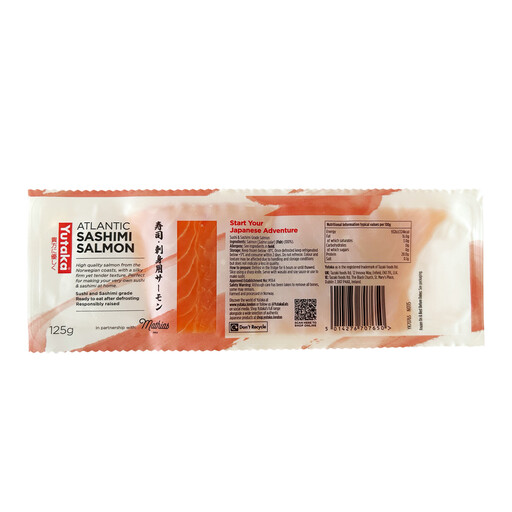
Yutaka Atlantic Sashimi Salmon 125g
Consider this only if you want its sashimi-style format rather than tinned salmon or a cooked fillet. Follow the pack’s frozen-storage and thawing instructions, and take account of its warning that some bones may remain.
View on Joybuy
 No image available
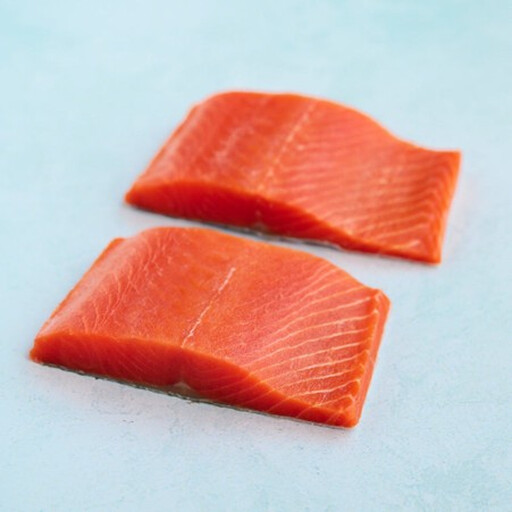
The Fish Society Wild Sockeye Salmon Fillet Steaks 220g
Fillet steaks for a planned cooked salmon meal rather than a cupboard meal. Allow for frozen storage, thawing and cooking, and check the current nutrition panel and bone warning if those details affect your choice.
View on Joybuy
Common questions
Can plain tinned salmon fit a keto-friendly meal?
It can if the exact pack and the rest of the meal fit your carbohydrate plan. The cited plain tins from Princes, John West and M&S list 0g to 0.2g carbohydrate per 100g, but sauces and other ingredients need their own label checks.
Is fresh salmon lower in carbohydrate than tinned salmon?
Not in the cited examples. The Waitrose Scottish fillet lists less than 0.5g carbohydrate per 100g, while the cited plain tins list 0g to 0.2g per 100g. For salt, that Waitrose fillet lists 0.08g per 100g, compared with 0.88g to 0.91g for the cited Princes, John West and M&S tins; compare the packs you intend to buy.
How should I store salmon left in an opened tin?
Follow the instructions on that tin rather than applying one time limit to every brand. The cited M&S packs say to transfer unused contents to a non-metallic container, refrigerate them and eat them within 24 hours. An ASDA Groceries listing for the cited John West tin gives a different period of two days after transfer to a covered, non-metallic container and refrigeration.
Does skinless and boneless mean no small bones remain?
No. M&S warns that some small bones may remain in its skinless-and-boneless Wild Alaskan Red Salmon. Read the warning on the exact product and take care when serving it.
Should I seek advice before making a major change to a low-carbohydrate diet if I have diabetes?
Diabetes UK advises speaking to your diabetes healthcare team before making significant dietary changes, particularly if you use insulin or medicines that increase the risk of hypoglycaemia. Choosing a salmon product does not replace advice about your individual diet or medicines.


