Parents assembling lunch without cooking
A ready-to-eat tinned product can go into an assembled lunch without cooking raw fish. Check its bone warning, fish-allergen declaration and instructions for storing any leftovers.


Choose a ready-to-eat tinned salmon product when lunch needs little preparation, checking the exact pack for bones, allergens, salt and storage after opening. Choose fresh fillets when you can refrigerate and cook raw fish for a fillet-style meal; check the pack for cooking instructions and possible bones before serving children.
A ready-to-eat tinned product can go into an assembled lunch without cooking raw fish. Check its bone warning, fish-allergen declaration and instructions for storing any leftovers.
If bones, salt or a skinless-and-boneless format affect your choice, compare the exact products rather than relying on the words “tinned salmon”. Tesco Groceries warns that some bones may remain in its Skinless & Boneless Wild Red Salmon.
Fresh fillets suit a fillet-style meal when chilled storage and cooking time are practical. Marks & Spencer labels its Organic Salmon Fillets as raw, requiring cooking, and warns that they may contain bones.
Decide whether lunch needs to be assembled without cooking or can be cooked from a chilled fillet. Then check the label of the particular product you intend to serve.
| Concern | What to check | Who this matters to |
|---|---|---|
| Preparation time | Check whether the product is ready to eat and whether the pack size suits the lunches planned. | When lunch must come together without cooking raw fish, I want salmon that can be used straight away; about 42% of consumers put minimal preparation first. |
| Label suitability | Read the fish-allergen and bone warnings, salt value and instructions for opened contents on the exact pack. | If I am serving children, I need to know about possible bones and what the label says about salt and allergens; these checks come first for about 33% of consumers. |
| A cooked fillet meal | Check the fillets’ chilled-storage temperature, use-by date, cooking directions and bone warning. | I can make time to cook and would rather serve a fillet-style lunch than assemble a tinned-salmon dish; a cooked meal is the primary need for about 25% of consumers. |
Asda Groceries describes soft edible bones in its Wild Alaskan Pink Salmon, while Tesco Groceries warns that some bones may remain even in its Skinless & Boneless Wild Red Salmon.
Read the warning on the can you buy and check the salmon before serving it to children.
Salt values are product-specific. Sainsbury’s lists 0.13g per half-can for its Wild Pacific Red Salmon No Added Salt; Tesco Groceries lists 0.90g per 100g for its Skinless & Boneless Wild Red Salmon. Those serving sizes are different.
Compare values on the same basis, such as per 100g where both labels provide it, and consider the amount you intend to serve.
Marks & Spencer says its Organic Salmon Fillets are raw, must be cooked and should be kept at 0°C to +5°C.
Choose that sort of fillet only when you can keep it chilled and follow its cooking instructions. For lunch without cooking, check that the tinned product you select is ready to eat.
Instructions differ by product. Tesco Groceries lists use within two days after opening for John West Red Salmon 213g, while Asda Groceries gives a three-day period for its Wild Alaskan Pink Salmon 418g.
Choose a can size you can use within its stated period, and follow the pack’s instructions for transferring, covering and refrigerating leftovers.
Its Red Salmon 213g is a tinned option for an assembled lunch.
Princes lists Wild Pacific Red Salmon in 105g and 213g pack sizes.
Tesco Skinless & Boneless Wild Red Salmon 170g offers a clearly labelled format for shoppers who want to check preparation needs.
Sainsbury’s Wild Pacific Red Salmon No Added Salt 212g is an option for comparing labelled salt values.
Asda Wild Alaskan Pink Salmon 418g is a larger ready-to-eat can for lunches planned across several portions.
M&S Organic Salmon Fillets represent the fresh, cooked-lunch route rather than a ready-to-eat tin.
These salmon formats may suit an assembled school-holiday lunch. Check the exact pack before relying on any product for a meal without cooking or serving it to children; fresh fillets involve different chilled-storage and cooking steps.
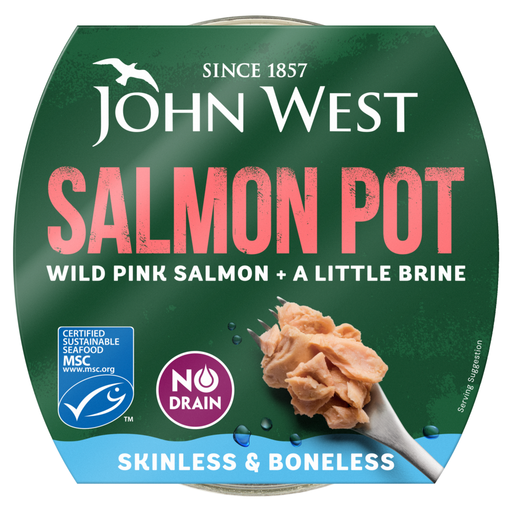 No image available
The 80g pot offers a smaller salmon format for a planned lunch. Check the pack’s bone warning and storage instructions before serving children.
 No image available
Four 213g cans may suit a plan for several salmon lunches. Before using a can for an unheated meal, check its ready-to-eat instructions and bone warning.
 No image available
This single 213g can suits a plan that does not call for the four-can pack. Check the exact pack for ready-to-eat directions and possible bones before an unheated lunch or serving children.
Yes. The NHS identifies salmon as oily fish and notes that tinned salmon can provide calcium and phosphorus when edible bones are included. Follow NHS age-specific advice when planning children’s portions and how often to serve oily fish.
Not when the product label says they are raw and must be cooked. Marks & Spencer gives both instructions for its Organic Salmon Fillets and warns that they may contain bones; follow the directions on the pack you buy.
Follow the exact can’s instructions for transferring, covering and refrigerating unused salmon. The Tesco Groceries listing for John West Red Salmon 213g says to use it within two days after opening; Asda Groceries gives three days for its Wild Alaskan Pink Salmon 418g.
No. Tesco Groceries warns that some bones may remain in its Skinless & Boneless Wild Red Salmon. Read the warning on your pack and check the salmon before serving children.
Do not assume a salmon product is suitable for someone with a fish allergy. The Food Standards Agency identifies fish as an allergen; check the ingredients and allergen declaration on the exact pack, and seek individual clinical advice where needed.