Who each format suits

Meal-prep cooks planning a salmon dinner

If you want a cooked fillet alongside vegetables and a planned portion of carbohydrate, frozen salmon is an option when you have freezer space and can follow its cooking directions. Check the nutrition basis on the particular pack before comparing it with tinned fish.

Shoppers assembling quick meals

Tinned salmon can go straight into a sandwich, salad or jacket potato without cooking. It suits a routine where keeping unopened fish in a cupboard is more useful than setting aside time to prepare a frozen fillet.

Shoppers comparing labels and portions

If you track the amount you serve, compare the exact product’s kcal, protein and salt figures. Plain fish, salmon packed in oil and flavoured products should not be treated as having the same nutrition profile.

What to check when buying

Concern What to check Who this matters to
Calories and portions Compare kcal per 100g and per intended serving, allowing for different cooked or drained bases. Check for oil or sauce. When planning a salmon meal, I want the portion and any added oil to fit with the vegetables and other food on my plate. About 33% of consumers put calorie-and-portion planning first.
Speed and storage Check whether the product is ready to use or can be cooked from frozen, and whether you have the storage it needs. If lunch needs assembling quickly, I want salmon I can use without setting aside cooking time. About 25% of consumers prioritise immediate use and storage.
Pack and serving size Compare net or drained weight with the stated portions per pack and the amount you intend to serve. When making meals for one person or a household, I want a pack that divides into useful portions without unwanted leftovers. Roughly 25% of consumers make portion flexibility their primary concern.
Preparation and guidance Read the frozen pack’s cooking and storage directions. If pregnant, check NHS guidance on oily fish. If I am cooking raw frozen fillets or need to account for pregnancy guidance, I want clear directions before choosing a pack. Around 17% of consumers chiefly prioritise preparation and relevant guidance.

Buying and preparation pitfalls

  • Assuming every salmon product has the same calorie profile

    Species, packing medium and preparation vary between products. Sainsbury’s lists 135kcal per 100g for its named frozen fillets when oven cooked, while John West lists 151kcal per 100g for its Wild Pacific Red Salmon. Those figures describe different products on different preparation bases, not a rule about frozen and tinned salmon.

    Compare the exact packs using the same per-100g or per-serving basis where possible, and include anything added during cooking or serving.

  • Overlooking what goes into the rest of the meal

    A plain fillet’s label does not account for oil, butter, sauces or sides added at home. NHS weight-loss guidance notes that oils and spreads are high in calories and advises using small amounts.

    Measure additions when planning the meal rather than judging it by the salmon label alone.

  • Using another pack’s frozen-fish instructions

    Raw frozen salmon needs to be prepared according to its own directions. ASDA’s Skin-On Boneless Wild Salmon Fillets label says not to eat the fish raw, to cook it fully and to check that it is piping hot.

    Follow the cooking and storage instructions on the pack you buy; do not transfer a different product’s timings to it.

  • Counting pregnancy guidance for only one format

    The NHS advises no more than two portions of oily fish a week during pregnancy, including salmon. The advice concerns salmon across tinned, frozen and fresh formats.

    If pregnant, check the NHS guidance when planning salmon meals rather than treating a change of format as a separate allowance.

Salmon brands and retailers for reference

John West

Its tinned range includes Wild Pacific Red Salmon and salmon fillets in olive oil.

  • John West lists 151kcal and 20.4g protein per 100g for its Wild Pacific Red Salmon.
  • Check the individual variant: those figures should not be applied to its olive-oil product or the whole range.

Princes

Its canned salmon range includes red and pink salmon in different pack formats.

  • Princes describes its red salmon as wild-caught; Tesco lists Princes tinned salmon products.
  • Check the particular species, pack size and nutrition label rather than applying a range description to every tin.

Tesco

Tesco lists own-label tinned salmon alongside branded tins, as well as salmon fillet products.

  • Its range gives shoppers plain tinned and fillet formats to compare.
  • Check the exact listing or pack for species, flavouring, portion size and nutrition; a category description does not establish those details for every product.

Sainsbury’s

Its named frozen salmon fillets are skinless, boneless wild Pacific portions.

  • Sainsbury’s lists 135kcal, 25.6g protein and 0.08g salt per 100g for this product when oven cooked; its instructions allow cooking from frozen.
  • Those cooked-product figures and directions do not describe every Sainsbury’s salmon pack.

Asda

Its salmon products include frozen wild fillets and chilled farmed fillets.

  • ASDA lists 140kcal per 100g when pan fried for its named frozen wild fillets and 225kcal per 100g for its named chilled farmed fillets.
  • These are different products with different stated preparation bases; the figures do not establish a general frozen-versus-chilled difference.

M&S

M&S lists frozen Scottish salmon portions among its frozen fish products.

  • Portioned frozen salmon is an option to examine when planning cooked meals.
  • Use the exact pack for nutrition, portion and preparation details rather than relying on a range description.

Joybuy salmon selections

These selections cover tinned pink salmon for meals assembled without cooking and frozen sockeye salmon steaks for a planned cooked meal. Compare the nutrition and serving information on the pack you choose rather than treating the two formats as interchangeable.

Morrisons Pink Salmon 213g, pack of four

Morrisons Pink Salmon 213g, 4 packs

Four 213g tins suit cupboard-based planning when you want salmon for meals assembled without cooking. For portion comparisons, check the pack’s serving size and whether its nutrition figures refer to drained or as-sold weight.

View on Joybuy

Morrisons Pink Salmon 213g tin

Morrisons Pink Salmon 213g

This single tin suits a quick salmon sandwich, salad or other meal that does not call for cooking the fish. Check the portion you intend to use and the pack’s drained or as-sold nutrition basis when comparing it with another tin.

View on Joybuy
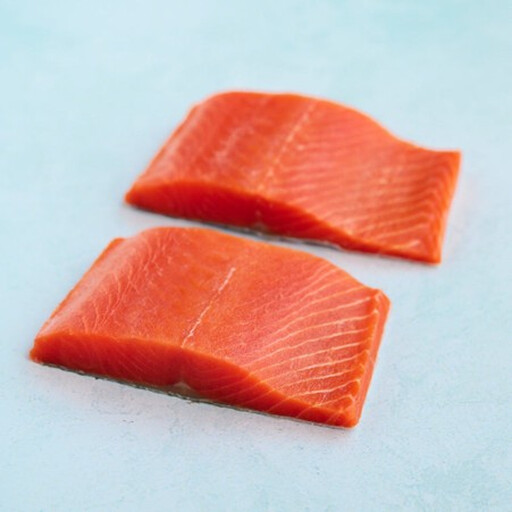
The Fish Society Wild Sockeye Salmon Fillet Steaks 220g

The Fish Society Wild Sockeye Salmon Fillet Steaks 220g

These frozen salmon steaks suit a planned cooked meal when you have freezer space and preparation time. Check the pack’s nutrition per serving and its thawing and cooking directions before deciding how much to prepare.

View on Joybuy

Common questions

Is frozen salmon automatically lower in calories than tinned salmon?

No. Compare the exact products and their stated preparation bases. Sainsbury’s lists 135kcal per 100g for its named frozen fillets when oven cooked, while John West lists 151kcal per 100g for its Wild Pacific Red Salmon; those two figures do not establish a rule for either format. Check the portion and any oil, sauce or glaze too.

Can frozen salmon be cooked without thawing?

Some frozen fillets can: Sainsbury’s provides cook-from-frozen instructions for its named salmon fillets. Follow the directions on your own pack, as cooking methods and timings differ between products.

How can I compare salmon for a weight-management meal?

Start with the serving you intend to eat, then compare kcal per 100g and per serving on the exact packs. Account for cooking oil and other additions separately. NHS weight-loss guidance discusses including protein at meals, serving vegetables and using small amounts of oils and spreads.

Do tinned and frozen salmon both count as oily fish?

Yes. The NHS identifies salmon as oily fish and advises including an oily-fish portion among two weekly fish portions. The format does not change whether the salmon counts as oily fish.

Does pregnancy guidance differ for tinned and frozen salmon?

The NHS pregnancy guidance applies to oily fish including salmon, regardless of whether it is tinned or frozen: it advises no more than two oily-fish portions a week during pregnancy. This is pregnancy-specific guidance, not a general weight-management target.