Quick breakfast assemblers
If salmon is an occasional addition to a cooked breakfast, tinned fish lets you serve flakes without thawing and cooking a fillet.


Choose tinned salmon if you want to add salmon to a full Scottish breakfast without preparing a raw fillet; it works as a flaked addition to eggs or potato scones. Choose frozen salmon fillets if an intact, hot cooked portion matters more, and you have freezer space and time to follow the pack’s cooking instructions. For either format, check the particular product’s ingredients, bone information and storage directions.
If salmon is an occasional addition to a cooked breakfast, tinned fish lets you serve flakes without thawing and cooking a fillet.
If the salmon is meant to be an intact cooked portion on the plate, look at frozen fillets and allow time to prepare them according to the pack.
If bones, ingredients, salt, allergens or portion format affect your choice, compare the labels of the specific tinned and frozen products you are considering.
Decide whether salmon needs to be a quick addition or a cooked centrepiece, then check storage, portion format and the product label.
| Concern | What to check | Who this matters to |
|---|---|---|
| Preparation time | Choose tinned salmon for flakes without cooking a raw fillet; follow the can’s directions once opened. | If breakfast already has several cooked items, I may want salmon I can portion without another cooking step. About 31% of consumers put minimal preparation first. |
| Intact cooked portion | For a whole fillet, distinguish plain frozen salmon from battered or otherwise prepared products and follow its cooking instructions. | When salmon is the main cooked item on my plate, flakes will not give me the portion I had in mind. An intact, hot fillet comes first for about 31% of consumers. |
| Storage and portions | Check cupboard or freezer space, the number of portions and any drained-weight declaration on a tin. | If I am buying salmon for more than one meal, I need a pack I can store and portion as planned. Storage and portion format are the primary concern for about 19% of consumers. |
| Ingredients and texture | Read the exact pack for bones, ingredients, salt, allergens and the basis of any nutrition figures. | Where bones or added ingredients would change what I can serve, the label matters more to me than the format alone. About 19% of consumers primarily need these product-specific checks. |
Sainsbury’s frozen-salmon range includes plain fillets alongside battered and prepared products. Those are different choices for a breakfast plate.
If you intend to season and cook a fillet yourself, check the product description, ingredients and cooking instructions.
M&S describes one tinned red salmon product as containing bones; its separately labelled skinless-and-boneless version cautions that small bones may remain.
If bone-free texture matters, look for a skinless-and-boneless label and check the fish as you serve it.
Princes presents nutrition for its Wild Pacific Red Salmon per 100g drained, whereas a frozen fillet pack’s stated weight describes the pack. Check which quantity each label uses.
Compare the portion you intend to serve as well as the stated weight: flakes mixed into a dish and a whole fillet serve different purposes.
Princes lists red salmon and salt for its Wild Pacific Red Salmon. Other salmon products, particularly coated or flavoured ones, can have different ingredients; fish is an allergen.
Read the current pack’s ingredients, allergen statement and storage instructions before choosing it for your household.
A tinned-salmon option with several formats shown in Tesco’s range.
A tinned-salmon option with wild Pacific red and pink products.
An own-label range in which shoppers can compare tinned salmon with frozen fillets.
A frozen-salmon range for shoppers planning a cooked portion.
An own-label range listing both tinned red salmon and frozen Scottish salmon portions.
These options cover a frozen salmon fillet-steak format for a planned cooked breakfast and tinned pink salmon for a quicker addition.
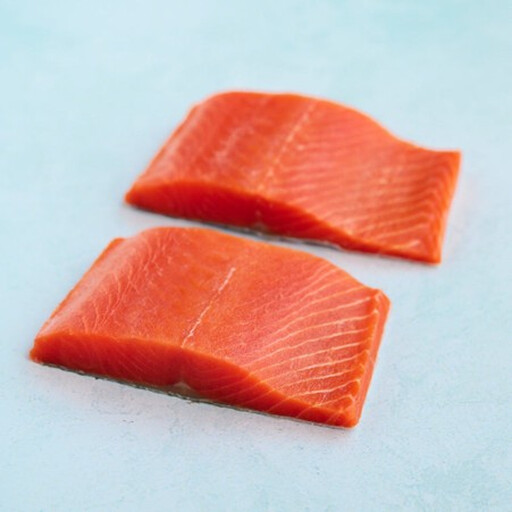 Image unavailable
Consider these frozen fillet steaks if you want a cooked salmon portion rather than flakes with breakfast. The pack is labelled 220g; plan for freezer storage, thawing and cooking according to its instructions.
 Image unavailable
This four-pack of tinned pink salmon suits a household planning cupboard-stored salmon for more than one occasion. Each can is labelled 213g. If bones affect how you will serve it, check the current pack; follow its directions for refrigerating unused contents after opening.
 Image unavailable
Consider this single tin when you want pink salmon available to add to breakfast without storing a frozen fillet. It is labelled 213g. Check the pack if bone status matters, and follow its after-opening storage directions if you do not use it all.
Yes. NHS Scotland educational guidance identifies salmon as oily fish and says fresh, canned and frozen versions count. Check the individual product label for its ingredients and nutrition information rather than assuming every preparation is the same.
Yes, tinned salmon can be used as a flaked addition without preparing a raw fillet. Once opened, follow that can’s storage directions for anything left over.
Do not assume so. M&S cautions that small bones may remain in its skinless-and-boneless red salmon, while another M&S red salmon product states that it contains bones. Check the label and inspect the fish while serving if texture matters.
Look for a plainly described fillet if you want to season and cook an intact portion yourself. Frozen ranges also contain battered and prepared salmon products, so check the ingredients and cooking instructions before buying.
Salmon is fish, which the Food Standards Agency identifies as an allergen; do not serve it to someone with a fish allergy. Read the current ingredient and allergen statement, especially when considering a coated or prepared product.