Quick meal builders
Choose a tin when salmon is going into a salad, sandwich, fishcake or pasta dish and you do not want to plan a thaw-and-cook step. John West identifies these uses for its skinless-and-boneless wild Pacific red salmon.


Choose tinned salmon for a ready-to-use ingredient in salads, sandwiches or fishcakes; choose frozen fillets for a cooked, portioned main if you have freezer space and can follow the pack’s preparation instructions. For a premium shop, compare the salmon type, skin and bone details, portion format and storage state rather than assuming either format is superior.
Choose a tin when salmon is going into a salad, sandwich, fishcake or pasta dish and you do not want to plan a thaw-and-cook step. John West identifies these uses for its skinless-and-boneless wild Pacific red salmon.
Choose a fillet when the meal calls for a distinct cooked portion. Check the individual pack for its skin, bone and cooking details: Tesco’s Finest sockeye example is described as skin-on and boneless, but it was listed as chilled and defrosted, not frozen.
Frozen fillets need room in the freezer and a preparation routine that fits the meal. If either is difficult to accommodate, a cupboard-stored tin may fit the plan more readily.
Start with how you intend to serve the salmon. Then compare the details of the particular tin or fillet pack, rather than treating “premium” as a preparation or storage instruction.
| Concern | What to check | Who this matters to |
|---|---|---|
| Ready-to-use convenience | Decide whether the recipe needs prepared salmon or a fillet to cook; check whether a frozen listing is for plain fillets or a prepared dish. | If I am making sandwiches or fishcakes without a thaw-and-cook step, a tin fits the task. About 31% of consumers put ready-to-use convenience first. |
| Fillet presentation and salmon type | Check the named salmon type, portion format, skin and bone description, and whether the pack is sold frozen, chilled or defrosted. | For a plated main, I want to know what the cooked portion will be before choosing a pack. A fillet-led presentation is the primary need for about 31% of consumers. |
| Skin, bones and texture | Look for an explicit skinless-and-boneless description if that matters to you; check a tin’s drained weight where stated. | If I dislike skin or bones in a cold dish, the wording on the particular tin matters. About 23% of consumers make those texture details their main concern. |
| Storage and preparation | Allow for freezer space and follow the pack’s cooking or defrosting directions, including any instructions for use after defrosting. | When freezer space or preparation time is tight, I need a format I can store and use as directed. Those requirements come first for about 15% of consumers. |
Storage state is product-specific. Tesco’s Finest sockeye fillets were listed as chilled and defrosted, while its frozen salmon range also contained plain fillets and prepared dishes.
Read the storage and preparation panels before planning the meal.
A tin’s stated drained weight and a fillet pack’s stated weight describe different product formats. Using the wrong figure can leave you planning portions on an unsuitable basis.
Check which weight a tinned listing states, then choose a quantity that fits the recipe or the portions you intend to serve.
Some tins explicitly carry that description, while the NHS notes that tinned salmon can contain edible bones. The difference may matter in a sandwich or salad.
If you want to avoid skin and bones, choose a product that explicitly says it is skinless and boneless.
GOV.UK says food should be fully defrosted before cooking unless the manufacturer’s instructions say to cook it from frozen.
Follow the method on the pack; if it does not instruct you to cook from frozen, defrost the salmon in the refrigerator before cooking.
A named tinned-salmon option if you want to select a particular red salmon format.
A tinned option for comparing labelled red salmon with other canned formats.
A retailer with separate tinned-salmon and frozen-salmon ranges.
An own-label tinned-salmon option for comparing red and pink products.
A retailer to consider when looking for frozen fish portions as part of a fillet-led meal.
A retailer with a tinned-salmon category and a named John West red salmon listing.
These selections cover a frozen sockeye fillet-steak option for a cooked main and pink tinned salmon in single-can and four-pack formats for recipes using prepared salmon.
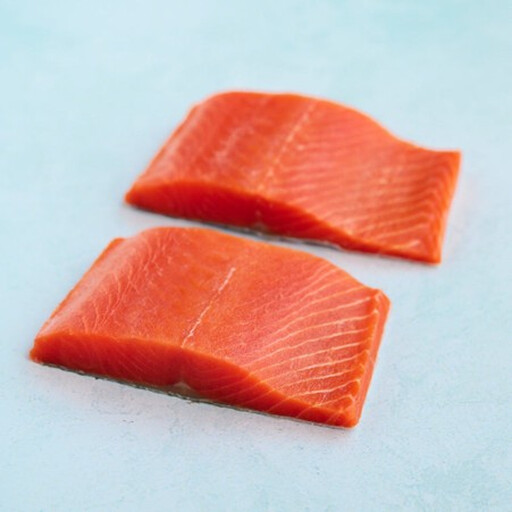 Image unavailable
Consider these fillet steaks for a cooked, portioned salmon meal when freezer storage fits your plans.
The named pack is 220g and identifies wild sockeye salmon. Check its instructions before deciding when to defrost and cook it.
 Image unavailable
This tinned format suits plans to keep salmon for several salads, sandwiches or cooked recipes.
The pack contains four 213g tins of pink salmon. Check the individual tins if skin, bones or drained weight affect your choice.
 Image unavailable
Choose the single-tin format when a recipe calls for prepared salmon without committing to a multipack.
The product name identifies a 213g tin of pink salmon. Check its skin and bone description and drained weight if those details matter to the dish.
Only if its manufacturer’s instructions say to cook it from frozen. GOV.UK says food should otherwise be fully defrosted before cooking; use the pack’s method and timings, and defrost in the refrigerator when required.
No. Check the storage and preparation information on the particular pack. Tesco’s Finest wild-caught sockeye fillets were listed as chilled and defrosted, while Tesco also listed salmon in a separate frozen range.
Salmon is an oily fish under NHS guidance, which advises at least two portions of fish a week, including one of oily fish. For this purchase decision, check the tin’s stated contents and portion information rather than assuming all tins have the same weight or include bones.