What matters when buying?
Start with what makes the salmon manageable to eat, then compare the pack and nutrition label for the meals you intend to make.
Standard tinned salmon
Choose it when: A store-cupboard fish option fits the meal routine and the person can manage any bones in the exact product.
Check: The Tesco listing for John West Red Salmon 213G warns that it contains bones; compare salt on the tin too.
Skinless-and-boneless tinned salmon
Choose it when: Reducing bone handling or preparation effort is more important than choosing a standard tin.
Bear in mind: Marks & Spencer warns that small bones may remain in its named product; the format does not establish suitability for a prescribed swallowing texture.
Fresh salmon fillets
Choose them when: A freshly cooked salmon meal is preferred and preparing the fillet is manageable.
Check: Inspect the exact fillet for bones and assess the prepared texture against the person’s eating needs; freshness alone does not settle that question.
| Concern |
What to check |
Who this matters to |
| Protein and oily fish |
Compare protein per 100g on the exact label and the amount you plan to serve. Check any omega-3 declaration separately. |
If putting together a manageable meal is the priority, salmon can provide a protein-containing oily-fish component. About 42% of consumers put this meal-planning need first. |
| Bones and texture |
Read the bone declaration. For a prescribed texture, follow the individual clinician’s advice for the food as served. |
When bones, chewing or swallowing determine whether fish is manageable, the pack format matters more than convenience alone. Roughly 33% of consumers make bone and texture management their primary concern. |
| Salt and routine use |
Compare salt per 100g and per intended serving on the current pack, alongside other foods in the day. |
For regular tinned-salmon meals, I would want the salt figure to fit alongside everything else I eat. About 25% of consumers prioritise that salt-conscious routine. |
Joybuy salmon products
These packaged pink-salmon options comprise a 213g tin and an 80g Fridgepot. Compare their pack labels for bones, salt and serving information if choosing salmon for an older adult; neither is a fresh fillet.
 Image unavailable
Morrisons Pink Salmon 213g
Consider this 213g tin when packaged salmon fits planned meals. Check the exact pack for its bone declaration, nutrition figures and opened-tin storage directions before deciding whether it suits the person eating it.
View on Joybuy
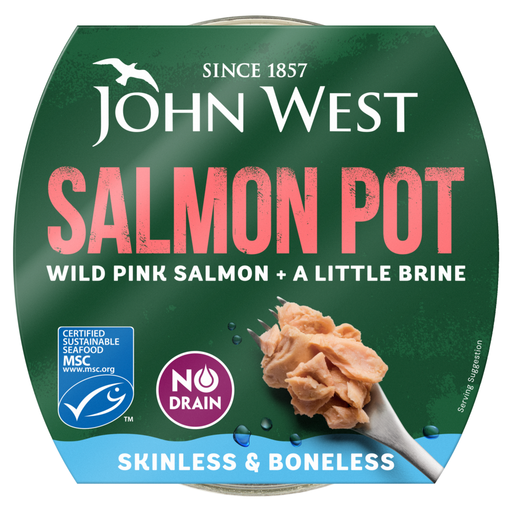 Image unavailable
John West Pink Salmon Fridgepot 80g
The 80g Fridgepot is a smaller packaged-salmon format to consider for a meal or snack. Check its own label for bones, salt, storage instructions and whether the salmon’s texture is manageable.
View on Joybuy
Common questions
Does tinned salmon count as oily fish?
Yes. NHS guidance identifies salmon as oily fish and recommends at least two portions of fish a week as part of a balanced diet, including one portion of oily fish. Tinned salmon is an option to consider alongside fresh salmon.
Should an older person always choose skinless-and-boneless salmon?
No. It can reduce bone-handling effort, but Marks & Spencer warns that small bones may remain in its named product. If the person has dysphagia or a prescribed texture, follow individual clinical advice about the food as prepared.
How do I compare salt in tinned salmon?
Read the exact pack’s salt figure per 100g and consider the amount to be eaten, as well as salt elsewhere in the meal and day. NHS guidance says adults should have no more than 6g of salt daily.
How should I store salmon after opening the pack?
Follow that product’s directions for transferring and refrigerating leftovers and for when to use them. Do not apply another brand’s opened-pack instructions to the salmon you have bought.
What should I check if someone has a fish allergy?
Read the current pack’s ingredients and allergen information before serving it. GOV.UK guidance says UK food businesses must provide information when a regulated allergen is an ingredient; fish is relevant to salmon products.


