Cooks making a quick salmon filling
If your bread recipe calls for cooked salmon to flake into a filling or bake, a ready-to-use tin avoids the thawing and cooking steps needed for frozen fillets. Check the tin’s draining instructions before mixing.


Choose tinned salmon when the recipe calls for cooked flakes to drain and mix into a filling, topping or bake; John West describes its 213g pink salmon tin as ready-to-use cooked salmon. Choose frozen fillets when the recipe needs fillet portions or salmon you will cook before adding it to the bread dish, allowing time to thaw and cook them. For a finely mixed filling, check the individual tin for a skinless-and-boneless label rather than assuming all tinned salmon has that texture.
If your bread recipe calls for cooked salmon to flake into a filling or bake, a ready-to-use tin avoids the thawing and cooking steps needed for frozen fillets. Check the tin’s draining instructions before mixing.
For a spread or finely mixed filling where skin or bones would be unwelcome, start with a tin explicitly labelled skinless and boneless. Sainsbury’s describes its 170g Wild Pacific Pink Salmon in those terms.
If the dish calls for recognisable pieces of salmon, frozen fillets are a separate option. Plan for frozen storage, thawing and cooking rather than treating them as a direct substitute for drained tinned salmon.
Start with the recipe’s required salmon form, then check texture, quantity and the exact product label.
| Concern | What to check | Who this matters to |
|---|---|---|
| Salmon form | Does the recipe call for drained, cooked flakes or fillet portions? Check the tin’s use instructions or allow for thawing and cooking fillets. | If I need cooked salmon to mix straight into a filling, fillet preparation changes my plan. About 31% of consumers would put the right salmon form first. |
| Skin and bones | Look for an explicit skinless-and-boneless label; otherwise check the fish carefully before mixing. | A finely mixed spread needs a texture that works for the people eating it. For about 23% of consumers, avoiding skin and bones would be the primary concern. |
| Quantity | Match the recipe quantity to the pack weight and check any stated drained weight or serving information. | When I am making one batch, I want enough salmon without opening more tins than I need. About 31% of consumers would prioritise portion size. |
| Ingredients and label details | Read the current ingredients and fish-allergen statement; check any origin or traceability claim on the individual product. | If the ingredients or stated origin affect my choice, the exact pack matters more than a general brand description. Roughly 15% of consumers would make those label details their main concern. |
John West describes its 213g tinned salmon as ready-to-use cooked fish, while frozen fillets need preparation before they can be added to a recipe.
Check whether the recipe expects cooked flakes or fillet portions before choosing the format.
Choosing fillets for a recipe that expects ready-cooked flakes adds thawing and cooking steps.
The reviewed John West, Asda and M&S tins carry bones warnings. A smooth filling may therefore need more checking and flaking than the product name suggests.
Choose a product labelled skinless and boneless when that texture matters, and read the current pack before use.
The referenced ranges include 105g, 170g, 213g and 418g options. A recipe quantity cannot be judged from the word “tin” alone.
Compare the pack weight with the amount the recipe requires and plan for any leftovers.
Opened-can instructions differ: the reviewed M&S product says to eat it within 24 hours, the John West product within two days, and the Asda product says best within three days.
Refrigerate leftovers and follow the storage and use instructions on the exact product you open.
Its 213g Wild Pacific Pink Salmon tin is relevant when a recipe needs cooked salmon to drain and flake.
A reference for shoppers considering plain Wild Pacific Red Salmon in 105g or 213g tins.
Its tinned-salmon range offers pink and red salmon formats, including skinless-and-boneless options.
Its 170g Wild Pacific Pink Salmon is described as skinless and boneless, a relevant format for finely mixed fillings.
Its 105g Wild Alaskan Pink Salmon tin is an option to compare against a smaller recipe quantity.
Its 105g Wild Alaskan Red Salmon tin is relevant to shoppers considering red sockeye salmon.
These selections cover frozen fillet steaks for recipes needing portions and tinned pink salmon for recipes using salmon in a filling or bake. Match the format to the recipe before choosing a pack.
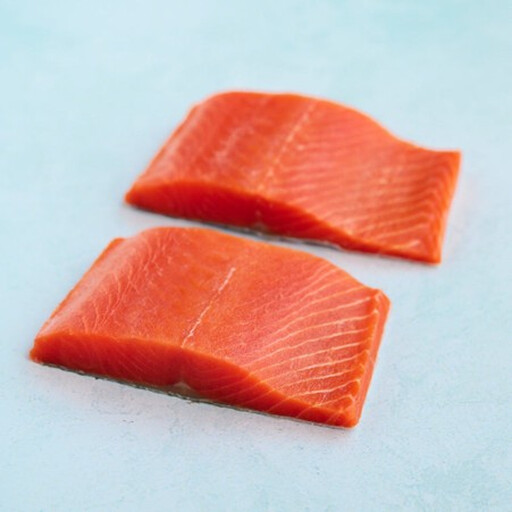 No image available
Consider these fillet steaks when the bread dish calls for salmon portions rather than drained tinned fish. The pack is labelled 220g; allow for thawing and cooking, and check the package instructions before preparing it.
 No image available
This four-pack of 213g tins is worth considering when a recipe or several batches call for tinned pink salmon. Check the current label for skin and bones information and any draining instructions before mixing the salmon into a filling.
 No image available
Consider the single 213g tin when one pack fits the amount of tinned salmon your recipe requires. Before making a finely mixed filling, check its current skin and bones information and follow any preparation instructions on the label.
Yes, if the recipe needs cooked, flaked salmon rather than intact fillet portions. John West describes its 213g tinned product as ready-to-use cooked salmon and instructs users to drain it; frozen fillets need preparation before use.
No. The reviewed John West, Asda and M&S products carry bones warnings. If a smooth mixture matters, look for an explicitly skinless-and-boneless product and read the current pack.
Follow the instructions on the specific tin and refrigerate leftovers as directed. The reviewed M&S product says to eat it within 24 hours, the John West product within two days, and the Asda product says best within three days.
Salmon is fish, which the Food Standards Agency identifies as an allergen. Check the ingredient and allergen information on the exact product before choosing it for anyone with a fish allergy.