Last-minute Italian-night cooks
If the salmon needs to go straight into pasta, a salad, fishcakes or a starter, tinned fish avoids the preparation needed for a raw fillet.


Choose tinned salmon when the fish will be folded through pasta or used in a salad, fishcake or starter without cooking a raw fillet. Choose frozen fillets when the meal calls for a distinct cooked salmon portion; allow for the pack’s storage and preparation instructions. Whichever format fits the dish, check the exact product for bones, added ingredients and the weight basis shown on its label.
If the salmon needs to go straight into pasta, a salad, fishcakes or a starter, tinned fish avoids the preparation needed for a raw fillet.
If you want a cooked salmon portion on each plate, look for fillets and plan around the chosen pack’s cooking directions.
If bones, skin, seasoning, salt or leftovers affect your choice, compare the exact packs rather than relying on the brand or the salmon’s colour.
| Concern | What to check | Who this matters to |
|---|---|---|
| Preparation time | Decide whether the recipe takes prepared salmon or needs a cooked fillet. For frozen fish, follow that pack’s cooking or thawing directions. | If dinner needs to come together without preparing a raw fillet, I would choose a dish that takes tinned salmon; about 33% of consumers put quick preparation first. |
| Fillet presentation | Check that the product is sold as portions and whether its skin and bone descriptions suit the dish. | For a meal built around a salmon portion on the plate, intact fillets matter more to me than a ready-to-use tin. About 27% of consumers make fillet presentation their primary concern. |
| Portions and pack weight | Look at the pack size, stated servings and whether a tin’s quoted weight refers to drained contents. | When cooking for several people, I need to know how many portions the pack provides; for about 20% of consumers, portion planning comes first. |
| Ingredients and bones | Read the ingredient list, salt information, bone statement and instructions for storing opened contents. | If the recipe calls for plain salmon, or small bones and added seasoning matter at the table, I need to inspect the particular label. Ingredient and bone checks are the main concern for about 20% of consumers. |
Tinned salmon works in dishes that take prepared or flaked fish, while frozen fillets need cooking and retain the portion format wanted for a plated main.
Choose the fish’s role in the meal before choosing the pack.
M&S warns that small bones may remain in its skinless-and-boneless tinned red salmon; Sainsbury’s states that its no-added-salt tinned red salmon contains small edible bones.
Check the bone statement on the exact product, particularly if someone eating it needs to avoid bones.
A tin’s drained contents and a frozen pack’s total weight describe different things; neither alone tells you how many portions your recipe will make.
Read any stated serving count alongside the weight basis, then compare it with the number of diners.
John West’s Mediterranean-style salmon contains olive oil, olives, peppers and herbs, so it will not serve the same recipe role as plain salmon. Instructions for storing unused tinned fish also vary by product.
Check the ingredients before choosing a flavoured tin and follow its own directions for leftovers.
John West offers a Mediterranean-style tinned Atlantic salmon fillet for recipes where olives, peppers and herbs fit the dish.
Princes is relevant if you want to add your own seasoning to tinned red salmon.
Tesco Groceries lists both tinned salmon and frozen salmon fillets, allowing you to choose by the role the fish will play in the meal.
Sainsbury’s has relevant tinned red salmon and frozen fillet options for the two meal formats.
M&S lists tinned red salmon and salmon portions in its frozen fish range.
For an Italian-night meal, these selections offer a tinned salmon option for dishes that take prepared fish and frozen salmon steaks for a planned cooked portion.
 No image available
Consider this tin when the recipe takes prepared salmon stirred through pasta or added to a salad. The pack size is 213g; check its bone and skin statements if those affect your choice. For unused contents, the product information instructs you to transfer them to a non-metallic container, refrigerate and use within two days.
 No image available
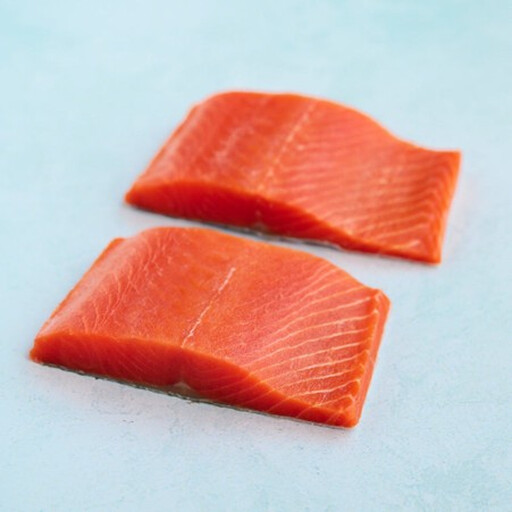
Consider these frozen steaks when cooked salmon portions are the main element of the meal. The pack is 220g. Its product information calls for thawing before cooking and specifies freezer storage at −18°C or below; check the packaging for cooking directions and bone information.
Use tinned salmon when the recipe calls for prepared fish folded through pasta or its sauce. Choose frozen fillets if you want to cook a distinct salmon portion and serve the pasta alongside it; follow that fillet pack’s preparation directions.
Some packs give instructions for cooking from frozen: Tesco Groceries does so for Tesco Wild Salmon Fillets 500G, and Sainsbury’s does so for its Salmon Fillets 360g. Follow the directions on your particular pack rather than applying another product’s method or timing.
Follow the instructions on the tin you open. M&S instructs buyers of its Wild Alaskan Red Salmon to transfer unused contents to a non-metallic container, refrigerate and consume them within 24 hours; Sainsbury’s gives a two-day refrigerated limit for the John West Mediterranean-style product it lists.
No. M&S warns that small bones may remain in its skinless-and-boneless tinned red salmon, while Sainsbury’s states that its no-added-salt tinned red salmon contains small edible bones. Read the statement on the exact pack.