Fast tea-time cooks
For parents and carers mixing salmon into pasta, fishcakes or sandwiches, plain tinned salmon avoids the raw-fish cooking stage needed for frozen fillets.


Choose plain tinned salmon when you need a ready-to-eat ingredient to flake into a quick meal. Choose frozen fillets when you want to serve a cooked piece of fish and have time to follow its cooking instructions. With either format, check the current pack for fish allergens and bone information; compare added ingredients and salt where those matter to your choice.
For parents and carers mixing salmon into pasta, fishcakes or sandwiches, plain tinned salmon avoids the raw-fish cooking stage needed for frozen fillets.
Pack wording matters when you want less preparation before serving. A Sainsbury’s listing says John West Wild Pacific Pink Salmon contains bones, while Princes lists a separate skinless-and-boneless red salmon product. Inspect the fish whichever format you choose.
Fish is an allergen, and prepared salmon can contain others. Tesco Groceries lists fish, milk and wheat in one salmon meal with cheese sauce, so check the ingredients and allergen statement on the pack you intend to serve.
Decide whether preparation time, bone and allergen checks, or control over added ingredients will determine the meal; then compare packs within the format that fits.
| Concern | What to check | Who this matters to |
|---|---|---|
| Preparation time and meal format | Check whether the salmon is ready to eat or requires cooking, and read the cooking directions for frozen fillets. | If tea time leaves little room to cook fish, I need salmon I can flake into a dish straight away; about 42% of consumers put quick preparation first. |
| Bones and allergens | Read the bone or deboned wording and the current ingredients and allergen statement. | When serving a child, I want to know what needs checking or removing before the fish reaches the plate. About 33% of consumers primarily need to manage bones or allergens. |
| Ingredients and salt | Compare ingredients and salt on the same basis, such as per 100g, noting whether a tinned value is for drained fish. | If I want to add my own flavours, a plain product lets me choose the other ingredients separately; for about 25% of consumers, ingredient and nutrition-label control is the main concern. |
Plain tinned salmon is ready to flake into a meal, whereas a raw frozen fillet needs cooking. That difference can change what is practical at tea time.
Choose the format around the dish you plan to serve, and follow the frozen product’s cooking instructions if you choose a fillet.
Sainsbury’s states that its listed John West Wild Pacific Pink Salmon contains bones. Other products use different wording, including deboned or skinless and boneless.
Check the wording on the particular pack and inspect the fish before serving it to a child.
A sauce or coating can change the allergen information: Tesco Groceries lists fish, milk and wheat in one salmon meal with cheese sauce.
Read the full ingredients and allergen statement rather than treating a prepared salmon dish as equivalent to plain salmon.
Ingredients and product details can change, which matters particularly when you are checking allergens or cooking directions.
Use the current pack to confirm ingredients, bone wording, storage and cooking instructions before preparing the meal.
A tinned-salmon option for quick mixed dishes.
Tinned red salmon is listed in both standard and skinless-and-boneless formats.
Frozen wild salmon fillets provide a route for a cooked-fillet meal.
Its tinned-fish listings include standard pink salmon and skinless-and-boneless salmon formats.
A fresh, freeze-at-home fillet route rather than a ready-to-eat tinned format.
These selections cover plain tinned salmon for mixed dishes, a ready-to-eat salmon pot for a similar quick meal, and frozen salmon fillet steaks for a cooked meal.
 Image unavailable
A tinned option to flake into a quick pasta dish, sandwich filling or fishcake mixture. The listed ingredients are salmon and salt; the 213g can is described as containing two portions. Check the current pack for bone and allergen information, and inspect the fish before serving.
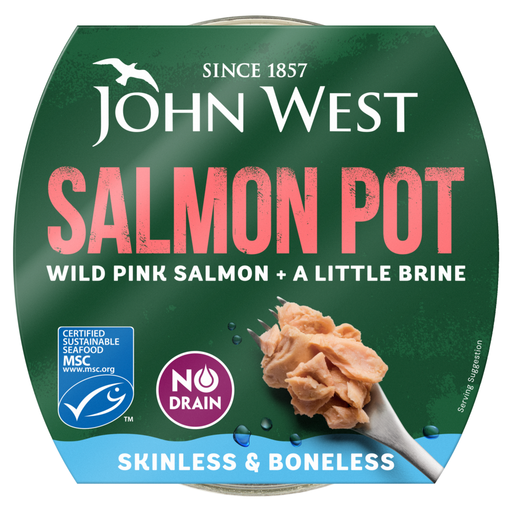 Image unavailable
This ready-to-eat pot suits a quick sandwich filling or topping when a tin is not essential. The listing gives an 80g pot with pink salmon, water and salt. It is a fridge pot, not a tin; check its storage, bone and allergen information on the current pack.
 Image unavailable
This plain tinned salmon suits quick mixed dishes. The listed ingredients are salmon and salt. The title says “4 Packs”, but the product details describe a 213g can, so confirm the total quantity before planning portions. Check the current pack for bones and allergens, and inspect the fish before serving.
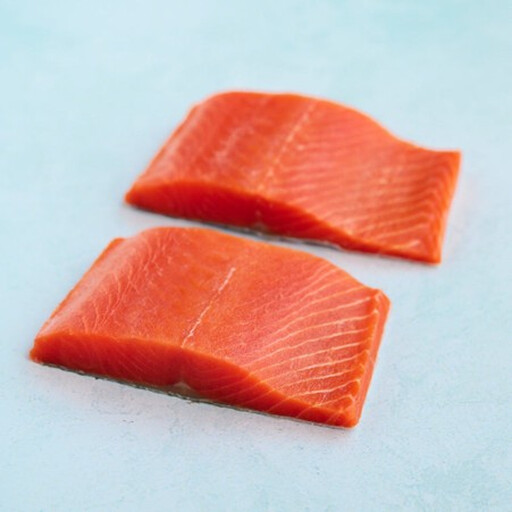 Image unavailable
Choose these frozen fillet steaks when you have time to prepare a cooked piece of salmon. The listing describes two skin-on steaks weighing 220g in total, with thawing and cooking methods. Follow the pack instructions and inspect for bones before serving; its allergen information also says it may contain crustaceans or molluscs.
Plain tinned salmon is the more direct choice when you want to flake ready-to-eat fish into a dish. A frozen fillet gives you a cooked-fillet meal instead, provided you allow time to follow its pack’s cooking directions.
No. Sainsbury’s states that its listed John West Wild Pacific Pink Salmon contains bones. If bone preparation matters, look for an explicitly skinless-and-boneless product and still inspect the fish before serving.
Fish can trigger an allergic reaction. For babies starting solid foods from around 6 months, the NHS advises introducing foods that can trigger allergic reactions one at a time so a reaction can be identified. Check the particular product’s ingredients and allergen statement before serving it.
Yes. Tesco Groceries lists fish, milk and wheat in one salmon meal with cheese sauce. Check the full label for the product you choose rather than relying on the word “salmon” in its name.