Quick-lunch planners
Ready-to-eat salmon works for salads or sandwiches when cooking is impractical. Check the pack for salt, bones and storage instructions; a fridge pot need not have the same storage requirements as a tin.


Choose ready-to-eat tinned salmon when you need fish for a quick cold meal; choose frozen fillets when you want portions for a cooked meal and can follow the pack’s preparation instructions. Neither format is automatically higher in protein: compare protein and salt per 100g, the amount you plan to eat, and any bone or defrosting instructions on the exact pack.
Ready-to-eat salmon works for salads or sandwiches when cooking is impractical. Check the pack for salt, bones and storage instructions; a fridge pot need not have the same storage requirements as a tin.
Fillets suit people planning hot meals and portion-led cooking. Tesco’s product instructions illustrate why the exact pack matters: its frozen wild salmon fillets have cooking instructions from frozen, while its chilled fillets that can be frozen at home require defrosting first.
People choosing by nutrition rather than format can compare the per-100g panel, then consider their serving size. The Tesco and Sainsbury’s examples in this article have different protein and salt figures, so the word “salmon” alone does not settle the choice.
For consumers weighing ready-to-eat salmon against fillets for cooked meals, start with the meal you need to make, then check the nutrition and preparation details on that product’s pack.
| Concern | What to check | Who this matters to |
|---|---|---|
| Ready-to-eat convenience | Check that no cooking is required, then check the usable serving amount and whether bones may remain. | If lunch needs to go straight into a salad or sandwich, preparation time and texture matter. About 40% of consumers put ready-to-eat convenience first. |
| Cooked-meal flexibility | Check whether the fillets can be cooked from frozen or need fridge defrosting, and read the cooking directions. | For planned hot meals, I need to know whether a fillet can go from freezer to cooking or must be thawed ahead of time. Cooked-meal flexibility is the main concern for about 30% of consumers. |
| Nutrition and label details | Compare protein and salt per 100g and per serving; read ingredients and allergen information. | When protein, salt or ingredients determine my choice, the exact product label matters more than its format. Around 30% of consumers make these label details their primary concern. |
Tesco lists 20.0g protein and 0.20g salt per 100g for its frozen wild salmon fillets. Sainsbury’s lists 20.8g protein and 0.81g salt per 100g for its tinned pink salmon; its honey-roast ready-to-eat salmon has different figures again.
Compare like-for-like per-100g figures, then check the amount you expect to eat.
Tesco’s frozen wild salmon fillets have from-frozen instructions, but its chilled fillets that are suitable for home freezing explicitly require defrosting before cooking.
If cooking from frozen is important, choose a pack that gives instructions for it.
A pack that needs fridge defrosting also needs advance meal planning.
John West Red Salmon warns that bones may remain, while Sainsbury’s cited pink salmon is labelled skinless and boneless. The NHS notes that bones in tinned salmon can be eaten, but texture may still affect your choice.
If bones would not suit your meal, look for an explicitly boneless pack.
NHS pregnancy guidance limits oily fish, including salmon, to no more than two portions a week.
If you are pregnant, use the pregnancy-specific NHS guidance when planning how often to eat salmon.
Its Red Salmon tin and Pink Salmon Fridgepot offer distinct ready-to-eat formats.
Its Wild Pacific Pink Salmon is a canned option for sandwiches and recipes.
The cited range includes a skinless-and-boneless tin and a flavoured ready-to-eat salmon snack.
Its cited fillets show why frozen and chilled products need separate preparation checks.
The cited Scottish salmon fillets are a chilled option for cooked meals.
These products cover ready-to-eat salmon, tinned salmon and a frozen fillet-steak option. Compare the pack directions for your intended meal rather than assuming the formats prepare or store alike.
 No image available
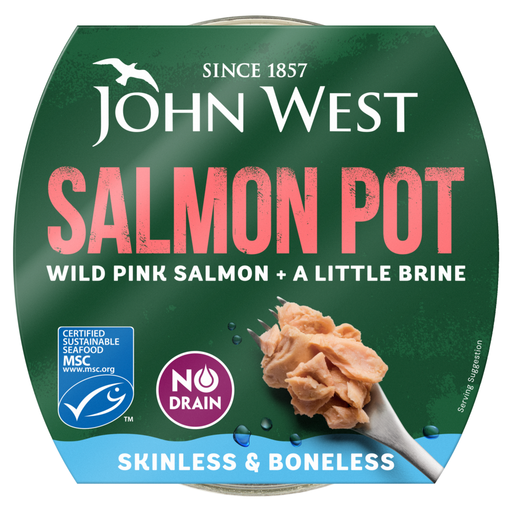
This ready-to-eat fridge pot suits a quick salad or sandwich when no cooking is planned. The product listing gives 23g protein per 100g and says to refrigerate it after opening; check the pack’s unopened storage directions for your plans.
 No image available
The four-pack offers separate 213g cans for planned meals. If you need salmon that can be eaten without cooking, confirm the preparation directions on the pack before choosing it.
 No image available
This single can suits someone choosing one 213g pack rather than a multipack. Check its preparation directions if eating it without cooking is essential, and use the current pack label for nutrition and allergen details.
 No image available
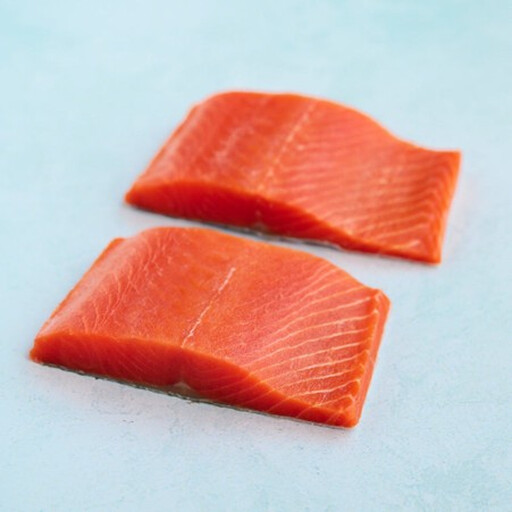
These frozen fillet steaks suit a planned cooked meal. The listing calls for thawing before cooking, so do not treat them as a cook-from-frozen option; check the pack’s nutrition and allergen information against your requirements.
No. Tesco lists 20.0g protein per 100g for its frozen wild salmon fillets, while Sainsbury’s lists 20.8g per 100g for its tinned pink salmon. Compare the exact products on a like-for-like basis, noting whether a figure applies as sold or after cooking.
No. Tesco’s frozen wild salmon fillets have oven and microwave instructions from frozen, whereas its cited chilled fillets that can be frozen at home require at least 10 hours of fridge defrosting. Follow the directions on your pack; Food Standards Scotland advises defrosting food in the fridge and using it within one to two days after defrosting.
Yes. The NHS lists salmon as oily fish. Its general advice is to eat at least two portions of fish a week, including one portion of oily fish; pregnancy-specific advice differs.
NHS pregnancy guidance says to eat no more than two portions of oily fish, including salmon, a week. Use that pregnancy-specific limit rather than increasing how often you eat salmon solely to obtain protein.
Read the current product’s ingredients and allergen information, particularly for flavoured salmon or mixed products. GOV.UK guidance identifies fish as an allergen that food businesses must declare when it is an ingredient in England, Northern Ireland and Wales.