Solo lunch or light-dinner shoppers
If you normally eat an entire 400g can, calculate nutrition for the whole can. Some labels give figures for only half of it.


For a single-person meal under 500 kcal, count the amount of soup you will eat and any bread or toppings, rather than relying on a half-can figure. Tesco Groceries lists several 400g soups that fall below that threshold when eaten on their own, but their salt, protein and ingredients differ; use the current can label to decide which suits your meal.
If you normally eat an entire 400g can, calculate nutrition for the whole can. Some labels give figures for only half of it.
If you add bread, butter, cheese or croutons, count those separately when checking whether your meal stays under 500 kcal.
Compare salt for the amount you will eat and read the ingredients and allergen information on the exact can. The NHS advises adults to have no more than 6g of salt a day.
Start with the portion you will actually eat, then compare salt, protein and ingredients without treating the calorie figure as the whole decision.
| Priority | What to check | Your needs |
|---|---|---|
| Whole-meal calories | Check whether nutrition is stated per 100g, half can or whole can. Calculate it for the amount eaten, then count additions separately. | I usually eat the whole can, so a half-can calorie figure does not tell me the total for my meal. |
| Salt | Compare salt for the full portion, not just per stated serving. The NHS adult daily maximum is 6g; Tesco Groceries lists 1.2g salt per half can for both Heinz Vegetable and Minestrone, or 2.4g per whole can. | Even when my soup fits the calorie target, I want to know how much salt the whole can contributes. |
| Meal format and protein | Compare the stated protein on the same portion basis and look at the recipe. Tesco Groceries lists 6.2g protein per half can for Heinz Big Soup Chicken & Vegetable and 2.1g for Heinz Minestrone; neither figure alone establishes how filling a meal will be. | For a soup-only lunch, I may prefer chicken and vegetables; for a lighter soup, minestrone may suit what I have planned. |
| Ingredients | Read the current ingredients and allergen information for the precise flavour. Check whether meat or other ingredients fit your dietary requirements. | A vegetable flavour name is not enough for me to judge whether a soup meets an allergy or dietary requirement. |
Tesco Groceries states nutrition per half can for Heinz Vegetable and Minestrone. Eating the full 400g can means consuming two stated servings.
Use the label’s serving basis to calculate calories, protein and salt for your portion. Count bread and toppings separately.
Tesco Groceries lists 1.2g salt per half can for Heinz Vegetable and Minestrone, making 2.4g for either whole can. The NHS adult daily maximum is 6g.
Compare salt for the quantity you intend to eat, even after a soup passes your calorie check.
Recipes differ between soups, and a vegetable-based name does not establish which ingredients are present.
Check the current ingredients and allergen information on the exact can before eating it.
Tesco Groceries lists 6.2g protein per half can for Heinz Big Soup Chicken & Vegetable, compared with 2.1g for Heinz Minestrone. That difference is useful to compare, but protein alone does not determine how satisfying a meal will be.
Choose the recipe and portion that fit the meal you want, then check its full-can calories, salt and any additions.
These references concern specific listed soups and label information, not every product made or sold under each name.
Tesco Groceries lists 400g Vegetable, Minestrone and Big Soup Chicken & Vegetable variants with nutrition stated per half can.
Tesco Groceries labels Baxters Favourites Scotch Broth 400g as serving one, so its nutrition figures apply to the full can.
Tesco Groceries provides the pack size and nutrition listings used for the named Heinz and Baxters comparisons here.
These five 400g Heinz soups offer different flavours for a single-can meal. Check the current full-can nutrition and ingredients for the variant you choose, particularly if you will add anything to the soup.
 No image available
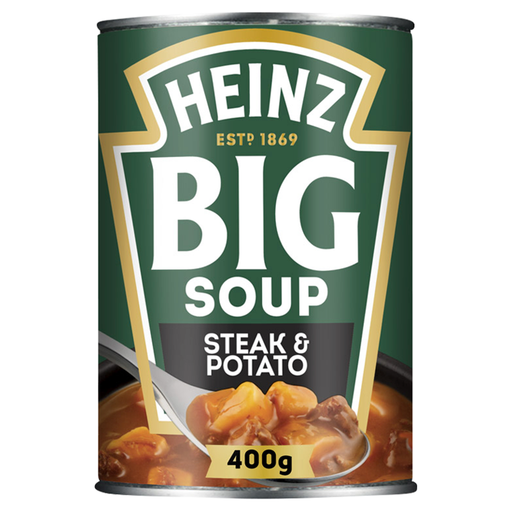
If steak and potato is the flavour you want for a soup-only meal, compare calories and salt for the entire 400g can rather than a smaller stated serving. Check the current ingredients and count any accompaniments separately.
 No image available
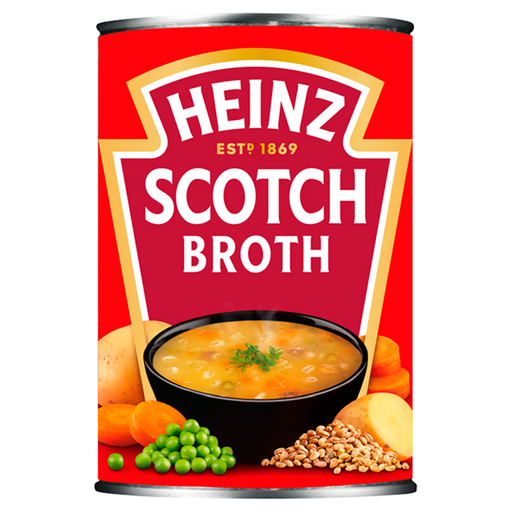
For a broth-style single-can meal, check the calories and salt for the full 400g, even if the label gives half-can values. Read the ingredients and allergen information if barley or wheat matters to your choice.
 No image available
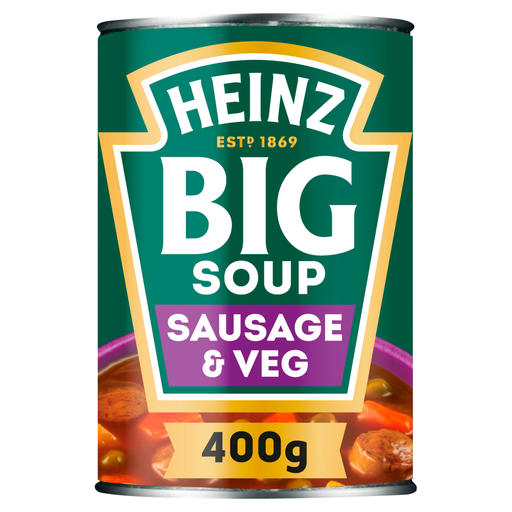
If you prefer sausage and vegetables, calculate the meal total from the label’s nutrition basis for the whole 400g can. Check salt and the allergen information as well as calories.
 No image available
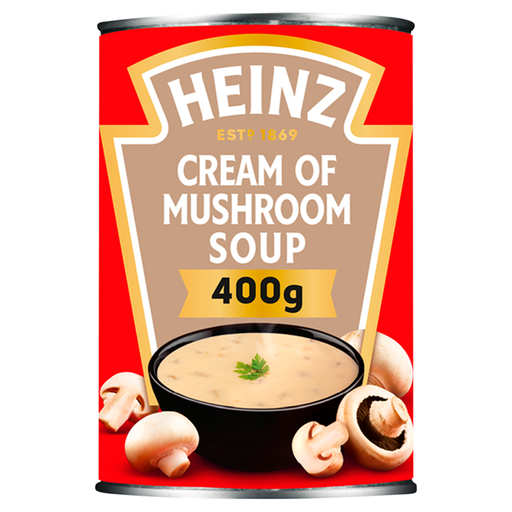
If mushroom soup suits your meal, note that the listed serving basis is smaller than the full 400g can. Calculate nutrition for the amount you will eat, and check the current milk and wheat allergen information.
 No image available
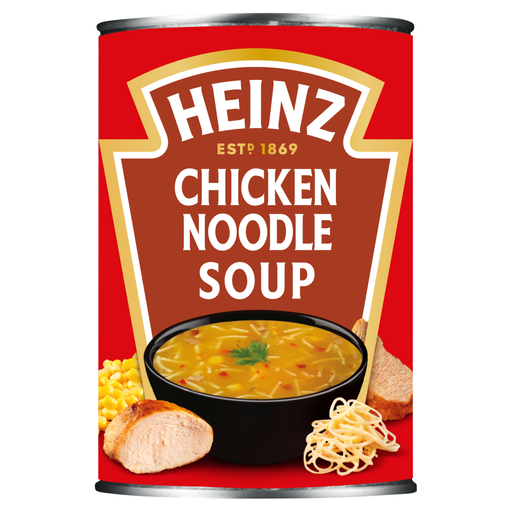
For chicken noodle soup as a one-person meal, use the full 400g can rather than the listed half-can serving when counting calories and salt. Check the current allergen label and include any bread or toppings in your meal total.
Yes, for the named Tesco Groceries examples when eaten on their own: Heinz Vegetable provides 188 kcal per can, Minestrone 126 kcal and Big Soup Chicken & Vegetable 200 kcal, calculated from their half-can labels. Baxters Favourites Scotch Broth states 152 kcal per can. Add any accompaniments separately and check the current label for the soup you buy.
Calories do not tell you how much salt the can contains. Tesco Groceries lists 1.91g salt per can for Baxters Favourites Scotch Broth and 1.2g per half can, or 2.4g per whole can, for Heinz Vegetable and Minestrone. The NHS advises adults to have no more than 6g of salt a day.
Read the ingredients and allergen information on the current can for the exact flavour. Do not assume that a vegetable-based name establishes which allergens are absent, or that two soups from the same brand use the same ingredients.
Yes. GOV.UK states that prepacked food requires a label displaying certain mandatory information. Use the label on the can you buy when checking its serving basis and ingredients.