Parents planning a quick lunch at home
A cupboard soup can be the starting point. If the complete lunch needs to stay below 500 kcal, count the amount served along with bread, toppings, drinks and other additions.


If you are planning a school-holiday lunch below 500 kcal, count the amount of soup served and every addition, not just the portion shown on the can. A lighter soup can leave more room for sides, but the choice also depends on salt, allergens and what else is served.
A cupboard soup can be the starting point. If the complete lunch needs to stay below 500 kcal, count the amount served along with bread, toppings, drinks and other additions.
Soup need not be the whole lunch. The NHS Eatwell Guide considers food-group balance over a day or week, so think about what fruit, vegetables, starchy foods or protein foods fit alongside the soup.
Compare salt for the amount that will be eaten and read the current can label for ingredients. The reviewed soups have different salt figures and allergen information.
Start with the portion you will serve, then add the rest of the lunch. Use the can’s current label for the final nutrition and ingredient check.
| Priority | What to check | Your needs |
|---|---|---|
| Whole-lunch calories | Check kcal per 100g or stated portion and the can size. Calculate the amount served, then include sides and drinks; the NHS notes that a labelled portion may differ from yours. | I need the complete lunch, not just a half-can serving, to stay below 500 kcal. |
| Salt | Compare salt per 100g across soups, then calculate it for the bowl or full can. Tesco Groceries lists 1.2g per half-can for each of the reviewed Heinz Vegetable and Carrot & Coriander soups. | Even if I choose a lower-calorie soup, I want to know how much salt is in the amount served. |
| Food alongside soup | Count additions after choosing the soup. Consider how the lunch fits with fruit, vegetables, starchy foods and protein foods across the day; the NHS Eatwell Guide does not require every meal to contain the full balance. | A bowl of soup may leave room for other foods, but I still need to portion those additions within the lunch plan. |
| Ingredients and allergens | Read the exact can’s ingredient and highlighted-allergen information before serving. For example, Campbell’s Soup UK lists wheat and milk in its Cream of Chicken soup, with possible egg presence, and milk and celery in its Cream of Tomato soup. | If a child has an allergy or dietary requirement, the current label matters more than the flavour name or an earlier online listing. |
A 400g can may give figures for a 200g half-can, while a condensed soup may use a smaller stated portion. Serving more changes both the calorie and salt totals.
Calculate the figures for the amount served before adding bread, toppings, drinks or dessert.
Tesco Groceries lists 1.2g salt per half-can for the reviewed Heinz Vegetable and Carrot & Coriander soups: that is 2.4g if the whole 400g can is eaten.
Compare salt per 100g between products, then check the amount in the portion you plan to serve.
Bread, spreads, cheese and croutons all contribute to the complete lunch. A soup’s calorie figure alone cannot establish the total.
Choose and portion the sides as part of the meal, then add their labelled calories to the soup.
Ingredient information is specific to the product and can change. This matters particularly when a child has an allergy or dietary requirement.
Read the current label on the exact can before buying and serving it.
These product examples show why portion size and salt deserve separate checks; they do not describe every soup in each range.
Tesco Groceries lists 400g Vegetable and Carrot & Coriander soups that can be compared by their labelled half-can portions.
Tesco Cream of Tomato is a 400g own-label example with nutrition stated for a 200g half-can.
Campbell’s Soup UK describes its condensed soups as options for a bowl of soup or as a cooking ingredient.
These 400g Heinz soups offer different flavours for a school-holiday lunch. Check the current can’s calories for the amount served and add any sides before judging the complete meal against 500 kcal.
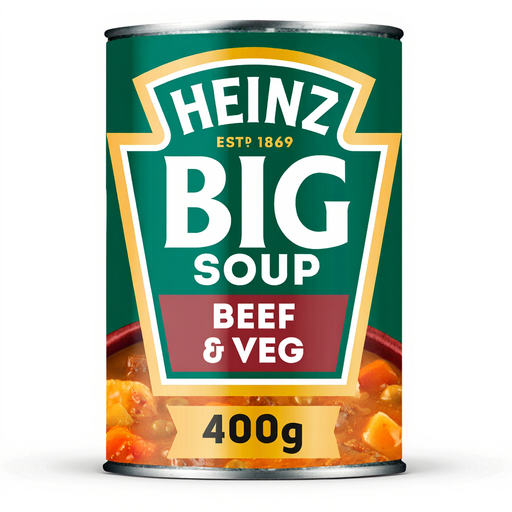 No image available
A beef and vegetable soup option for an at-home lunch. Use the 400g can size to work out the amount served, and check the current nutrition and allergen label before adding sides.
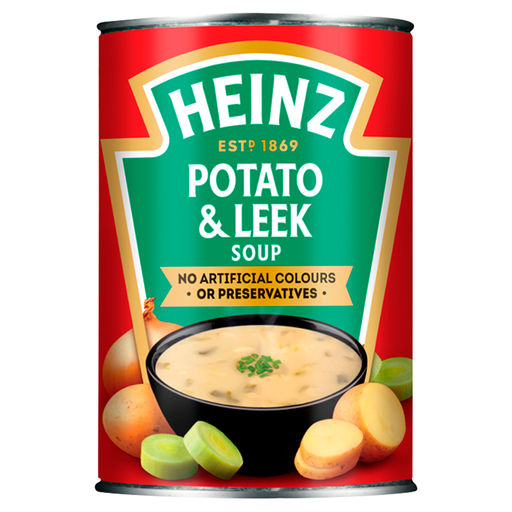 No image available
A potato and leek option if you plan to serve soup with other foods. Check calories for the portion taken from the 400g can, include the sides in the lunch total and read the current allergen label.
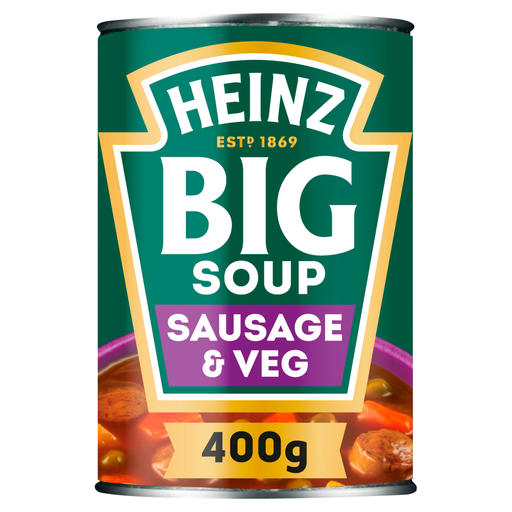 No image available
A sausage and vegetable soup option for a lunch built around a 400g can. Calculate calories for the amount served and any additions; check the can’s current ingredients and allergen information.
No. Add the calories in the amount of soup actually served and in any bread, spreads, toppings, drinks or dessert. The NHS notes that a manufacturer’s stated portion may differ from yours.
Not necessarily. The NHS Eatwell Guide looks at food-group balance over a day or week, rather than requiring every meal to contain everything. Consider whether fruit, vegetables, starchy foods or protein foods are needed alongside the soup, and count what you add.
Yes. Calorie and salt figures answer different questions. Compare salt per 100g, then calculate the amount in the portion served; Tesco Groceries lists 1.2g salt per half-can for each of the reviewed Heinz Vegetable and Carrot & Coriander soups.
Check the current label of the exact product. Campbell’s Soup UK lists wheat and milk in its Cream of Chicken soup, which may also contain egg, and milk and celery in its Cream of Tomato soup. Other products need their own ingredient check.
Follow that product’s label. Tesco Groceries instructs shoppers to transfer unused Cream of Tomato soup to a non-metallic container, cover and refrigerate it, and consume it within four days. Its Heinz Carrot & Coriander listing says to refrigerate unused soup in a suitable container and eat it within two days.