What matters when choosing a soup?
Screen the current pack for the relevant allergen before weighing up the recipe and its organic label. The awareness figures below come from a Food Standards Agency/Ipsos survey conducted in December 2023; they describe two different respondent groups, not all soup shoppers.
| Priority | What to check | Your needs |
|---|
| Declared ingredients |
Read the current pack’s full ingredient list and emphasised allergens. Check the exact flavour rather than assuming that soups from one range share a recipe. |
I need to know whether this particular tin contains an allergen I avoid, even if another flavour from the same brand does not. |
| Possible cross-contact |
Read any current “may contain” or equivalent statement as well as the ingredients. The Food Standards Agency says precautionary labelling communicates possible unintended allergen presence. |
A recipe without my allergen as an ingredient still needs a check for precautionary information before I choose it. |
| Organic and vegan wording |
Use organic wording for its production and certification meaning, not as an allergy claim. Do not use vegan wording instead of checking ingredients and possible cross-contact. |
I want an organic soup, but its label still has to fit my allergy. In the Food Standards Agency/Ipsos survey, 53% of respondents with hypersensitivities to animal-origin allergens and 50% of those regularly shopping for someone with one were aware before the survey that cross-contamination might make vegan products unsuitable. |
| Recipe fit |
Compare ingredients in the specific soup: Tesco lists milk in Heinz Organic Cream of Tomato, while other cited vegetable and bean recipes have different ingredient lists. Recheck the physical pack if using an online listing to shortlist products. |
If I avoid milk, a non-creamy recipe may be a useful place to start screening, but its name cannot settle whether it suits my allergy. |
Brand and retailer examples
These examples show why an organic claim, a recipe name and an allergen declaration answer different questions; they are not endorsements of entire ranges.
Mr Organic
Ocado and Waitrose list 400 g organic, plant-based soups including Creamy Red Pepper and Tomato & Lentil.
- The cited listings provide product-specific ingredient information for initial screening.
- Plant-based wording does not settle allergen or cross-contact suitability; Waitrose advises checking the current pack because recipes can change.
Heinz
Tesco lists Heinz Organic Cream of Tomato Soup 400g as an organic tinned-soup example.
- Its listing identifies the ingredients and declares milk.
- Cream and dried skimmed milk make this example unsuitable where milk must be avoided; check current availability separately.
Tesco
Tesco Cream of Chicken Soup provides an own-label recipe to compare with organic options.
- Its listed ingredients identify wheat flour, double cream and milk proteins.
- Tesco warns that products can be reformulated, so the online listing does not replace the current label.
Sainsbury’s
Sainsbury’s Vegetable Soup is another product-level example for checking a specific flavour.
- Its listing identifies durum wheat semolina and celery-containing flavouring; Sainsbury’s also provides allergen-specific own-brand lists.
- Sainsbury’s says those lists are updated monthly and advises checking the product packaging before purchase or consumption.
Soup options on Joybuy
These options include three soups named as organic and one pea soup whose organic status should be checked separately. For every tin, compare the current pack with the specific allergen you need to avoid.
 No image available
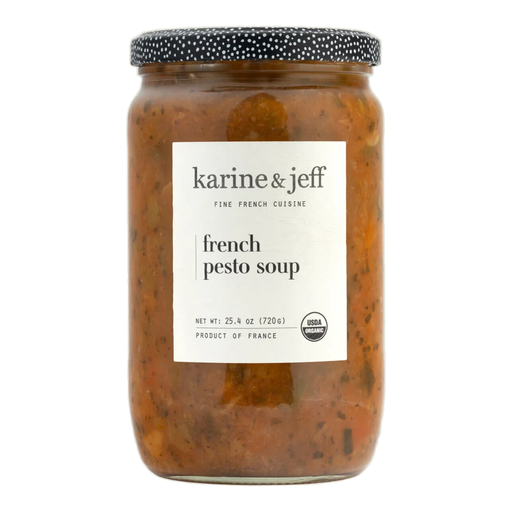
Karine & Jeff Organic French Pesto Soup 680g
Consider this organic soup if its vegetable-and-bean recipe interests you. The product information flags possible wheat, soya and celery traces; check the current pack against your allergen before choosing it.
View on Joybuy
 No image available
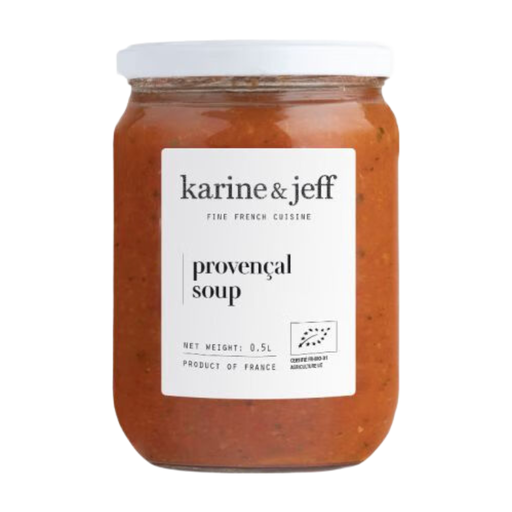
Karine & Jeff Organic Provençal Soup 500ml
This organic vegetable soup may be worth screening if you are comparing recipes without listed milk ingredients. Its product information flags possible traces of wheat, soya, sesame, celery, mustard, milk and nuts, so check the current pack rather than relying on the recipe name.
View on Joybuy
 No image available
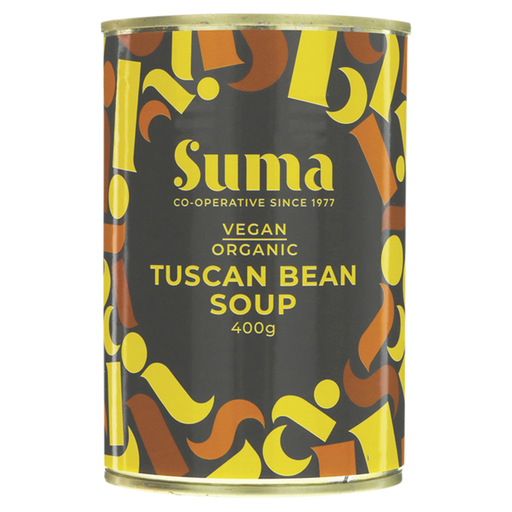
Suma Organic Tuscan Bean Soup 400g
This organic bean soup is an option to screen if celery is not an allergen you avoid. Its product information declares celery; check the current pack for the full ingredients and any precautionary statement.
View on Joybuy
 No image available
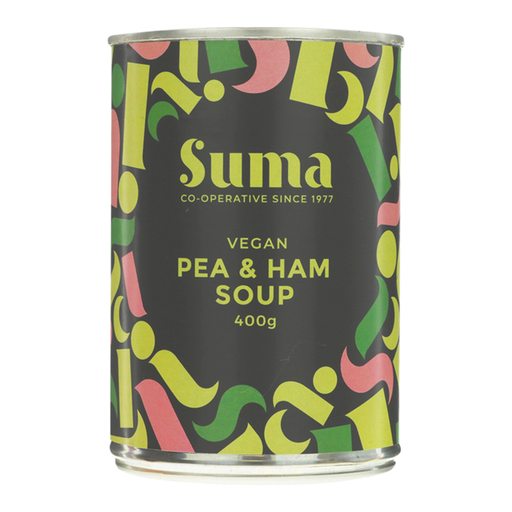
Suma Pea & Vegan Ham Soup 400g
Screen this pea soup separately from the organic-labelled options. Its product information declares milk, soy and wheat despite the vegan wording in its name; check the current pack and do not use the name to make an allergy decision.
View on Joybuy
Frequently asked questions
Does organic mean a tinned soup is suitable for a food allergy?
No. The Department for Environment, Food & Rural Affairs’ UK organic labelling rules concern organic production and certification, not suitability for a particular allergy. Check the current ingredients, emphasised allergens and any precautionary statement for the specific soup.
Can I use a vegan label to choose soup for a milk allergy?
No. The Food Standards Agency says vegan labelling should not replace allergen labelling: possible cross-contamination still matters. Read the ingredients and any precautionary statement on the current pack.
What does “may contain” mean on a soup label?
The Food Standards Agency describes it as precautionary labelling for an allergen that could be unintentionally present. It is separate from an ingredient declaration, so check both against the allergen you need to avoid.
Is an online supermarket ingredient list enough?
Use it to shortlist soups, then read the physical pack before buying or eating. Tesco and Waitrose warn that recipes and displayed product information can change.


