Households avoiding a known food allergen
Assess each can against the intended eater’s avoidance list. Read the full ingredients as well as highlighted allergens and any precautionary statement; a soup’s flavour does not settle whether it fits.


Choose a tinned soup only when the current can’s full ingredients, declared allergens and any precautionary statement fit the intended eater’s avoidance plan. Flavour, brand and vegetarian labelling cannot establish allergy suitability: comparable soups can declare different allergens, and recipes can change.
Assess each can against the intended eater’s avoidance list. Read the full ingredients as well as highlighted allergens and any precautionary statement; a soup’s flavour does not settle whether it fits.
Choose cans whose physical labels you can check when buying and again before serving. Leeds Teaching Hospitals NHS Trust advises both checks because manufacturers can change recipes.
An explicit declaration about gluten-containing cereals can help narrow the choice. Check the exact can for other ingredients the eater avoids, too; that declaration does not address every allergy.
Start with the intended eater’s avoidance plan, then assess the exact can rather than choosing by flavour or a broad dietary label.
| Priority | What to check | Your needs |
|---|---|---|
| Ingredients and allergens | Read the full current ingredient list and highlighted allergens. The Food Standards Agency identifies 14 regulated allergens that must be declared when used as ingredients; also check for any other ingredient the eater avoids. | I need to know whether this exact soup contains an ingredient on the eater’s avoidance list, not whether its name sounds suitable. |
| Exact recipe | Compare the named variety and its current label, even when two cans have the same flavour. ASDA Groceries lists milk in Heinz Cream of Tomato Soup 400g, but milk and mustard in Just Essentials Tomato Soup 400g. | Two tomato soups could require different decisions for the person I’m shopping for. I cannot use another can’s allergen information as a shortcut. |
| Precautionary wording | Look for statements such as “may contain” separately from the ingredients. Food Standards Agency research describes precautionary allergen labelling as information about possible unintended presence, not a measured risk level. | If the ingredients do not name an avoided allergen, I still need to consider any precautionary statement under the eater’s individual allergy-management plan. |
| Current pack | Use online listings to shortlist soups, then check the physical label at purchase and before serving. Asda, Tesco and M&S advise that product information can change. | When stocking up or buying a familiar soup again, I want the decision to reflect the can in hand rather than an older listing or a previous purchase. |
ASDA Groceries lists milk in Heinz Cream of Tomato Soup 400g, while its Just Essentials Tomato Soup 400g lists milk and mustard. “Tomato soup” is not enough information for someone avoiding either ingredient.
Compare the ingredients and allergy advice on the exact can with the intended eater’s avoidance list.
Sainsbury’s lists milk ingredients in its vegetarian Cream of Tomato Soup, and M&S lists milk ingredients and wheat flour in its vegetarian Cream of Mushroom Soup. Vegetarian status answers a different dietary question.
Check ingredients and allergen information for the substances the eater avoids.
Asda, Tesco and M&S warn that product information can change. A past check does not establish the ingredients of a later can.
Read the physical label when buying and again before serving, including after a packaging change or substitution.
A precautionary statement concerns possible unintended allergen presence, even when that allergen is not listed as an ingredient. The Food Standards Agency describes this as precautionary allergen labelling.
Consider the statement under the eater’s individual allergy-management plan. If the can does not fit that plan, choose another product.
These examples show why allergy checks belong to the named variety and current pack, not to a brand or retailer as a whole.
Assess each Heinz soup variety separately rather than treating the brand or a familiar flavour as an allergen guide.
Tesco’s online soup listings can help with pre-shop screening; the can remains the check for a purchase.
Use the ingredients of the individual Sainsbury’s soup rather than its vegetarian status to assess an allergy.
Asda’s product pages give variety-specific allergy advice that can help narrow a shortlist before checking the pack.
Check each M&S soup’s ingredients and allergen information, including when it is labelled vegetarian.
Campbell’s UK presents a range of soups for cupboard storage and cooking uses.
These are tinned soups to assess against an individual avoidance plan, not a list of soups suitable for every allergy. Check the current can’s ingredients and precautionary wording before buying and serving.
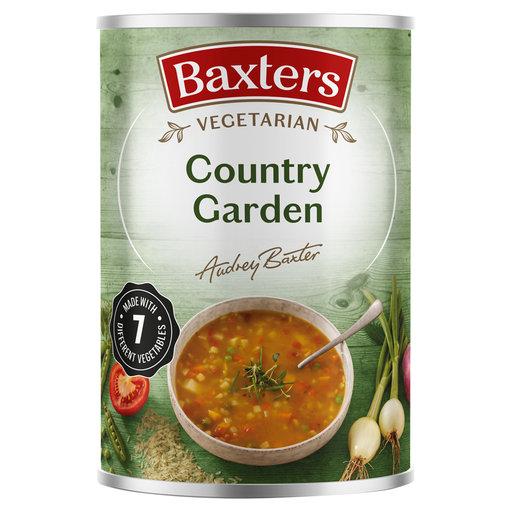 Image unavailable
For a shopper checking gluten-containing cereals, compare the current can’s declaration with the eater’s avoidance plan. The listing also identifies milk; a gluten-related declaration does not establish suitability for a milk allergy or any other allergy.
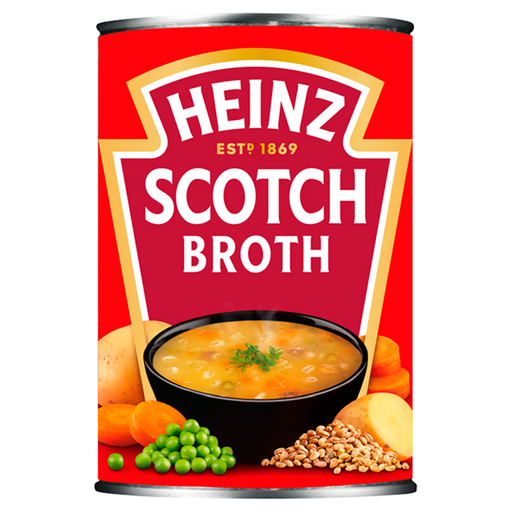 Image unavailable
If the eater avoids gluten-containing cereals, check the current label particularly carefully: the listing identifies barley and wheat. Read the remaining ingredients and any precautionary statement against the full avoidance plan.
 Image unavailable
The listing identifies milk and gluten from wheat, so the flavour name alone cannot guide a milk- or wheat-allergy decision. Check the current can’s full ingredients and precautionary wording for the intended eater.
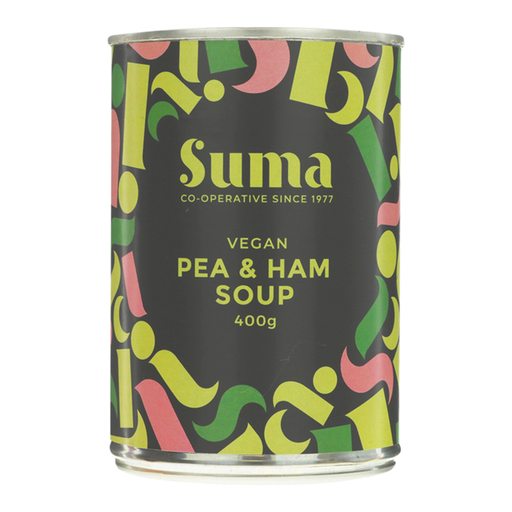 Image unavailable
Do not use “Vegan Ham” in the name as an allergy declaration: the listing identifies milk, soya and wheat. Resolve any conflict between the name and allergen information by checking the physical can before deciding whether it fits the eater’s plan.
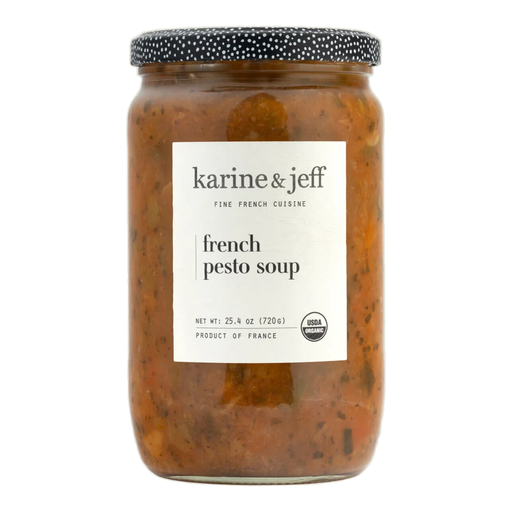 Image unavailable
For someone avoiding wheat, soya or celery, assess the precautionary wording on the current can: the listing says this soup may contain them. Consider that statement under the eater’s individual allergy-management plan as well as reading the ingredients.
Read the full ingredients, the declared allergens and any precautionary statement on the current can. Food Standards Agency guidance says the 14 regulated allergens must be declared when used as ingredients; the full list still matters if the eater avoids an ingredient outside those categories.
Vegetarian labelling does not establish that a soup is free from milk. Sainsbury’s lists milk ingredients in its vegetarian Cream of Tomato Soup, and M&S lists them in its vegetarian Cream of Mushroom Soup. Check the exact current product against the eater’s avoidance plan.
Use a listing to shortlist soups, then verify the physical label when buying and before serving. Asda, Tesco and M&S advise that ingredients or allergen information can change.
It signals possible unintended allergen presence rather than naming a deliberately used ingredient. Food Standards Agency research describes this as precautionary allergen labelling; it does not quantify the risk. Consider the wording under the intended eater’s individual allergy-management plan.
Check the Food Standards Agency’s Allergy Alerts for current notices. The agency says food may be withdrawn or recalled when allergen labelling is missing or incorrect.