BBQ hosts planning a backup meal
A cupboard tin can provide a lunch during preparation or an alternative when barbecue plans change. Check how many people the tin serves and what its label says about storage.


Keep a ready-to-heat tinned soup if you want a straightforward lunch or a non-barbecue option while preparing food; choose condensed soup when the tin is intended as an ingredient in a cooked dish. Before stocking up, check portions, salt for the amount likely to be eaten, allergens and the instructions for storing any leftovers.
The useful format depends on whether the tin is a spare meal, a recipe ingredient or an option for guests with particular dietary requirements.
A cupboard tin can provide a lunch during preparation or an alternative when barbecue plans change. Check how many people the tin serves and what its label says about storage.
If the soup is going into a bake or sauce, look for a format intended for cooking rather than choosing by flavour alone. Campbell's describes its condensed Cream of Tomato soup as a cooking ingredient.
When serving guests with allergies or dietary requirements, read the current can's ingredient and allergen statements. A familiar flavour name cannot establish whether a particular soup is suitable.
Start with the job the soup needs to do, then compare the label for the portions you expect to serve and any leftovers you may have.
| Priority | What to check | Your needs |
|---|---|---|
| Format | Check whether the tin is ready to heat or condensed, and read its preparation directions. Campbell's presents its condensed Cream of Tomato soup as an ingredient for recipes. | I want something I can serve while preparing the BBQ, or a soup that will go into a cooked dish. Those are different jobs for a tin. |
| Portions | Compare the can size, stated servings and nutrition-panel serving size. Sainsbury's describes its 400g Cream of Tomato Soup as containing two servings. | If one person will eat the whole tin, I need to read the nutrition figures against that amount, not assume a stated serving is the entire can. |
| Salt | Find the salt figure and the quantity it describes, such as per 100g or per serving. Compare like quantities when looking at different tins. | I want to know how much salt is listed for the portion I plan to serve, rather than relying on a flavour name or a front-of-pack description. |
| Ingredients | Read the current ingredient list, allergen statement and any dietary designation. Heinz states that its Cream of Tomato Soup contains milk. | For a guest avoiding particular ingredients, I cannot judge suitability from the words “tomato” or “vegetable” alone. |
| Storage | Follow the unopened and post-opening instructions on the can. Food Standards Scotland advises checking food labels for storage directions; the cited M&S Cream of Tomato Soup specifies refrigeration and use within two days after opening. | If a tin may be partly used, I need a plan for storing the remainder and using it within that product's stated period. |
A can may contain more than one stated serving: Sainsbury's lists two servings for its 400g Cream of Tomato Soup. Nutrition shown per serving therefore describes only that stated portion.
Check the serving size and servings per can against the amount each person is likely to eat.
A fat description does not tell you the soup's salt figure or the amount covered by its nutrition panel.
Read salt separately and compare it using the portion you expect to serve.
Heinz states that its Cream of Tomato Soup contains milk. The flavour name alone cannot answer an allergen or dietary question.
Check the current can's full ingredient and allergen information before serving guests with specific requirements.
Post-opening directions differ by product. M&S instructs shoppers to refrigerate its cited Cream of Tomato Soup in an airtight container and eat it within two days; Tesco instructs shoppers to transfer and refrigerate unused contents of its cited tomato soup.
Read the directions on the tin you open and store leftovers accordingly.
These examples illustrate different formats and label details; a brand name alone does not establish the ingredients or instructions for every soup in its range.
Its Cream of Tomato Soup is a branded tomato option to consider for a cupboard meal.
Campbell's describes its condensed Cream of Tomato Soup as a cooking ingredient, making format an important consideration if the tin is for a recipe.
Tesco's cited Low Fat Tomato Soup is a 400g own-label option.
Sainsbury's cited 400g Cream of Tomato Soup provides a stated serving count for meal planning.
The M&S tinned-soup range lists vegetarian and vegan choices, though each product needs its own label check.
These 400g soups offer different flavours for a cupboard backup during BBQ preparation. Choose by the number of people you expect to serve, the ingredients they can eat and the instructions on each can; this selection is not a comparison of condensed cooking bases.
 No image available
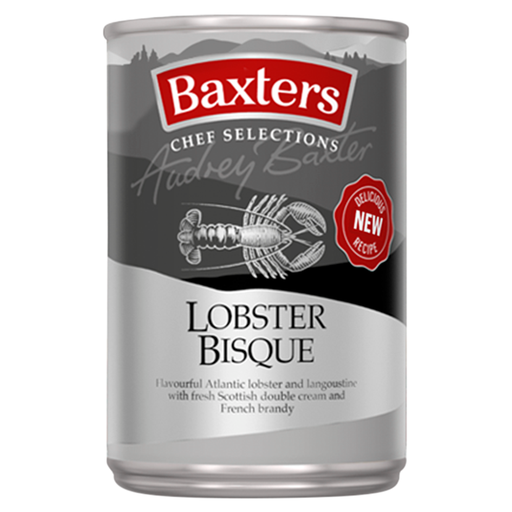
Consider this lobster bisque as an individual backup meal. The can is 400g; check its serving directions and allergen statement before offering it to guests.
 No image available
This 400g mushroom soup is an option for a non-barbecue meal. Compare the pack's stated portions with the number of diners and check its allergen information before serving.
 No image available
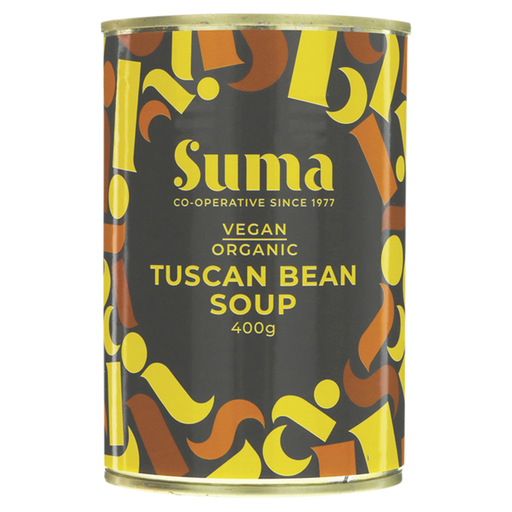
For a bean-soup alternative to the BBQ menu, this is a 400g tin. Check the can for its serving size, salt figure and allergen statement when planning for a group.
No image available
This 400g parsnip and carrot soup offers a different flavour for a backup lunch. Check portions, allergens and post-opening storage on the can before relying on it for guests or leftovers.
 No image available
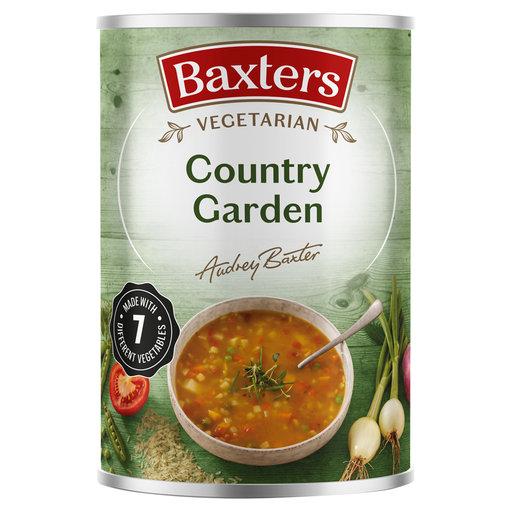
The vegetarian designation makes this 400g soup worth checking when planning a non-barbecue option. Vegetarian does not establish suitability for every allergy or a vegan diet, so read the current ingredients and serving directions.
A best-before date concerns quality, whereas a use-by date concerns safety, according to GOV.UK. Check which marking is on the tin and follow its storage instructions; do not apply best-before guidance to a product marked use-by.
Follow that product's label rather than assuming every soup has the same instructions. M&S says to put unused Cream of Tomato Soup in an airtight container, refrigerate it and eat it within two days; Tesco instructs shoppers to transfer, cover and refrigerate unused contents of its cited tomato soup.
No. Heinz states that its Cream of Tomato Soup contains milk. Read the current ingredient and allergen statements on the particular tin before serving it to someone who needs to avoid milk.