Students with a short break between lectures
A tinned soup can work as a hot lunch if you have the equipment its preparation instructions require. Check the calories for the amount you will eat, including anything served alongside it.


For a lecture-day lunch under 500 kcal, calculate the calories for the soup you will actually eat: Tesco Groceries lists Heinz Vegetable at 94 kcal and Heinz Cream of Tomato at 102 kcal per half 400g can, making a full can 188 kcal or 204 kcal respectively. Count bread and other extras towards the lunch, and check full-can salt, allergens and whether you can heat the soup between lectures.
A tinned soup can work as a hot lunch if you have the equipment its preparation instructions require. Check the calories for the amount you will eat, including anything served alongside it.
A half-can figure is not the figure for a full can. Compare energy for your actual portion, then look at salt, ingredients and allergens rather than choosing on calories alone.
Look for a vegetarian declaration on the particular soup. Tesco Groceries describes Heinz Vegetable and Heinz Cream of Tomato as suitable for vegetarians; a vegetable or tomato flavour name alone does not establish suitability.
Start with the quantity you will eat, then check whether the soup and any accompaniments fit both your lunch plan and your lecture timetable.
| Priority | What to check | Your needs |
|---|---|---|
| Whole-lunch calories | Check kcal per 100g or stated portion, the can size and how much you will eat. Add the kcal from bread, toppings and drinks; the NHS notes that a manufacturer’s portion may differ from yours. | I might finish the can rather than eat half, and I want the soup plus everything served with it to stay under 500 kcal. |
| Salt | Work out salt for the portion eaten, not just the labelled half can. Tesco Groceries lists Heinz Vegetable at 1.2g salt per half can, or 2.4g for the full 400g can; the NHS advises adults to have no more than 6g a day. | If lunch includes salty sides, I want to consider the soup’s salt alongside the rest of the day’s food. |
| Ingredients and allergens | Read the current can’s ingredient and allergen statements. Tesco Groceries lists wheat in Heinz Vegetable; Marks & Spencer lists milk ingredients in its Cream of Tomato soup. | I need the exact soup I buy to fit my dietary requirements, rather than relying on its flavour name. |
| Preparation and leftovers | Check the heating instructions against your access to a microwave or hob. If you will keep leftovers, follow that product’s container, refrigeration and use-within instructions. | A hot lunch only works for my timetable if I can prepare it during the break or before leaving, and store any remainder as directed. |
A 400g can labelled per half can gives figures for only 200g. Finishing it doubles the stated portion’s calories before any sides are counted.
Use the full-can figure, or multiply the half-can figure by two, then add everything else in the lunch.
Calories do not tell you how much salt the portion contains. Tesco Groceries lists Heinz Vegetable at 1.2g salt per half can, which is 2.4g if you eat both halves.
Compare salt for the amount you will eat and consider it alongside your other food; the NHS adult daily maximum is 6g.
Vegetable and tomato soups can contain ingredients such as wheat or milk. Campbell’s Soup UK also lists milk and celery in its Cream of Tomato condensed soup.
Check the ingredient, allergen and suitability information on the current can, especially when avoiding a particular ingredient.
A tinned soup is only practical as a hot campus lunch if its preparation method fits the facilities and time available. Keeping part of a can also calls for the product’s stated storage steps.
Check the heating directions before buying. For leftovers, follow the individual label: Marks & Spencer says to transfer opened Cream of Tomato soup to an airtight container, refrigerate it and eat it within two days.
These examples help identify label differences; a brand or retailer name does not tell you the calories, salt or allergens of every soup in its range.
Its 400g vegetable and tomato soups provide examples of ready-to-heat cans with nutrition stated per half can.
Its condensed soups need to be considered as prepared, which matters if lunch must fit a short break.
Its tinned- and packet-soup range includes own-label and branded options, allowing comparison of individual product labels.
Its tinned-soup range includes soups identified as vegetarian or vegan; check each individual product rather than applying a range label to every can.
Its Heinz Spring Vegetable listing offers another example of why shoppers should compare the labelled portion with the amount they intend to eat.
These 400g tinned soups are options to consider for a lecture-day lunch. For each one, check the current label for the calories and salt in the amount you will eat, then include any accompaniments in the 500 kcal calculation.
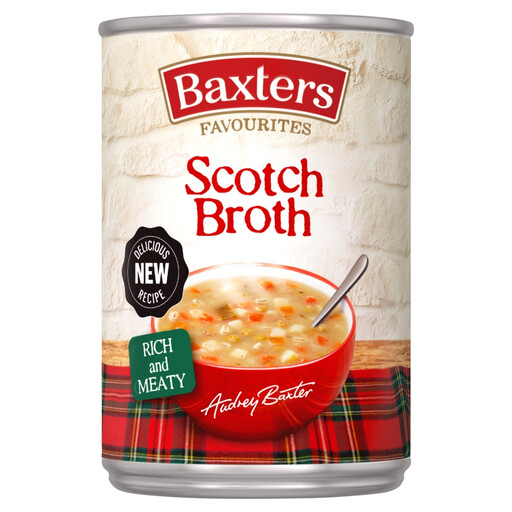 No image available
If you plan to eat the whole 400g can, use its full-can nutrition figures when allowing for a side. This soup contains barley, so check the current pack if that affects your choice; also account for its salt alongside other foods.
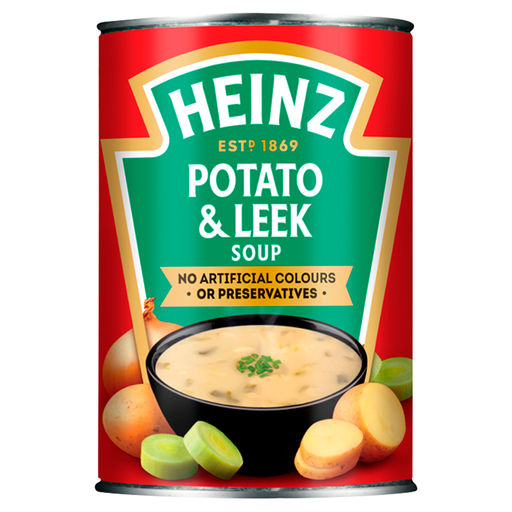 No image available
For a full-can lunch, calculate from the nutrition for both stated half-can portions before adding extras. This soup contains milk; check its current label if you avoid dairy, and compare salt for the full amount eaten.
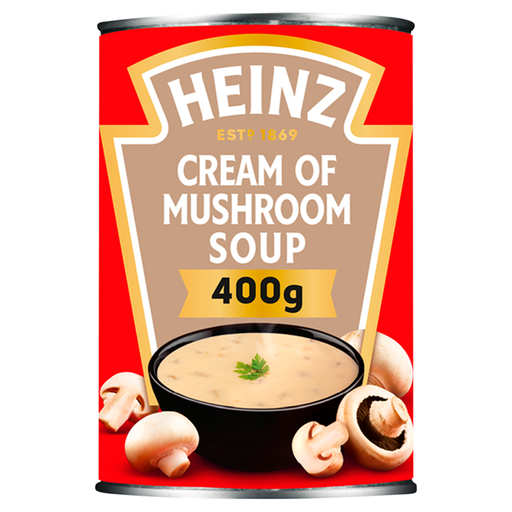 No image available
Use the energy figure for the portion you intend to eat, particularly if you will finish the 400g can. It contains milk and wheat, so its ingredient and allergen statements matter alongside the calorie and salt figures.
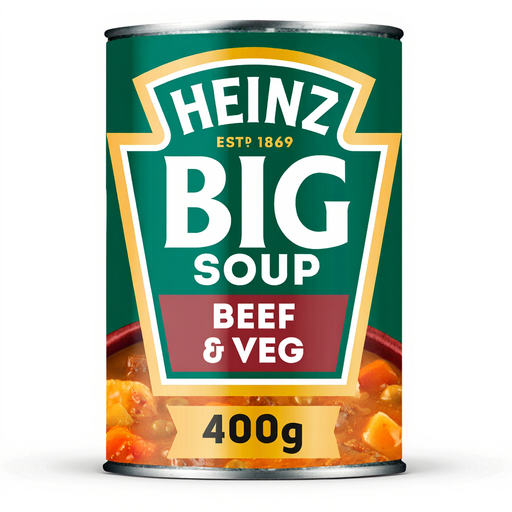 No image available
The 400g can is described as serving two. If you eat it alone, calculate calories and salt for the full can rather than one stated serving, and include anything you have with it.
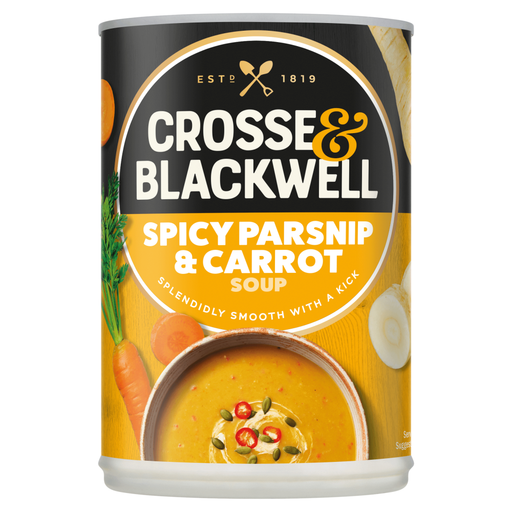 No image available
Check the calories for the quantity you will eat from this 400g can and confirm that its heating directions fit your available facilities. It contains celery, milk and wheat; read the current pack if you have dietary restrictions.
Not necessarily. Calculate the calories for the soup you will actually eat and add bread, butter, cheese, toppings, drinks or snacks included in that lunch. The NHS notes that a manufacturer’s stated portion may differ from your own.
Use per 100g to compare soups on the same quantity basis, then calculate the calories for your actual portion. Marks & Spencer lists its Cream of Tomato soup at 63 kcal per 100g; a 400g can at that rate would be 252 kcal before accompaniments.
Calories and salt are separate label measures. Tesco Groceries lists Heinz Vegetable at 94 kcal and 1.2g salt per half can, which becomes 188 kcal and 2.4g salt for the full 400g can. The NHS advises adults to have no more than 6g salt a day.
Follow the storage instructions for that particular soup. Marks & Spencer says opened Cream of Tomato soup should be transferred to an airtight container, refrigerated and eaten within two days; Tesco Groceries gives a covered-container and two-day instruction for WW Carrot & Lentil soup.
No. Check the current can’s ingredients, allergen statement and suitability declaration. Tesco Groceries lists wheat in Heinz Vegetable and milk in Heinz Cream of Tomato, while Campbell’s Soup UK lists milk and celery in its Cream of Tomato condensed soup.