Compare kcal per 100g first, then check the energy in the bowl you intend to serve: a smaller tin or a ‘low fat’ label does not answer both questions. A tomato soup may suit a small first course, while a bean or lentil soup offers a different texture; whichever you choose, check the current tin for salt, allergens and serving instructions before planning the menu.
Who is this for?
The right tin depends on the size of the first course and what your guests can eat, not just the energy figure on the front.
Hosts serving a small first course
If soup comes before a larger main course, compare kcal per 100g and decide how much will go into each bowl. Include any garnish or bread in your menu planning rather than treating the soup label as the figure for the whole course.
Hosts catering for vegetarian or vegan guests
Check the current tin’s suitability statement, ingredients and allergen information. Vegetarian or vegan wording alone does not settle whether a soup meets a guest’s allergy requirements.
Hosts considering a pulse-based soup
Bean and lentil soups are alternatives when you want a different texture from smooth tomato soup. Compare energy at the portion you plan to serve, then check the ingredients against your guest list.
What should you check?
Start with a comparable energy figure, settle on a bowl size, then check the details that could change which soup you serve.
| Priority |
What to check |
Your needs |
| Energy and portion |
Compare kcal per 100g across tins, then use the stated serving or planned bowl size. Tesco Groceries lists 31 kcal per 100g for Tesco Low Fat Tomato Soup; ASDA Groceries lists 29 kcal per 100g for ASDA Cream of Tomato Soup. Those figures alone do not describe a different-sized bowl. |
I’m serving a first course, so I want to know what each guest will actually receive rather than compare unlike can sizes. |
| Ingredients and allergens |
Read the ingredient list, declared allergens and any precautionary wording on the current tin. Check dietary-suitability wording separately from allergy information. |
One guest may need to avoid an ingredient even if the soup otherwise suits the menu. |
| Salt |
Compare salt for the portion you intend to pour, not just per tin. Tesco Groceries lists 1.7g salt for a whole 295g can of Heinz Weight Watchers Tomato Soup. |
If the meal also includes salty accompaniments, I want to see the soup’s salt figure in the context of the complete menu. |
| Soup style |
Check whether the tin describes a smooth tomato soup or a bean or lentil recipe. For a pulse-based example, Sainsbury’s lists 6.8g protein and 4.4g fibre per half-can of its Tomato & Three Bean Soup. |
I may prefer a bean or lentil bowl to a smooth tomato starter, but I still want to compare the stated portion and energy. |
| Serving plan |
Check the stated servings, heating directions and instructions for storing an opened tin. Work out the number of bowls before deciding how many tins to use. |
I need to heat and serve enough soup for the guest count without assuming every tin makes the same number of bowls. |
Common buying mistakes
-
Comparing only the figures per tin
A whole-can figure and a half-can figure describe different amounts of soup. Tesco Groceries lists 76 kcal for a 295g can of Heinz Weight Watchers Tomato Soup, while ASDA Groceries lists 59 kcal for a half-can of ASDA Cream of Tomato Soup.
Use kcal per 100g for the initial comparison, then calculate the amount in the bowl you plan to serve.
-
Assuming ‘low fat’ settles the calorie question
Fat and energy are different label measures. Tesco Groceries lists 51 kcal per 100g for Heinz Cream of Tomato Soup and 31 kcal per 100g for Tesco Low Fat Tomato Soup.
Read the energy line for each product rather than using the product name as a substitute for it.
-
Relying on dietary wording alone for guests with allergies
A vegetarian or vegan description does not replace the ingredient list, allergen declaration or precautionary wording for the particular tin being served.
Check the current label against each guest’s requirements before choosing the soup or its garnish.
-
Counting the soup but not the additions
The tin’s energy figure does not include bread, cream, cheese, croutons or oil added at the table.
Choose accompaniments and portions while planning the starter, and consider them separately from the soup’s label values.
Brand and product-line references
These examples show why the exact recipe and stated portion matter more than the brand name alone.
Heinz
Two tomato soups illustrate how much the declared portion and energy figure can vary within one brand.
- Tesco Groceries lists 76 kcal for a whole 295g can of Heinz Weight Watchers Tomato Soup.
- Tesco Groceries lists 51 kcal per 100g for standard Heinz Cream of Tomato Soup. Compare equivalent quantities rather than the names or can totals.
Campbell’s
Its Cream of Tomato Condensed Soup is a different format from a ready-to-serve tin.
- The condensed format gives hosts a soup to prepare according to the tin’s directions.
- Campbell’s Soup UK lists 116 kcal per 100g; check the stated measurement basis and preparation directions before comparing a planned bowl with another soup.
Tesco
Its Low Fat Tomato and Low Fat Lentil & Vegetable soups offer different styles of first course.
- Tesco Groceries lists 31 kcal per 100g for Low Fat Tomato Soup.
- Tesco Groceries lists 44 kcal per 100g for Low Fat Lentil & Vegetable Soup; compare the portion you would serve for either recipe.
Sainsbury’s
Tomato & Three Bean Soup is a pulse-based alternative to a smooth tomato starter.
- Sainsbury’s lists 6.8g protein and 4.4g fibre per half-can.
- That half-can is listed at 113 kcal. Check whether the stated portion matches the bowl you intend to serve.
Asda
ASDA Cream of Tomato Soup is a 400g tomato-soup option with both per-100g and half-can energy figures.
- ASDA Groceries lists 29 kcal per 100g and 59 kcal per half-can.
- Check the current tin’s salt and allergen information before selecting it for particular guests.
M&S
Tomato & Basil Soup offers a different tomato flavour from cream-of-tomato recipes.
- Ocado lists 34 kcal per 100g and 68 kcal per 200g half-can.
- Check the current tin for dietary-suitability and allergen wording if either affects your guests.
Joybuy soup option
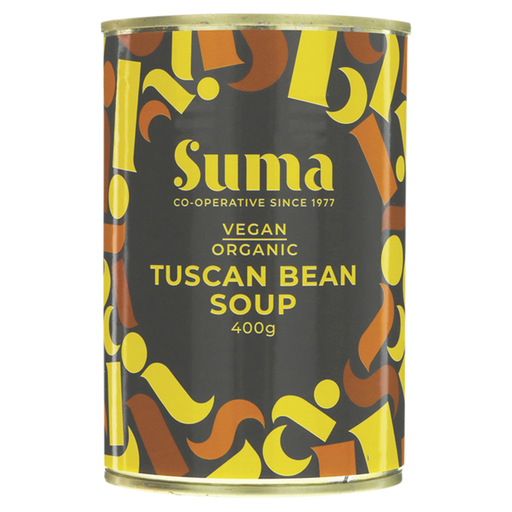
This bean soup is an option if you would prefer a pulse-based starter to smooth tomato soup; use its current label to plan the portion for each guest.
 No image available
Suma Organic Tuscan Bean Soup 400g
Consider this 400g bean soup if you want a pulse-based starter. Check the tin’s serving guidance, energy and salt for your planned bowl, as well as its allergen information before serving guests.
View on Joybuy
Questions about serving tinned soup
Does ‘low fat’ mean a soup has fewer calories?
No: compare the stated kcal per 100g and the portion you intend to serve. Tesco Groceries lists 51 kcal per 100g for Heinz Cream of Tomato Soup and 31 kcal per 100g for Tesco Low Fat Tomato Soup, so the wording on the tin is not enough to make the comparison.
How many tins should I plan for a starter?
Start with the serving size on the exact tin and the amount you want in each bowl. For example, Ocado gives a 200g half-can serving for M&S Tomato & Basil Soup; if you plan larger bowls, a half-can-per-guest calculation will not be enough.
Is a vegan soup automatically suitable for a guest with a milk or egg allergy?
No. Vegan recipe wording and allergy information answer different questions. Read the current tin’s ingredients and precautionary allergen wording, and check the guest’s requirements before serving it.
Can I heat soup ahead and reheat it for late guests?
Follow the storage and reheating directions on the exact tin rather than assuming a second heating is suitable. If guests are arriving at different times, check those directions before deciding whether to serve the soup in batches.


