Shoppers tracking calories
If you plan to eat the whole tin, you need its whole-can energy figure. A half-can serving on the label is not the amount in a full-can lunch.


Choose tinned soup by the calories and salt in the amount you expect to eat, not a low-fat claim or a figure for half a can. A 295g tin and a 400g tin can use different serving sizes on their labels; also check ingredients and allergens, and consider what else you plan to eat if the soup will be your main meal.
If you plan to eat the whole tin, you need its whole-can energy figure. A half-can serving on the label is not the amount in a full-can lunch.
Some of the lower-calorie 295g soups listed by Tesco contain 1.7g to 1.9g salt per can. Compare the amount you will eat with the NHS guidance that adults should have no more than 6g salt a day.
A tomato or lentil soup may suit a different choice from a chicken soup, but the recipe name is not an allergen check. Read the current can for ingredients such as milk, wheat, barley or celery.
Start with the portion you intend to eat, then compare salt and the rest of the meal rather than choosing on calories alone.
| Priority | What to check | Your needs |
|---|---|---|
| Calories and portion | Check whether energy is given per 100g, per half can or per full can. Use the stated serving count to work out the amount you will eat, and compare per-100g figures when tin sizes differ. | I might eat the whole tin, even when the panel gives figures for half. I want to count the calories in my actual bowl. |
| Salt | Compare grams of salt for the intended portion as well as per 100g. A low-fat label does not give you the full-can salt figure; NHS guidance for adults is no more than 6g salt a day. | Calories matter to me, but I also want to know how much salt the full tin contributes. |
| Meal size | Read the protein and fibre figures for the portion you will eat. Check the ingredients, and consider whether the soup is a light lunch or one part of a larger meal. | Will this tin be my whole lunch, or am I planning to eat something alongside it? The answer changes which portion figures I need to use. |
| Ingredients and allergens | Check the current can’s ingredient list and allergen declaration, particularly for milk, wheat, barley and celery. Confirm whether the particular recipe is vegetarian if that matters to you. | I need the recipe to fit what I eat or avoid; a familiar flavour name is not enough to establish that. |
ASDA Cream of Tomato and Tesco Low Fat Lentil & Vegetable soups give nutrition figures for half a 400g can. Eating the full tin doubles the stated calories and salt for that serving.
Check the serving size and number of servings before comparing tins. Calculate figures for the amount you intend to eat.
Tesco lists 1.7g salt per can for Heinz Weight Watchers Tomato, 1.8g for WW Carrot & Lentil and 1.9g for Heinz Weight Watchers Chicken. Their calorie figures alone do not show those differences.
Read salt in grams for your portion, even when the front of the tin highlights calories or fat.
A whole-can calorie figure tells you how much energy the soup provides, not everything you need to know about the meal you are planning.
Decide whether the soup is the meal or part of it, then check its portion size, protein, fibre and ingredients alongside anything else you expect to eat.
Ingredients and nutrition information can change. That matters particularly when you rely on an allergen declaration or a specific portion figure.
Check the can in hand for ingredients, allergens, nutrition, storage instructions and the best-before date.
These examples describe particular soups and label formats, not every product made by each brand.
The Tomato and Chicken soups listed by Tesco come in 295g tins with whole-can nutrition figures.
The Carrot & Lentil Soup listed by Tesco is a 295g vegetarian option with nutrition stated for the whole can.
Tesco Low Fat Lentil & Vegetable Soup is a 400g tin whose stated nutrition serving is half a can.
ASDA Cream of Tomato Soup is a 400g vegetarian tin with nutrition stated per half can.
M&S Cream of Tomato Soup is a 400g tin with nutrition listed per 100g.
Campbell’s Condensed Cream of Tomato Soup is presented by the manufacturer for cooking as well as serving as soup.
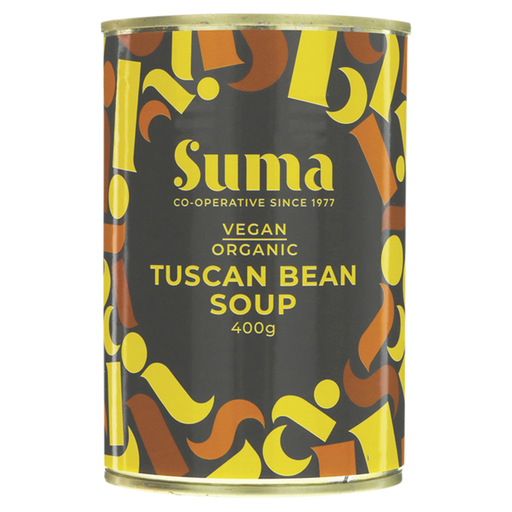
This bean soup is an option to assess using its 400g tin size and the portion and ingredient checks above.
 No image available
If you plan to eat the whole 400g tin, use the current label’s serving and per-100g figures to check calories and salt for that amount. Check its allergen declaration if you avoid celery.
Use per 100g to compare different tin sizes, then use the figure for the amount you expect to eat to plan your meal. As the NHS explains, nutrition information is given per 100g or 100ml and sometimes per portion; a labelled portion need not be your portion.
Not necessarily. Tesco lists 1.7g to 1.9g salt per full can across the Heinz Weight Watchers Tomato and Chicken and WW Carrot & Lentil examples. Compare the salt figure for the amount you will eat; NHS guidance says adults should have no more than 6g salt a day.
The calorie figure alone cannot answer that. Check the tin’s portion size, protein, fibre and ingredients, then consider it alongside anything else you intend to eat as part of that meal.
Check the current can rather than relying on the soup’s flavour. The product examples include milk in several tomato and chicken recipes, and wheat, barley or celery in some chicken and lentil recipes; declarations differ by product and may change.
Use it to compare options, but check the physical can before purchase or use. Confirm its serving size, nutrition figures, ingredients, allergens and storage instructions, particularly if you are returning to a recipe you bought before.