Shoppers planning quick lunches
If you stock the cupboard during a weekly shop, compare kcal per 100g and decide whether a 400g tin will make one lunch or two. A half-can figure does not describe the whole tin.


For a 200g portion, Tesco Groceries lists 61 kcal for Tesco Low Fat Tomato Soup and 87 kcal for its lentil-and-vegetable soup; M&S lists 34 kcal per 100g for Tomato and Basil Soup, equivalent to 68 kcal per 200g. Compare the amount you will actually eat, then check salt, allergens and whether the soup suits the meal you have planned.
A per-100g figure helps compare soups, but the portion you serve determines how much of the tin goes into a meal.
If you stock the cupboard during a weekly shop, compare kcal per 100g and decide whether a 400g tin will make one lunch or two. A half-can figure does not describe the whole tin.
A smooth tomato soup and a lentil-and-vegetable soup offer different ingredients and textures. Decide whether you will serve the soup alone or add something else, and include those additions when considering the meal.
Check each exact tin. Heinz Cream of Tomato contains milk, while M&S says its vegan Tomato and Basil Soup is not suitable for people with a milk or egg allergy.
Start with a common weight for comparison, then work out what the portion you intend to eat contributes.
| Priority | What to check | Your needs |
|---|---|---|
| Calories and portion | Compare kcal per 100g, then check the declared serving weight. If the label gives figures for half a 400g tin, eating the whole tin doubles those figures. | I might eat a whole tin for lunch, so I need the calories for that amount—not just the half-can serving printed on the label. |
| Salt | Read salt per 100g and for your intended portion separately from calories or a low-fat claim. Where shown, traffic-light labelling can help you compare products before reading the full panel. | A lower-calorie figure is not my only consideration; I want to know the salt in the quantity I will serve. |
| Ingredients and allergens | Read the current ingredients, highlighted allergens and any specific allergy warning. Check these even when a soup is described as vegetarian or vegan. | Someone in my household needs a suitable option, so the exact recipe and allergy statement matter more than the flavour name. |
| Storage and format | Check whether the soup is ready to heat or condensed, and follow the pack’s preparation instructions. If you expect leftovers, check its directions for storage after opening. | I want tins that fit my weekly-shop routine and can use any remaining soup within the period stated on the pack. |
For the compared 400g soups that declare a 200g serving, the whole tin contains twice the stated half-can calories and salt.
Decide how much you will eat before comparing labels, and use the per-100g figures when portions differ.
Salt and calories describe different things. Tesco Groceries lists 0.69g salt per 200g for Low Fat Tomato Soup and 0.93g per 200g for Low Fat Lentil & Vegetable Soup.
Compare salt for the same amount of soup alongside the calorie figure.
Tomato soup can contain milk. M&S also gives milk and egg allergy exclusions for its vegan-labelled Tomato and Basil Soup.
Read the current ingredient and allergen information for the exact product each time you buy it.
Tesco Groceries lists Campbell's condensed soups in 295g packs alongside ready-to-heat soups sold in different sizes. Preparation can change the amount of soup served.
Check the preparation directions and whether nutrition is stated for the product as sold or as prepared before comparing portions.
These examples show why the exact product and serving basis matter more than a brand-wide assumption.
Tesco Groceries lists Low Fat Tomato and Low Fat Lentil & Vegetable soups in 400g tins, allowing a comparison at the same 200g portion size.
Sainsbury's lists both smooth Cream of Tomato and chunkier Vegetable Big Soup as 400g options.
M&S lists tomato soups with different recipes and dietary descriptions, so the product name alone does not settle the comparison.
Tesco Groceries lists Campbell's 295g condensed Cream of Mushroom and Cream of Chicken soups.
These Joybuy soup options include different tin sizes and a 400g soup whose pack format needs checking. Compare the current labels for the portion, ingredients and storage that suit your shop.
 No image available
A 400g mushroom soup to consider if you plan to divide a tin between meals. Check the calories and salt for the portion you will eat; the listed ingredients identify milk and wheat.
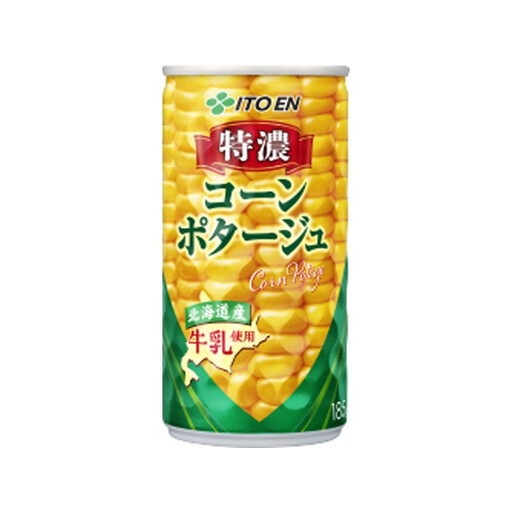 No image available
The 185g size may suit a smaller soup occasion than a 400g tin; check the serving basis before comparing meal portions. The listed ingredients include milk and chicken bouillon flavouring, and the current pack should be checked before relying on its carbohydrate and sugars figures.
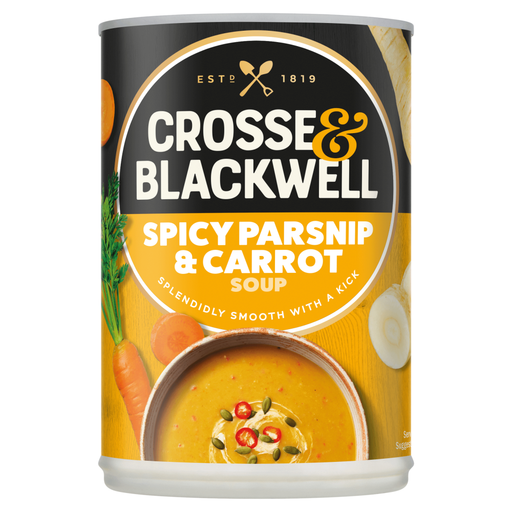 No image available
A 400g parsnip-and-carrot soup to consider for a planned cupboard meal. Confirm the pack format before treating it as a tinned option, and check its serving size and listed celery, milk and wheat.
Compare kcal per 100g first, then calculate the amount you intend to eat. As NHS food-label guidance explains, nutrition information is given per 100g or 100ml and may also include a portion figure; for a 400g tin declaring a 200g serving, the whole tin contains twice the stated serving calories.
No—read the salt figure separately. NHS guidance describes 0.3g of salt or less per 100g as low for foods, while Tesco Groceries lists 0.69g salt per 200g for Low Fat Tomato Soup and 0.93g per 200g for Low Fat Lentil & Vegetable Soup.
Do not rely on the vegan description alone. M&S labels its Tomato and Basil Soup vegan but states that it is not suitable for people with a milk or egg allergy; check the allergy statement on the current pack.
Follow that product’s instructions for transferring, refrigerating and using the remainder. If you expect to eat only half a tin, check those directions during your shop rather than assuming the same storage period applies to every soup.