Low-fat label comparers
If fat is your starting point, compare the per-100g figure across tins before checking sugars, salt and the amount you plan to serve.


For a low-fat, lower-sugar tinned soup, compare both figures per 100g: the NHS defines low fat as 3g or less and low sugars as 5g or less per 100g of food. A “no added sugar” claim does not replace those checks; also consider salt, ingredients and how much of the tin you will eat. For example, Sainsbury’s lists Heinz No Added Sugar Cream of Tomato at 1.2g fat and 2.6g sugars per 100g, while Campbell’s Soup UK lists its Cream of Mushroom condensed soup at 6.7g fat per 100g despite its 0.7g sugars.
If fat is your starting point, compare the per-100g figure across tins before checking sugars, salt and the amount you plan to serve.
If you want tomato soup with no added sugar, check the total-sugars and fat figures as well as the wording on the front of the tin.
If a soup needs to be vegan as well as lower in fat and sugars, check its dietary statement, ingredients and allergen declaration alongside the nutrition table.
Start with per-100g values so tins with different serving suggestions can be compared on the same basis, then check the portion you intend to eat.
| Priority | What to check | Your needs |
|---|---|---|
| Fat | Read total fat per 100g. The NHS defines 3g or less per 100g of food as low fat; check the figure even for soups described as creamy or condensed. | I want a soup that fits a low-fat choice, rather than choosing it on flavour or its sugar figure alone. |
| Total sugars | Read sugars per 100g, separately from any “no added sugar” claim. The NHS defines 5g or less per 100g of food as low in sugars. | A no-added-sugar tomato soup appeals to me, but I still want to know its total sugars and fat. |
| Salt and ingredients | Compare salt per 100g and for your intended portion. Read the ingredients and allergen declaration on the current tin. | I need to check whether the soup contains an ingredient I avoid, without overlooking its salt figure. |
| Portion | Check how many servings the tin lists and how much you will eat. Use the same serving amount when comparing totals across products. | If I eat the whole tin, a figure given for half a tin will not describe my full portion. |
The claim concerns added sugar, not the amount of total sugars or fat shown in the nutrition table.
Compare both per-100g figures before deciding whether the soup meets your priorities.
Campbell’s Soup UK lists its Cream of Mushroom condensed soup at 0.7g sugars but 6.7g fat per 100g as consumed. That fat figure is above the NHS low-fat definition for foods.
Check whether a condensed soup’s values are stated as sold or as consumed, then compare its fat figure on the stated basis.
A per-serving figure can represent less soup than you intend to eat, making the numbers difficult to compare across tins.
Compare per 100g first, then use the label’s serving information for the amount you plan to have.
Soups with similar fat and sugar figures can differ in salt and ingredients that matter to your choice.
Read the salt figure and the current tin’s ingredient and allergen declarations before buying.
These figures describe particular soups, not every product made by either brand.
Sainsbury’s and Tesco list different fat and sugar figures for the Heinz varieties below, making the individual tin more useful than the brand name for this decision.
Campbell’s Soup UK describes its condensed cream soups as options for eating as soup or using in cooking; their as-consumed nutrition figures need checking against a low-fat priority.
These 400g tinned soups offer different flavours to consider while comparing fat and total sugars per 100g. Check each current tin for its nutrition and ingredient details rather than treating its name as a reduced-sugar claim.
 No image available
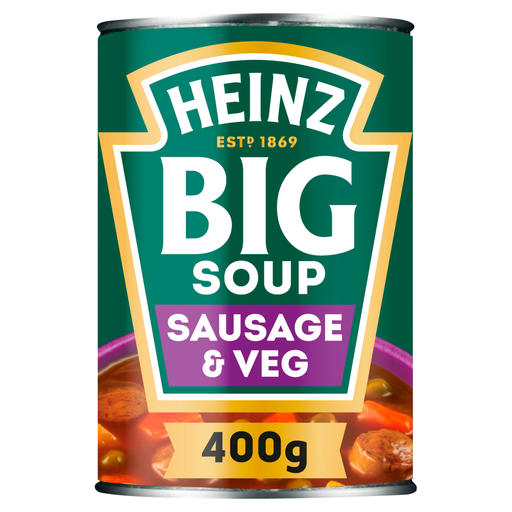
For a sausage and vegetable soup, compare the current tin’s fat and total sugars per 100g with your other options. Check its salt figure and ingredient declaration too, particularly if wheat matters to you.
 No image available
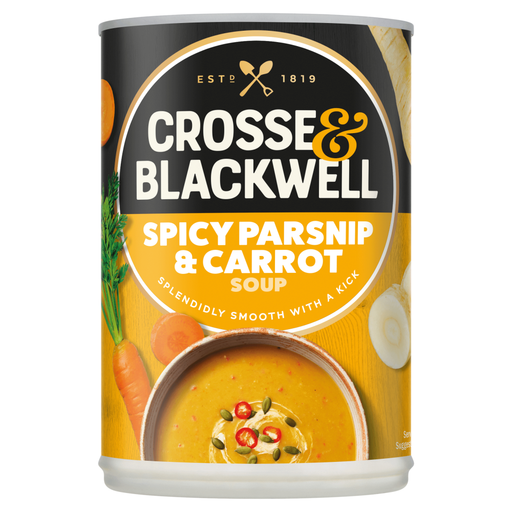
If you prefer parsnip and carrot to tomato, compare the current tin’s fat, total sugars and salt per 100g. Read its allergen declaration if celery, milk or wheat matters to you.
Compare total fat and total sugars per 100g. The NHS defines low fat as 3g fat or less and low sugars as 5g total sugars or less per 100g of food. Then check salt and the figures for the amount you expect to eat.
No. The claim does not tell you either total figure. Sainsbury’s lists Heinz No Added Sugar Cream of Tomato Soup at 1.2g fat and 2.6g total sugars per 100g; use the nutrition table to assess that product rather than assuming the wording applies to other soups.
Read the declaration on the current tin, not just its flavour or dietary description. Joybuy’s listing for Heinz Plant-Based Creamy Tomato identifies soya, for example; ingredients and product details should be checked against the tin you receive.
Follow the instructions on that product’s label. Sainsbury’s instructions for Heinz French Onion Soup say to transfer unused soup to a suitable container, refrigerate it and eat it within two days; another soup’s instructions may differ.