Shoppers keeping tins for regular meals
If soup is a cupboard staple, consider tin size, preferred flavours and whether every tin in a multipack is likely to be used.


For a regular cupboard shop, choose soup in a portion and flavour you will use, and check the exact tin before committing to a multipack. Compare salt and protein for the amount you intend to eat, and read ingredients and allergens rather than assuming similar-sounding recipes are alike.
If soup is a cupboard staple, consider tin size, preferred flavours and whether every tin in a multipack is likely to be used.
Compare the salt and ingredients on the exact recipe, particularly when allergens or vegetarian suitability matter. Nutrition figures per 100g help with comparison, while per-portion figures relate to the amount you plan to eat.
Check protein per serving and consider what else will be served with the soup. Harrogate and District NHS Foundation Trust advises including a protein source at every meal for older people who need to increase their intake.
Start with the portion and format you will use, then compare the nutrition and ingredients of those specific recipes.
| Priority | What to check | Your needs |
|---|---|---|
| Portion and pack | Check the tin weight, stated servings and number of tins. For a multipack, consider cupboard space and whether you will use them all. | I want a manageable amount for regular lunches, rather than a pack that sits unused. |
| Salt | Compare salt per 100g and for the portion you intend to eat. The NHS describes 0.3g or less per 100g as low in salt and more than 1.5g per 100g as high. | If I am comparing recipes, I need the figures for the amount I will actually serve, not just a front-of-pack description. |
| Meal planning | Read protein per serving and check what ingredients the recipe contains. A soup name alone cannot tell you how much protein the serving provides. | When soup is the main part of my meal, I want to know what is in that serving and what might be served alongside it. |
| Dietary suitability | Read the current ingredients and allergen statement for the exact variant. Check any vegetarian declaration separately from the flavour name. | I cannot assume that two tomato, vegetable or broth recipes have the same ingredients. |
| Preparation | Check whether the product is a ready-to-heat tin, a condensed soup or a sachet that needs water, and follow its preparation instructions. | A small hot snack may suit one occasion; for another, I want a tin that fits my usual meal routine. |
More tins are useful only if the quantity, flavours and storage needs suit the household.
Check the tin count and weights, then think about how often you would use that particular soup.
A low-fat or one-of-five-a-day claim does not describe the soup’s salt or protein content. Sainsbury’s lists 1.1g salt and 1.7g protein per half can of Heinz Cream of Tomato Soup; its Heinz Minestrone listing gives 1.2g salt and 2.1g protein per half can.
Compare the nutrition panel for your intended portion alongside any front-of-pack claim.
The formats involve different quantities and preparation. Sainsbury’s instructions for its Cream of Tomato Soup in a Cup call for 200ml of freshly boiled water per sachet.
Choose the format according to whether you want a small prepared cup or a tin to serve as part of a meal.
The ingredients differ across recipes: Sainsbury’s listings identify milk in Heinz Cream of Tomato and wheat, egg and celery ingredients in Heinz Minestrone.
When an allergen or dietary restriction matters, read the current label for the exact product and variant.
These examples show differences in recipe and format; check the individual product rather than treating a brand name as a dietary guide.
Tesco’s tinned-soup listings include 400g own-label recipes and Stockwell & Co Vegetable Soup 400g.
The reviewed listings include Cream of Tomato and Minestrone, alongside other Heinz soup formats.
Tesco’s listings include Campbell's condensed Cream of Mushroom and Cream of Chicken soups in 295g tins.
Its reviewed soup listings include tinned recipes and Cream of Tomato Soup in a Cup sachets.
The M&S tinned-soup range lists recipes including chunky vegetable, minestrone, and spiced lentil and tomato.
These 400g tins include broths, creamy soup, a steak-and-potato recipe and a vegetable recipe. Use the exact product label to compare portions, ingredients and dietary suitability.
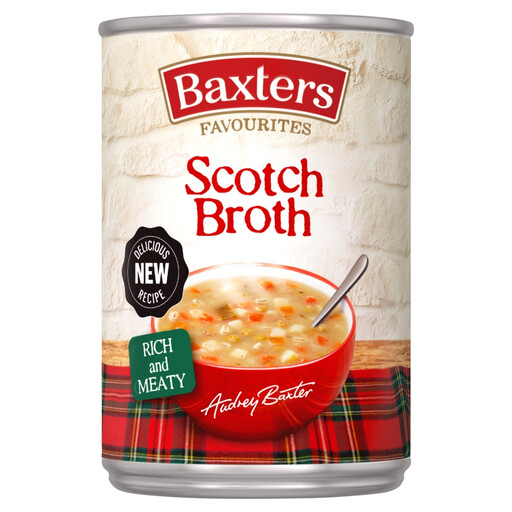 No image available
If Scotch broth appeals for a regular meal, check the ingredients and nutrition for the portion you plan to serve. Read the current allergen statement before buying if dietary restrictions apply.
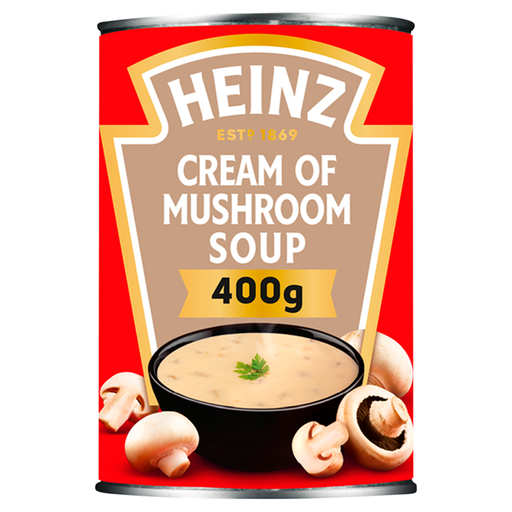 No image available
For a creamy mushroom soup, check the exact ingredients and allergen statement. Compare nutrition for the amount you intend to eat rather than relying on the flavour name.
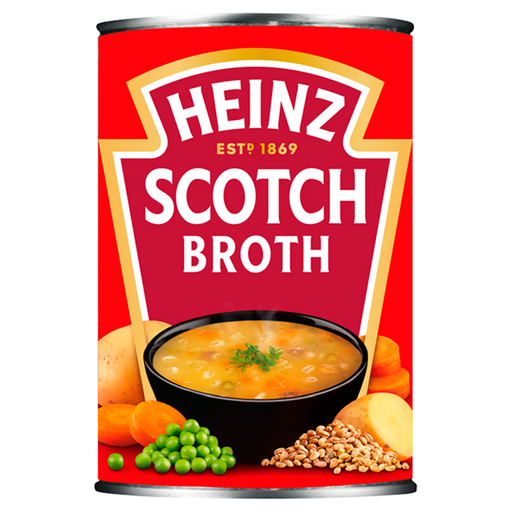 No image available
If you are comparing Scotch broths, read this tin’s ingredients and per-portion nutrition independently of other recipes. Check its allergen statement where relevant.
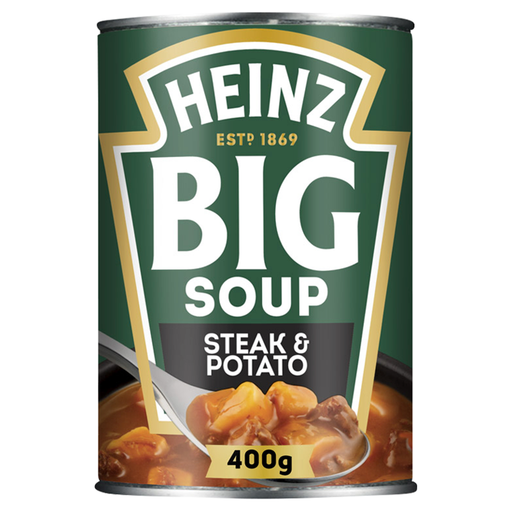 No image available
For a steak-and-potato recipe, check the nutrition panel for your intended serving. The name alone does not establish how much protein that serving contains.
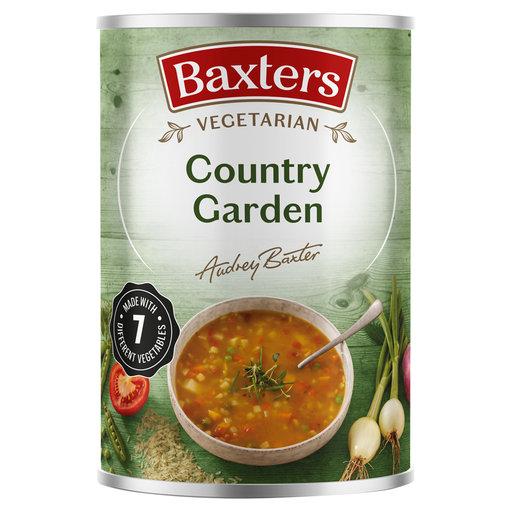 No image available
If this vegetable recipe suits your flavour preference, check its protein and salt figures for the portion you will serve. Read the current ingredients and allergen statement for dietary suitability.
Check the recipe, your serving size and what else you will eat with it. Sainsbury’s lists 1.7g protein per half can of Heinz Cream of Tomato Soup. For older people who need to increase protein intake, Harrogate and District NHS Foundation Trust advises including a protein source at every meal.
Use salt per 100g to compare recipes, then check the figure for the portion you intend to eat. The NHS describes 0.3g or less per 100g as low in salt and more than 1.5g per 100g as high; it advises adults to have no more than 6g a day. Check the exact tin because portion sizes differ.
No. Read the current ingredients, allergen statement and any vegetarian declaration for the exact variant. Sainsbury’s listings identify milk ingredients in Heinz Cream of Tomato and wheat, egg and celery ingredients in Heinz Minestrone.
Use them as a starting point, then read the nutrition information on the pack. The NHS explains that nutrition labels give figures per 100g or 100ml; any stated portion may differ from the amount you serve.