Hosts serving hot refreshments
You need to transport soup, heat it before service and plan how to keep it hot. If you supply food to visitors, allow for temperature checks and access to ingredient information as well as cups and serving equipment.


For car boot sale refreshments without chilled transport, start with a tin whose unopened storage instructions suit your setup. M&S lists a 400g chicken-and-vegetable soup with pearl barley and a 400g tomato soup labelled suitable for vegetarians; choose between them according to the guests you expect. A chilled soup needs refrigeration during transport and service, while soup served hot needs separate provision for heating and hot holding.
You need to transport soup, heat it before service and plan how to keep it hot. If you supply food to visitors, allow for temperature checks and access to ingredient information as well as cups and serving equipment.
Look at the named ingredients and the amount in each tin when deciding how many servings to prepare. Marks & Spencer lists chicken, vegetables and pearl barley in its 400g Chunky Chicken and Vegetable Soup; a smooth soup is a different choice if visible pieces matter to your menu.
A clearly labelled vegetarian option gives guests a choice alongside meat-based soup. Check each physical can for its current ingredients and allergens: a vegetarian label does not mean a soup is free from milk, wheat or other allergens.
Decide how you will transport and serve the soup, then compare the recipe, dietary label and number of portions you intend to make from each tin.
| Priority | What to check | Your needs |
|---|---|---|
| Storage and transport | Read the unopened storage instructions and confirm whether the product is a tin or a chilled soup. Plan refrigerated storage for any unused soup where the label requires it. | I need to bring refreshments to an outdoor event without relying on chilled transport. A cupboard-stored tin and a soup labelled for chilled storage call for different arrangements. |
| Recipe and portion | Compare the stated weight, named ingredients and serving information on the exact product. M&S lists chicken, vegetables and pearl barley in its 400g Chunky Chicken and Vegetable Soup. | If visitors may want a lunch-like serving, I would look for a recipe with identifiable chicken or vegetables and decide on the portion size before estimating how many tins to bring. |
| Dietary information | Check the vegetarian statement, full ingredients and highlighted allergens on each physical can. M&S labels its 400g Cream of Tomato Soup suitable for vegetarians; that statement alone does not establish vegan or allergen-free suitability. | I want guests to be able to choose a soup that fits their diet and check the packaging themselves when they ask about ingredients. |
| Heating and service | Arrange a way to heat soup before transferring it to hot-holding equipment. Food Standards Agency caterer guidance says hot food should be held at 63°C or above, subject to limited exceptions; hot-holding equipment is not for reheating cold food. | I need equipment and a serving routine that work throughout the sale, not just a way to warm the first batch. |
Tesco lists its Finest soup range under chilled soup, and the Sainsbury's Taste the Difference Chicken Mulligatawny example has instructions for heating from chilled. Neither is a substitute for an ambient tin when refrigerated transport is unavailable.
Check the product format and storage instructions before buying. Choose chilled soup only if you can meet its refrigeration requirements through transport and service.
A chilled choice also means arranging refrigerated transport and storage.
The word does not tell you whether a soup is chunky, vegetarian or suitable for your serving setup. An ingredient list and storage label answer more useful questions for an outdoor event.
Compare the actual recipe, tin size, dietary statements and preparation instructions rather than assuming a range name describes what guests will receive.
Food Standards Agency caterer guidance distinguishes heating food from holding it hot. It says hot food should be kept at 63°C or above, apart from limited exceptions.
Heat the soup before putting it into preheated hot-holding equipment, and check temperatures during service. Plan batches around what you can heat and serve safely.
Allow for suitable heating and holding equipment, temperature checks and a plan for soup left after service.
A soup can be labelled suitable for vegetarians and still contain allergens. Guests also need information about the particular recipe being served, not just its flavour name.
Check the current label on every can and keep its packaging accessible while serving so ingredients can be checked.
These examples help distinguish tinned recipes from chilled ranges; a brand name alone does not establish a soup's storage needs or dietary suitability.
Marks & Spencer lists 400g Chunky Chicken and Vegetable and Cream of Tomato soups. They offer different recipe and dietary routes within the tinned-soup brief.
The Big Soup range includes named chicken-and-vegetable and chunky-vegetable recipes, offering different ingredients to compare for a hot serving.
Tesco lists tinned-and-packet soup separately from the chilled soup category containing its Finest range.
The Taste the Difference Chicken Mulligatawny example is a 600g chilled soup with instructions for heating from chilled.
These 400g soup options cover meat-based, bisque and cream-of-mushroom recipes for a car boot sale menu. Check each can's storage, preparation and dietary information against the way you plan to serve it.
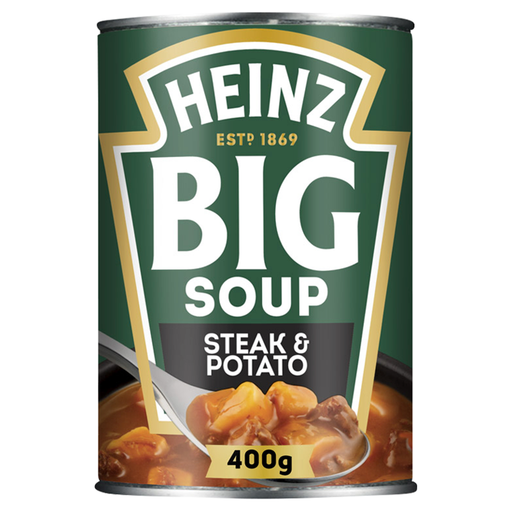 No image available
A steak-and-potato recipe to consider when planning a meat-based hot serving. Check the physical can for current ingredients, allergens, storage instructions and preparation directions before taking it to the event.
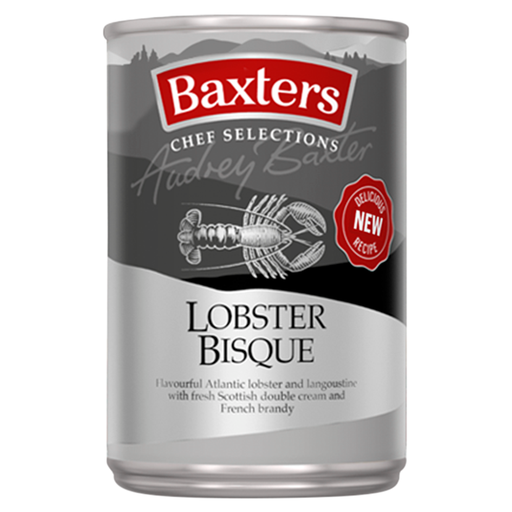 No image available
A lobster bisque is a different recipe choice from chunky chicken-and-vegetable soup. Check the current can for its ingredients and allergens, particularly when serving guests who need information about crustaceans, and confirm its heating and storage directions.
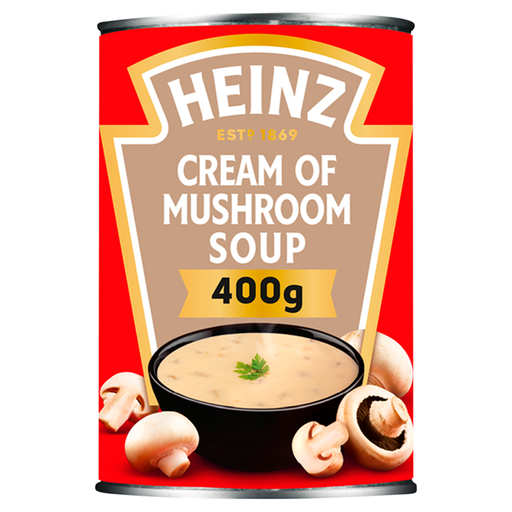 No image available
This cream-of-mushroom recipe offers an alternative flavour to meat-and-vegetable soups. If you need a vegetarian option, confirm the statement on the physical can and check its full allergen declaration; the flavour name alone is not enough.
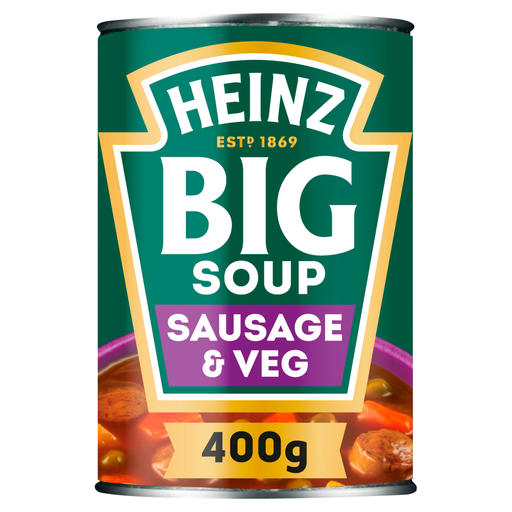 No image available
A sausage-and-vegetable recipe for guests who want a meat-based choice. Before planning transport or service around it, read the can's unopened storage and heating instructions, and check its current ingredient and allergen information.
Plan to serve food safely and check the event organiser's and local authority's requirements for your activity. GOV.UK guidance for community and charity events in England, Northern Ireland and Wales says food supplied, sold or provided at those events must comply with food law and be safe to eat; whether your car boot sale activity needs food-business registration depends on its circumstances.
Food Standards Agency caterer guidance says hot food should be held at 63°C or above, apart from limited exceptions. Heat the soup before transferring it to hot-holding equipment; do not rely on that equipment to reheat cold soup. Check the requirements applicable to your event and location.
The Food Standards Agency registration service says a new food business should register with its local authority at least 28 days before trading or starting food operations. If you are unsure whether your car boot sale activity counts as a food business, ask the relevant local authority before the event.
Check the label on each physical can you serve and keep the packaging accessible. Recipes and allergen information can change, so an online description should not replace the ingredient and allergen declaration on the product in use.