Hosts planning an optional starter
A ready-to-heat tin avoids the dilution step required by condensed soup. If you are sharing it before a takeaway, check the labelled serving count rather than assuming one can means one portion.


Choose a ready-to-heat tin for a simple optional starter, or a condensed soup if you are willing to dilute it and want to use it in cooking on another occasion. A vegetable, bean or pasta soup makes more sense when the tin might stand in for a meal; whichever role you have in mind, check the intended portion, salt and allergens on the exact product.
A ready-to-heat tin avoids the dilution step required by condensed soup. If you are sharing it before a takeaway, check the labelled serving count rather than assuming one can means one portion.
Campbell’s UK describes its condensed soup as suitable for cooking. Its Cream of Chicken soup needs dilution when served as soup, and its ingredient information identifies wheat and milk.
Compare the exact tin’s allergens, salt per serving and storage directions before serving guests. Similar-looking soups can have different ingredients and labelled portion sizes.
Decide whether the tin is for a starter, a backup meal or cooking, then compare preparation, portion and ingredient information for that role.
| Priority | What to check | Your needs |
|---|---|---|
| Preparation | Check whether the soup is ready to heat or needs dilution. Read the heating directions and use an appropriate container rather than heating soup in its metal can. | I want to put out a warm starter without adding much preparation while the takeaway arrives. |
| Portion and salt | Compare salt per 100 g on the same basis, then check the salt in the portion you plan to serve. A 400 g tin can contain two labelled servings, as Joybuy’s Heinz Cream of Tomato listing and Sainsbury’s Minestrone listing show. | If soup is only one course, I would rather choose the portion deliberately than treat a whole tin as a single serving. |
| Ingredients | Read the current ingredient and allergen information for the exact variant. Tomato soup can contain milk; minestrone can contain wheat, egg and celery; a plant-based soup can contain soya. | Everyone sharing the meal needs a soup that fits their ingredient restrictions, regardless of the flavour on the front of the tin. |
| Role and texture | For a starter, consider a smooth ready-to-heat soup. For a backup meal, check for ingredients such as beans, vegetables or pasta; for cooking, check a condensed soup’s preparation directions. | I want the cupboard tin to suit what I might actually serve, whether plans stay the same or the takeaway falls through. |
Serving sizes and salt figures differ. Action on Salt’s 2026 analysis of 481 chilled and ambient soups reported that 23% exceeded the Government’s voluntary maximum salt target.
Compare salt per 100 g and for the portion you intend to serve, rather than judging it by flavour or can size.
Campbell’s Cream of Chicken is not simply heat-and-eat: its directions specify adding one can of water, or half milk and half water, before heating.
Choose a ready-to-heat tin if you do not want the dilution step. Keep condensed soup in mind if you also plan to cook with it.
Creamy tomato soups can contain milk, minestrone can contain wheat, egg and celery, and plant-based soup can contain soya.
Read the current ingredient and allergen information on the exact variant before serving it to someone with restrictions.
The Sainsbury’s Minestrone and M&S Cream of Tomato product directions call for leftovers to be transferred to a suitable container, refrigerated and used within two days.
Follow the storage instructions on your tin, including its stated container and time limit.
These ranges illustrate different soup formats; choose by the individual product label rather than assuming every tin from a brand has the same ingredients.
A reference point for ready-to-heat tomato soup and other familiar tinned formats.
Its UK condensed range offers tins that can be prepared as soup or used in cooking.
Its tinned and packet soup range includes everyday, plant-based and condensed categories.
Its 400 g Minestrone is an example of a soup containing pasta and pulses rather than a smooth starter.
Its tinned-soup range includes vegetable, tomato and other varieties, with vegan and vegetarian options identified separately.
These tins offer different ways to keep soup for takeaway night: a single optional course, a soup to share, or a vegetable- or pulse-based backup. Check each product’s serving and ingredient information for the role you have in mind.
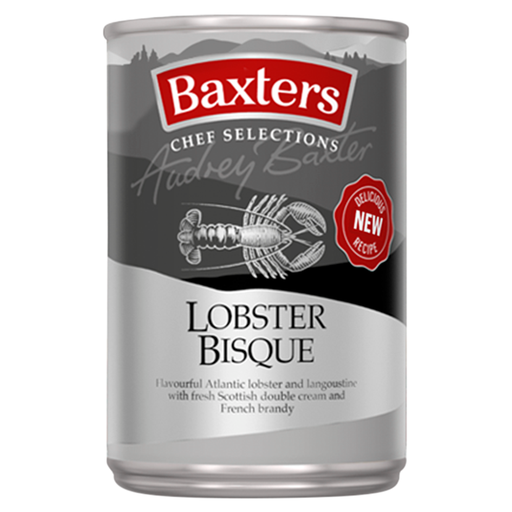 Image unavailable
For a single optional course, this 400 g bisque is stated to serve one. The product information specifies hob heating for 3–4 minutes, 0.38 g salt per 100 g, and crustaceans, milk, sulphites and celery as allergens. Follow its directions not to boil it or reheat it once cooled.
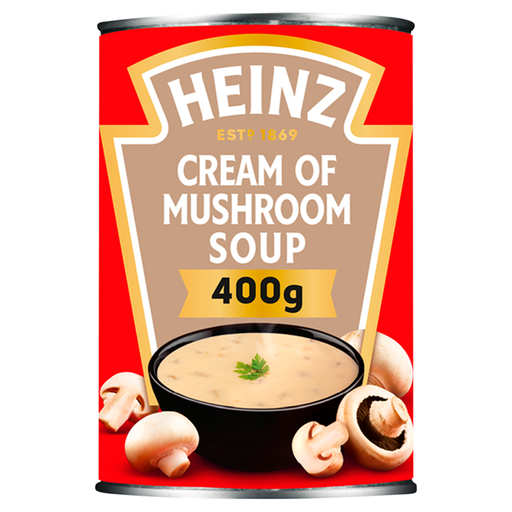 Image unavailable
This 400 g tin lists two servings and hob and microwave heating directions, making it an option when soup is a shared starter. Its product information specifies 6% mushrooms and 0.6 g salt per 100 g; it contains milk and wheat.
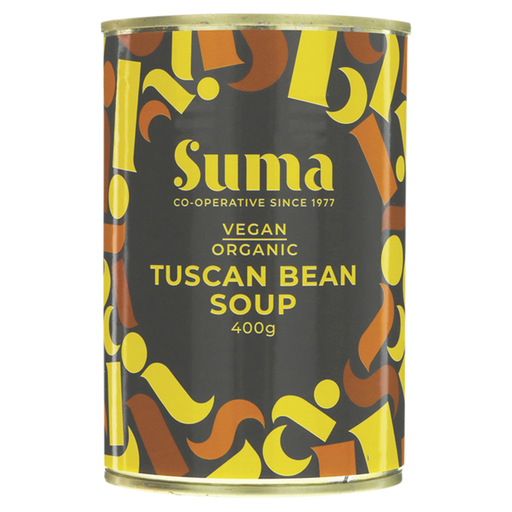 Image unavailable
A bean-and-vegetable tin to consider if soup may replace rather than precede the takeaway. The 400 g product lists four bean varieties, 14% beans, 0.70 g salt and 2.0 g fibre per 100 g; it contains celery. Check the can’s serving and heating directions when planning the portion.
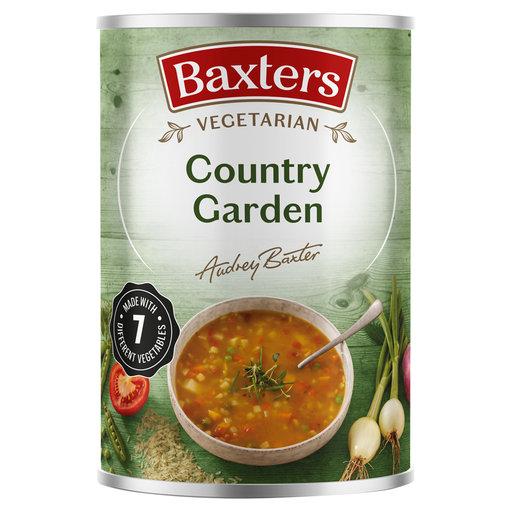 Image unavailable
This 400 g vegetable-and-rice soup could serve as an optional course or a cupboard backup. Its product information lists 38% mixed vegetables, 7% cooked rice and 0.52 g salt per 100 g. It contains milk; check the current can for serving and heating directions.
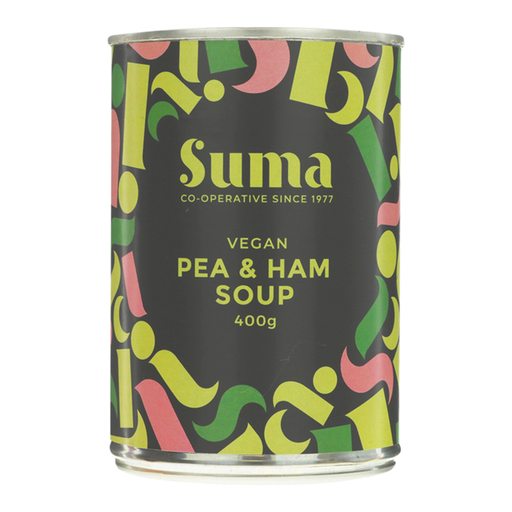 Image unavailable
This 400 g pea-based soup is another option when the tin may become a separate course. Its product information lists 27% green peas and 10% vegetarian ham-style pieces. Before relying on vegan or milk-free suitability, check the current pack: the supplied allergen declaration lists milk, soya and wheat, while its ingredient list does not list milk. Check the pack for serving and heating directions too.
Choose ready-to-heat soup when you want a starter with no dilution step. Condensed soup suits a plan that allows more preparation or includes using the tin in cooking later; Campbell’s Cream of Chicken directions specify adding one can of water, or half milk and half water, before heating.
No. Heinz and M&S tomato soups can contain milk, while a Heinz plant-based tomato recipe lists soya. Check the current ingredient and allergen information for the exact tin, including any wheat, egg or celery in other varieties.
Compare the labelled salt per 100 g first, then check how much salt is in the portion you intend to serve. Action on Salt’s 2026 analysis of 481 chilled and ambient soups found labelled serving sizes ranging from 147.5 g to 500 g, so a per-serving figure needs its portion size alongside it.
Follow the storage directions on that tin. Sainsbury’s Minestrone and M&S Cream of Tomato instruct shoppers to transfer leftovers to a suitable container, refrigerate them and use them within two days; check whether your chosen product gives different instructions.