Quick-meal top-up shoppers
A ready-to-heat tin can fill a gap in the cupboard. Check how to heat it, how much you plan to serve and whether its ingredients suit you.


For a quick storecupboard meal, choose a ready-to-heat tin; choose condensed soup when you want to dilute it or use it in cooking. Check the preparation directions, can size, salt per serving and allergens before treating similar-looking soups as interchangeable.
Preparation matters most when a tin needs to become a meal quickly or serve as an ingredient.
A ready-to-heat tin can fill a gap in the cupboard. Check how to heat it, how much you plan to serve and whether its ingredients suit you.
Compare can weights and labelled servings rather than assuming two tomato soups will cover the same number of meals. Check how leftovers must be stored if you will not use the whole tin.
Condensed soup is a separate option when you intend to dilute it or add it to a recipe. Read its preparation directions before substituting it for ready-to-heat soup.
Start with how you will use the soup, then compare labels on the same basis and plan for any leftovers.
| Priority | What to check | Your needs |
|---|---|---|
| Preparation | Check whether the soup is ready to heat or needs dilution. For condensed soup, read the directions for added water or milk. | I need a meal I can heat without adding ingredients, or a concentrated soup I can use in cooking. |
| Can size | Compare the can weight, labelled servings and amount you expect to use. Account for dilution when planning a portion of condensed soup. | One tin may need to cover more than one meal, so I want to know how much I will actually serve. |
| Salt | Compare salt per 100g across similar soups, then check the labelled portion against the amount you will eat. The NHS explains that nutrition information is given per 100g and sometimes per portion. | If salt matters to my choice, I want to compare the same quantity of each soup without losing sight of the size of my bowl. |
| Ingredients | Read the current ingredient list and allergen declaration for the exact variety. A vegetarian statement does not replace an allergen check. | I need to check whether the particular tin suits my ingredient or allergy requirements, not just its flavour name. |
| Leftovers | Read the tin’s instructions for transferring, covering and refrigerating unused soup, and for when to use it. | If I am serving only part of a tin, I need to know how to handle what remains. |
Campbell's Condensed Cream of Tomato directs you to add liquid before heating; a ready-to-heat tin follows different preparation directions.
Decide whether you want soup to heat as sold or an ingredient to dilute or cook with, then compare the relevant cans.
Salt per 100g allows a like-for-like comparison, but labelled serving sizes can differ from the amount in your bowl.
Check both figures where available. NHS guidance says the adult daily maximum of 6g includes salt already present in food.
The reviewed Heinz and Tesco tomato soups contain milk, while the Campbell's condensed tomato soup lists milk and celery.
Check the current pack’s ingredients and allergen declaration for the exact variety.
The reviewed Tesco and Campbell's tomato soups give different instructions and timeframes after opening.
Follow the directions on the tin you open, including any instruction to transfer and cover unused soup before refrigerating it.
These examples describe particular tomato soups, not every variety made by each brand.
Heinz Cream of Tomato 400g is a ready-to-heat vegetarian option.
Tesco Cream of Tomato 400g is an own-label, ready-to-heat vegetarian soup.
Campbell's Condensed Cream of Tomato 295g is intended to be diluted and can also be used in cooking.
These tins offer different flavours for a storecupboard top-up. Choose the variety you will use, then check its current pack for preparation, portions, allergens and storage after opening.
 No image available
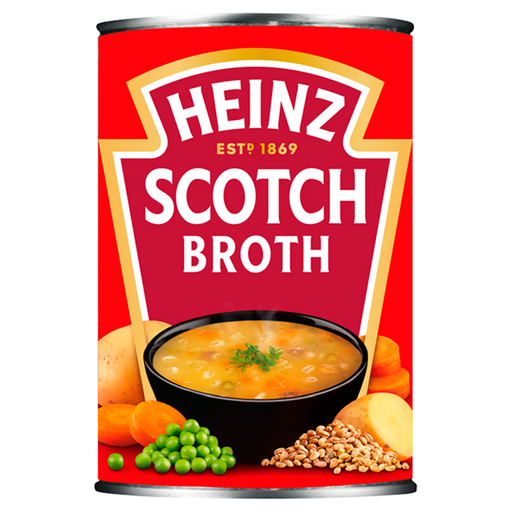
For a cupboard meal, check the heating directions and decide whether the 400g tin covers the portions you need. Check the current allergen declaration if you avoid barley or wheat, and follow the tin’s instructions for refrigerating leftovers.
 No image available
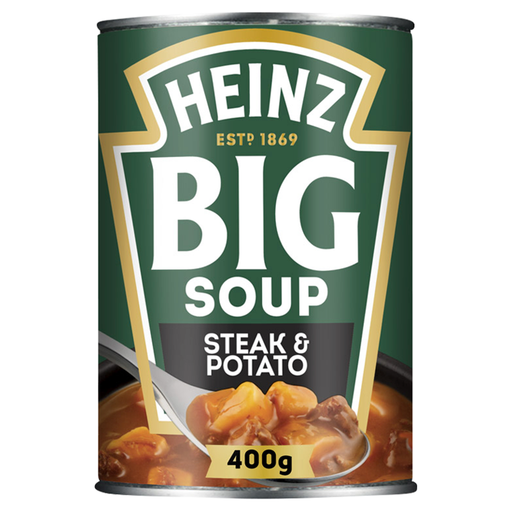
This 400g steak-and-potato variety is an option when you want a different soup for a cupboard meal. Check the pack’s heating instructions, the salt figure for the amount you will serve and its directions for storing leftovers.
 No image available
If mushroom soup suits your meal, check how you will divide the 400g tin and compare salt against the portion you intend to eat. Check the current pack for milk and wheat allergens and for directions on storing any unused soup.
 No image available
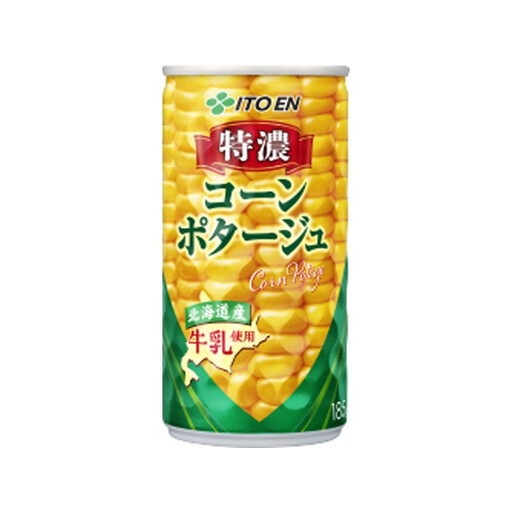
The 185g corn potage offers a smaller tin to consider for a cupboard top-up. Read the current pack’s preparation and nutrition information before comparing it with a larger soup, and check its milk declaration if relevant to you.
Compare salt per 100g first, then check the amount in the portion you expect to eat. The NHS says adults should have no more than 6g of salt a day, including salt already in food; its food-label guidance describes more than 1.5g per 100g as high and 0.3g or less per 100g as low.
No. The Tesco Groceries directions for Campbell's Condensed Cream of Tomato say to add one can of water, or a mix of milk and water, before heating. Follow the directions on a ready-to-heat tin separately.
Follow the instructions for the exact tin. Tesco Groceries says to transfer leftover Tesco Cream of Tomato soup to a non-metallic container, cover and refrigerate it, then use it within four days; its Campbell's Condensed Cream of Tomato listing says to empty and cover the unused soup, refrigerate it and use it within two days.
Not necessarily. The reviewed Heinz and Tesco tomato soups contain milk, and the Campbell's condensed tomato soup lists both milk and celery. Check the current ingredients and allergen declaration for the variety you are buying.