Christmas backup-meal planners
Keep ready-to-heat soup for busy days or unexpected guests, choosing packs with dates and storage instructions that fit your plans.


For quick Christmas-period lunches, start with ready-to-heat soup in a pack size you will use; add bean or chunky varieties if you want a different texture, or condensed soup if you plan to cook with it. Check the exact pack for allergens, dietary suitability, salt per serving, its date marking and what to do with leftovers after opening.
Keep ready-to-heat soup for busy days or unexpected guests, choosing packs with dates and storage instructions that fit your plans.
Check can size and stated servings when deciding how many lunches your Christmas shop will cover. Two 400g soups need not have the same ingredients or portion guidance.
Read the exact recipe for milk, soya or other relevant allergens; distinguish vegetarian from vegan labelling and compare salt against the portion you expect to eat.
Choose the soup format for the meals you have in mind, then compare the labels on the exact packs before stocking up.
| Priority | What to check | Your needs |
|---|---|---|
| Meal and storage plan | Check whether the soup is ready to heat or condensed and needs preparation. Read the date marking, unopened storage directions and instructions for leftovers. | I want a straightforward cupboard lunch during the Christmas period, with a pack I can use before or after the day itself. GOV.UK distinguishes best-before dates, which concern quality, from use-by dates, which concern safety. |
| Ingredients and allergens | Read the current ingredient and allergen information on each flavour, especially before buying several packs. Check the exact vegetarian or vegan statement rather than relying on the flavour name. | Everyone eating the soup needs a suitable option. Sainsbury's lists milk ingredients in Heinz Cream of Tomato, while Joybuy's Heinz Plant Based Creamy Tomato listing identifies soya as an allergen. |
| Salt and portions | Compare salt per 100g and per stated serving, then consider the portion you will actually eat. A half-can figure is not a whole-can figure. | If I serve a full can, I need to account for more than the half-can amount on the label. Sainsbury's lists 1.1g salt per half can for Heinz Cream of Tomato and 0.89g for its own Cream of Tomato; GOV.UK advises adults to have no more than 6g salt across a day. |
| Can size and variety | Check the pack weight and stated number of servings. Look at smooth, chunky, bean and condensed formats according to how you intend to serve them. | I may want a smooth soup for a quick lunch and a bean or chunky option for a change of texture. If a tin is for a recipe, I will check its preparation instructions rather than assume condensed soup is ready to serve. |
The Heinz and M&S cream-of-tomato products described by Sainsbury's and Marks & Spencer contain milk, despite being labelled suitable for vegetarians.
Check the ingredients and emphasised allergens on the current can. A vegetarian statement does not establish that a soup is vegan or milk-free.
Salt per 100g helps compare recipes, but a planned bowl may be half a can or a full can. Sainsbury's lists 1.1g salt per half-can serving for Heinz Cream of Tomato.
Read the serving size alongside the per-100g figure and work out which labelled portion matches what you intend to serve.
Unopened storage directions no longer describe how to keep leftovers. Marks & Spencer instructs shoppers to refrigerate its opened Cream of Tomato Soup in an airtight container and eat it within two days.
Follow the instructions on your exact pack when storing any soup left after a meal.
These examples show different soup formats and label details; check each current product rather than applying one recipe's information to a whole range.
Its UK listings include smooth tomato soup and other soup varieties.
Tesco's own-label soup listings include Cream of Tomato and Plant Chef options alongside other brands.
Its own-label Cream of Tomato 400g provides a labelled serving comparison with branded tomato soup.
Its tinned-soup range spans smooth, chunky, vegetable, bean and meat-containing recipes.
Campbell's UK presents its soups as options for serving and for use in recipes; Tesco lists condensed Campbell's products.
These Joybuy soups offer mushroom, bean, meat and vegetable choices for Christmas cupboard planning. If you specifically need a tin, check the pack format of the Crosse & Blackwell soup before ordering.
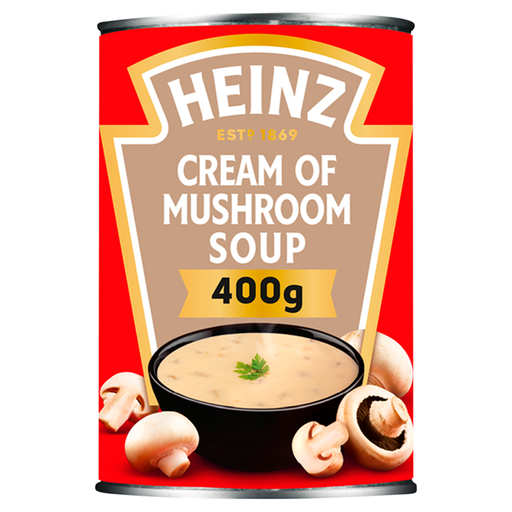 No image available
A mushroom option for a ready-to-heat cupboard meal. Check its listed milk and wheat ingredients if either matters in your household.
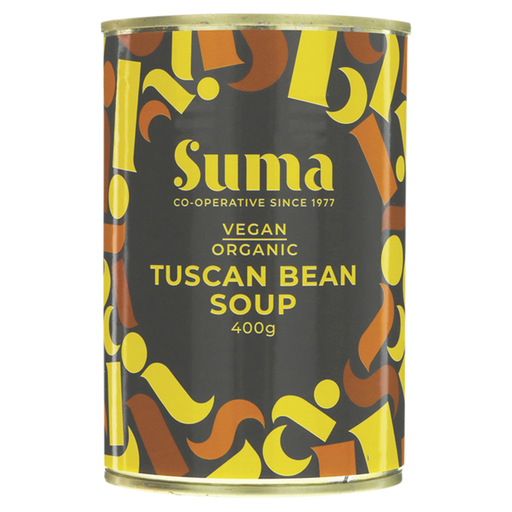 No image available
Choose this bean soup if you want a change from smooth tomato varieties. Its listed allergen information includes celery.
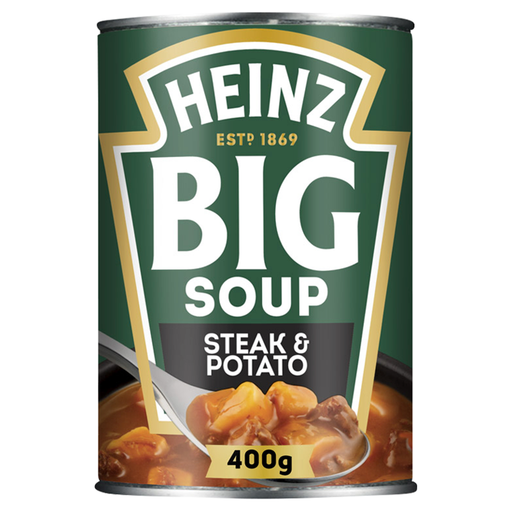 No image available
A meat-and-potato soup for shoppers wanting a different cupboard meal from vegetable or tomato soup. Check its barley and wheat ingredients if avoiding gluten.
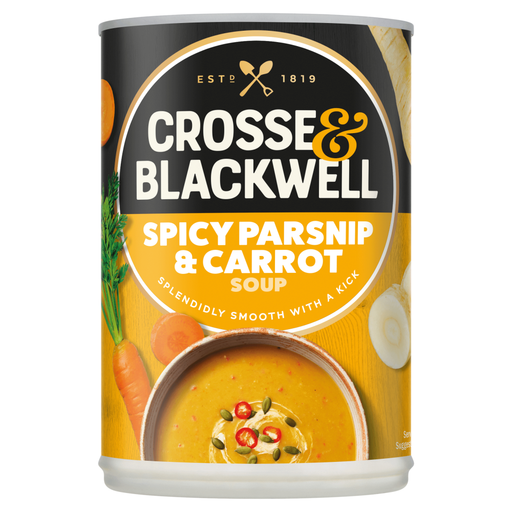 No image available
A parsnip-and-carrot flavour for cupboard variety. Check the pack format if you need a tin, and read the listed celery, milk and wheat ingredients.
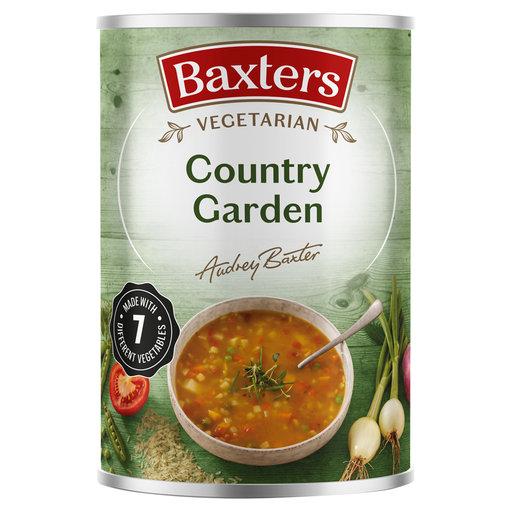 No image available
A vegetarian vegetable-and-rice soup for a different cupboard option. It lists milk, so its vegetarian name does not make it suitable for someone avoiding dairy.
Yes, if the date marking and unopened storage instructions on the exact can fit your plans. GOV.UK says best-before dates concern quality and lists tinned food among products that may carry them; a use-by date concerns safety and should not be treated the same way.
Follow the exact pack's leftover instructions. Marks & Spencer directs shoppers to put its opened Cream of Tomato Soup in an airtight container, refrigerate it and eat it within two days.
Not necessarily. The Heinz and M&S cream-of-tomato recipes described by Sainsbury's and Marks & Spencer contain milk. Joybuy labels Heinz Plant Based Creamy Tomato Soup vegan but lists soya as an allergen, so check the current ingredients of the exact soup.
Read both salt per 100g and salt per stated serving, then match the serving figure to the amount you plan to eat. Sainsbury's lists 1.1g per half can for Heinz Cream of Tomato and 0.89g per half can for its own Cream of Tomato; GOV.UK advises adults to have no more than 6g salt across a day.
Consider condensed soup if you intend to use it in a recipe and can follow the exact pack's preparation instructions. Tesco lists Campbell's condensed soups, and Campbell's UK describes soup as a recipe base; do not assume a condensed product is prepared like a ready-to-heat can.