Hosts serving a starter to several guests
A multipack can simplify cupboard planning, but count labelled servings rather than assuming one can fills one bowl. ASDA Groceries lists two servings per can for Heinz Vegetable 4 x 400g.


For a simple starter for several guests, a ready-to-heat multipack lets you plan from the number of cans and their labelled portions: ASDA Groceries lists Heinz Vegetable 4 x 400g as two servings per can, or eight labelled portions across the pack. Allow for larger bowls or seconds, and check each flavour’s allergens. Condensed soup makes more sense as a cooking ingredient or when you want to adjust its consistency, but you must follow its dilution instructions before serving.
A multipack can simplify cupboard planning, but count labelled servings rather than assuming one can fills one bowl. ASDA Groceries lists two servings per can for Heinz Vegetable 4 x 400g.
Several cans give you portions to open as needed if Christmas plans change. Check the date and storage directions when buying, then follow the instructions for any opened can.
If the soup is going into a sauce or bake rather than straight into bowls, a condensed format may suit the recipe. Check what liquid the specific can calls for and plan the amount needed after dilution.
Decide whether you are serving soup in bowls or cooking with it, then work out portions and check the exact recipe before buying for a group.
| Priority | What to check | Your needs |
|---|---|---|
| Pack and portions | Count cans, their weight and the labelled serving size. ASDA Groceries lists Heinz Vegetable 4 x 400g as two servings per 400g can. | I need enough starter bowls for the guests coming, with room for larger portions or seconds. Four cans provide eight labelled servings for that Heinz Vegetable pack, not a guaranteed eight bowls of any size. |
| Allergens | Read the allergen statement on each flavour’s current pack. ASDA Groceries lists milk in Heinz Cream of Tomato and wheat in Heinz Vegetable. | A familiar flavour is not enough for me to judge whether every guest can eat it; I need to check the exact can against their requirements. |
| Preparation | Check whether the soup is ready to heat or condensed, and follow its heating or dilution directions. Do not use the undiluted can weight as the serving yield for a condensed recipe. | If I am serving a starter, I want to know what preparation is needed before guests sit down. For a sauce or bake, I can plan around the condensed format instead. |
| Salt labelling | Compare the stated amount on the same serving basis. ASDA Groceries lists 1.2g salt per 200g half-can serving for Heinz Vegetable; Tesco Groceries lists 1.1g per half-can for Heinz Cream of Tomato. | I want to compare the flavours using their labelled portions, rather than mistaking a per-serving figure for the amount in a whole can. |
| Storage | Check the date mark and the specific can’s opened-storage instructions. GOV.UK explains that a best-before date concerns quality, while a use-by date concerns safety. | There may be soup left after dinner, so I need to know how to store opened contents and when to use them. |
ASDA Groceries labels each 400g can of Heinz Vegetable as two servings. Four cans therefore give eight labelled servings, but larger starter bowls or seconds will use the pack sooner.
Work from the labelled portion size and the bowls you plan to serve, then allow extra cans if needed.
ASDA Groceries lists milk in Heinz Cream of Tomato and wheat in Heinz Vegetable. Neither name alone tells you whether a soup suits a particular guest.
Ask guests about relevant dietary requirements and check the allergen statement on the exact cans before serving.
Condensed soup needs preparation according to its can’s directions, so the can weight alone does not tell you how much prepared soup a recipe will yield.
Check the required liquid and prepared yield before deciding how many cans to buy for bowls or a dish.
Opening a can changes the storage decision. Sainsbury’s Broccoli & Stilton Soup and M&S Cream of Chicken Soup each specify refrigeration and use within two days after opening.
Follow the instructions on your chosen can for opened contents, rather than relying on its unopened best-before date.
Tesco Groceries and ASDA Groceries list Cream of Tomato and Vegetable soups in 4 x 400g packs.
Campbell’s Soup UK lists condensed Cream of Chicken, Cream of Mushroom and Cream of Tomato soups.
Sainsbury’s lists individual 400g soups including Broccoli & Stilton, Scotch Broth and Oxtail.
M&S lists tinned tomato, mushroom, vegetable and meat soups, including a 400g Cream of Chicken can.
Tesco Groceries lists both a Heinz Cream of Tomato 4 x 400g pack and an own-label Cream of Tomato 4 x 400g product.
ASDA Groceries lists Heinz Vegetable and Cream of Tomato in 4 x 400g packs.
These Heinz six-can soups are options for stocking several 400g cans for Christmas-period meals. Plan their portions from the serving guidance on the packs; the eight-portion calculation for the four-can Vegetable pack above does not establish a serving count for these products.
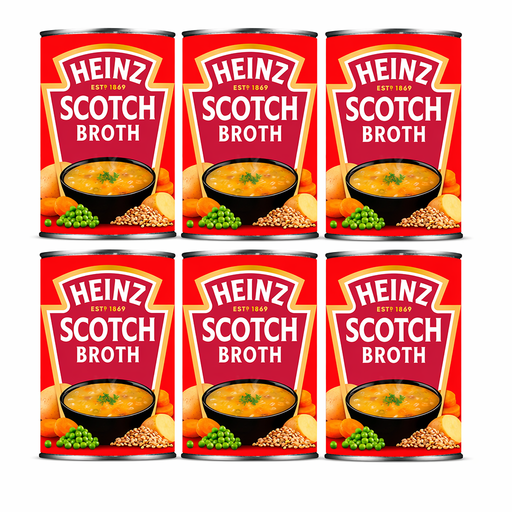 No image available
Six cans offer a multi-can cupboard option when planning soup for several guests. Check the pack’s serving guidance against your bowl size and allow for seconds; this product contains barley and wheat, so check its allergen information for guests.
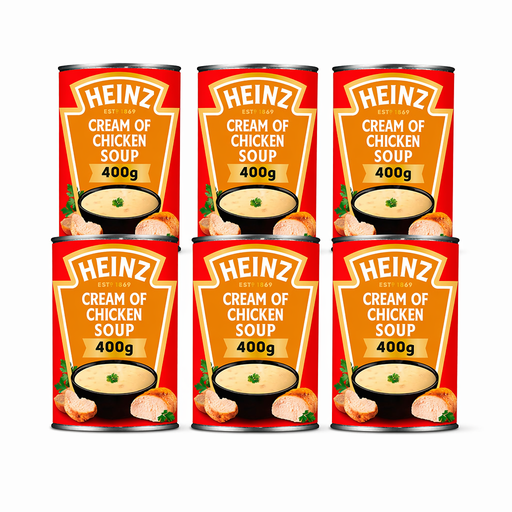 No image available
Six cans provide a chicken-flavoured option for a Christmas-period cupboard supply. Check the pack’s serving size and preparation directions before planning a group meal; this product contains milk and wheat, so check its allergen information for guests.
It can provide eight labelled 200g portions if the specific soup is labelled as two servings per 400g can, as ASDA Groceries states for Heinz Vegetable. Eight guests may need more if bowls are larger or people want seconds, so plan from your intended portion size.
Choose ready-to-heat soup if you want to serve it with less preparation. Condensed soup is an option for a recipe or for adjusting consistency, but check the can’s dilution directions and prepared yield before using it to plan starter portions.
No. ASDA Groceries lists wheat in Heinz Vegetable Soup and milk in Heinz Cream of Tomato Soup. Check the ingredient and allergen statement on each exact flavour you buy.
Follow the opened-storage directions on the can you used. Sainsbury’s Broccoli & Stilton Soup and M&S Cream of Chicken Soup specify refrigeration and use within two days after opening. GOV.UK distinguishes the unopened product’s best-before date, which concerns quality, from a use-by date, which concerns safety.