Shoppers planning a starter
A seafood bisque and a clear beef consommé play different roles at the table. Choose the recipe before deciding how many cans you need, and check its ingredients against your guests’ requirements.


Choose by the role the soup will play: a creamy lobster bisque fits a seafood starter, a clear beef consommé offers a different first course, and asparagus or tomato soup provides a vegetarian option. Before buying, check the particular can’s allergens, ingredients, portion size and nutrition panel; a premium range name does not establish dietary suitability.
A seafood bisque and a clear beef consommé play different roles at the table. Choose the recipe before deciding how many cans you need, and check its ingredients against your guests’ requirements.
Cream of asparagus and creamy tomato soup offer different flavours and can sizes. Vegetarian suitability does not establish whether a soup is suitable for someone avoiding milk, wheat or other allergens.
If salt, saturates or portion size matter to your choice, compare the nutrition panels on the same basis and use the serving information to judge how much soup you will prepare.
Start with the course you want to serve, then compare the exact cans for ingredients, quantity and preparation instructions.
| Priority | What to check | Your needs |
|---|---|---|
| Recipe and course | Check whether the soup is creamy seafood, clear beef or vegetable-based. Read the can weight and serving statement rather than assuming one can makes one portion. | For a seafood starter, I might choose bisque; for a clear first course, consommé is a different fit. A larger tomato soup could work when I want a quick meal. |
| Ingredients and allergens | Read the exact flavour’s ingredients list and highlighted allergens. Check meat-derived and alcohol-containing ingredients separately from vegetarian or gluten-free wording. | If I am serving someone with an allergy or dietary restriction, I need the particular recipe to meet it—not just a reassuring range name. |
| Nutrition and portion | Compare salt and saturates per 100g on the nutrition panels, then consider the amount you intend to serve. Do not treat cans of different weights as equal portions. | I want to compare the soup as part of the meal I am planning, especially if I may serve only some of a larger can. |
| Heating and storage | Follow the can’s heating directions. If any soup remains, check its refrigeration and use-within instructions after opening. | When I am preparing a starter ahead of time or keeping leftovers, I need instructions for that specific soup rather than a rule borrowed from another can. |
Recipes within a premium range can have quite different ingredients. Baxters lobster bisque contains crustaceans, milk, celery and sulphites, while its cream of asparagus soup contains milk and wheat.
Check the current ingredients list and highlighted allergens for the exact flavour before adding it to a meal for guests.
A 400g can and a 580g can do not represent the same quantity of soup. Nutrition figures shown per 100g also describe a different amount from a whole serving.
Check the can weight, stated servings and the amount you expect each person to eat before comparing nutrition panels.
After-opening instructions can differ between recipes, so a time stated for one soup should not be applied to another.
Follow the particular can’s directions for transferring, refrigerating and using any leftovers.
Tesco lists premium tinned soup separately from its Finest fresh-soup range. A chilled soup will not serve the same pantry-shopping purpose as a can.
Check the pack format and storage instructions when choosing soup for the cupboard.
These references describe recipe and format distinctions; they do not mean every product in a brand’s range suits the same meal or dietary need.
The Luxury soups considered here include lobster bisque, cream of asparagus and beef consommé—distinct choices for seafood, vegetarian and clear-soup courses.
M&S Collection Rich Italian Tomato and Basil Soup is a creamy tomato option for shoppers considering a vegetarian meal rather than a meat or seafood starter.
When considering a Heinz soup, use the named recipe and can format—not brand recognition alone—to decide whether it fits a starter or quick meal.
A Campbell's condensed soup requires a different preparation decision from a ready-to-heat soup.
Tesco Groceries distinguishes premium tinned soup from its separate Finest fresh-soup range.
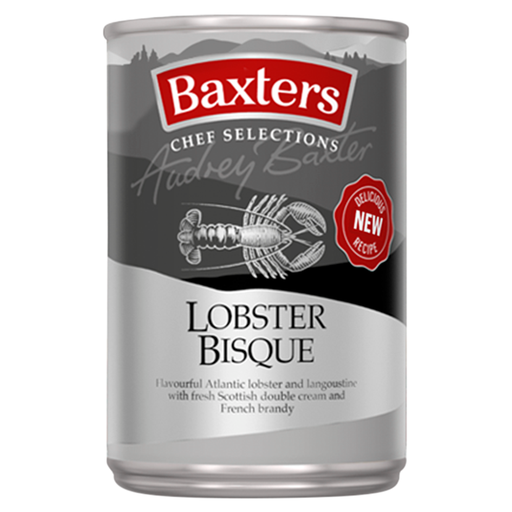
This selection is a lobster bisque for shoppers considering a creamy seafood starter; the other soup styles discussed above remain separate choices.
 No image available
Consider this 400g bisque for a seafood-focused starter when shellfish and dairy suit the people being served. The Joybuy listing names lobster, langoustines, double cream, white wine and French brandy. Check the current can for crustaceans, milk, celery and sulphites; follow its gentle-heating and after-opening instructions.
No. Choose for the course and the guests: lobster bisque is a creamy seafood option, whereas beef consommé is a clear, meat-based soup. Check the particular recipe’s ingredients and allergens before serving it.
Start with the nutrition figures per 100g so the quantities have the same basis, then consider how much of each soup you will actually serve. The NHS advises using food labels to compare prepacked products; can weights alone do not describe the nutrition in your portion.
No. Baxters cream of asparagus soup is vegetarian but contains milk and wheat; its beef consommé is labelled gluten free but contains beef-derived ingredients and celery. For an allergy, check the actual pack’s ingredients and highlighted allergens, as described in Food Standards Agency guidance for prepacked food.
Follow that soup’s after-opening directions, including how to refrigerate leftovers and when to use them. Do not assume a storage period printed on one brand or flavour applies to another.