Cyclists stocking a practical cupboard
A tin of soup offers a low-preparation lunch for a busy day. If you also want food for rides, distinguish that everyday meal from what you plan to eat around a particular session.


Choose tinned soup as a convenient storecupboard meal component, not as the only food you rely on around a demanding ride. After intense or prolonged exercise, UK Sports Institute guidance calls for carbohydrate, protein and fluids; check what the portion of soup contributes and plan other food alongside it.
A tin of soup offers a low-preparation lunch for a busy day. If you also want food for rides, distinguish that everyday meal from what you plan to eat around a particular session.
If you expect to eat soup after intense or prolonged cycling, consider what else will provide carbohydrate, protein and fluids. UK Sports Institute recovery guidance calls for all three soon after that kind of exercise.
Nutrition and ingredients matter when choosing between similar cans, especially if you need to check milk, another allergen or vegetarian suitability. Read the label for the exact recipe rather than relying on its name.
Start with the meal you intend to make, then compare labels per 100g and for the amount you expect to eat. The NHS explains that nutrition information is given per 100g and may also be shown per portion.
| Priority | What to check | Your needs |
|---|---|---|
| Meal contribution | Compare carbohydrate and protein per 100g. Check the stated serving size against the amount you will eat, then consider what other food and fluids are part of the meal. | After a longer or harder ride, I want to know what the soup contributes rather than count the tin as the whole recovery meal. UK Sports Institute guidance calls for carbohydrate, protein and fluids after intense or prolonged exercise. |
| Salt | Compare similar soups using salt per 100g, then look at the amount in your intended portion. The British Dietetic Association advises checking labels because salt can differ between brands. | If soup is a regular cupboard meal for me, I want to compare cans on the same basis instead of assuming a tomato or vegetable recipe has little salt. |
| Ingredients | Read the current ingredients and allergen information. Check any vegetarian or vegan statement against the exact product and recipe. | I need a soup that fits my dietary requirements. Cream-of-tomato soup is not necessarily dairy-free: the Heinz and M&S examples described by Tesco and M&S contain milk. |
| Preparation | Check the can size, heating directions and instructions for storing leftovers. For chunky, bean or pasta recipes, still compare the nutrition panel rather than judging them by texture alone. | For a low-effort lunch, I want a recipe I can prepare as directed and combine with other food when the soup alone does not make the meal I planned. |
Tesco lists 0.8g protein per 100g for Heinz Cream of Tomato Soup, while M&S lists 1.2g per 100g for its Cream of Tomato Soup. Those figures describe the soups, not everything needed after a demanding ride.
After intense or prolonged exercise, use UK Sports Institute guidance on carbohydrate, protein and fluids to plan what you eat and drink alongside the soup.
A figure for half a can cannot be compared directly with another product’s figure per 100g. The NHS says nutrition information is provided per 100g and sometimes per portion.
Compare the per-100g figures first, then use the current label to work out what the quantity you plan to eat contributes.
M&S lists 0.45g salt per 100g for its Cream of Tomato Soup; Tesco lists 0.5g per 100g for Heinz Cream of Tomato Soup. A recipe name alone does not tell you either figure.
Compare salt per 100g between similar soups and check the amount in your portion, particularly if you have been advised to monitor salt intake.
The Heinz and M&S cream-of-tomato examples are described as vegetarian but contain milk. A familiar recipe name does not establish allergen suitability.
Check the current can for ingredients, allergens, dietary statements and directions for storing any leftovers.
These examples show different recipes to investigate; a brand name does not establish the nutrition or ingredients of every soup it makes.
A familiar tinned-soup brand whose cream-of-tomato label provides a useful starting point for comparing cans.
Its tinned-and-packet-soup range includes own-brand recipes alongside other brands, offering several recipe formats to compare.
Its tinned-soup range includes vegetarian and vegan choices as well as chunky vegetable, minestrone and chilli-bean recipes.
Its condensed soups are an option to consider if you want soup that can also be used in cooking.
These tins cover vegetable-based, creamy and meat-named recipes for cupboard meals around cycling. Use the current label to compare what each portion contributes; none should be assumed to cover a demanding ride’s food and fluid needs on its own.
 No image available
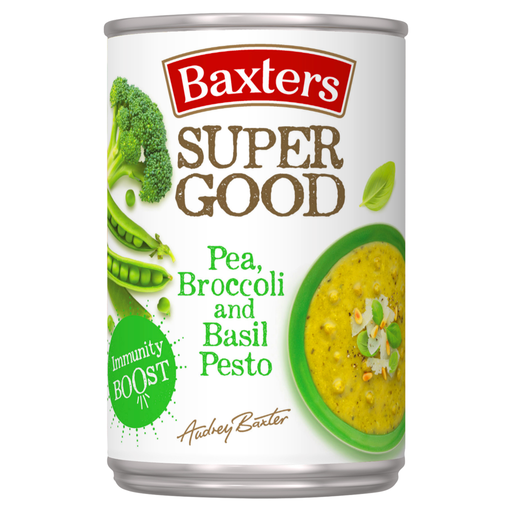
A pea-and-broccoli soup to consider as the base of a cupboard meal. It contains milk, so check the current pack if that affects your choice.
For a meal after intense or prolonged riding, compare the portion’s carbohydrate and protein with the other food you plan to have.
 No image available
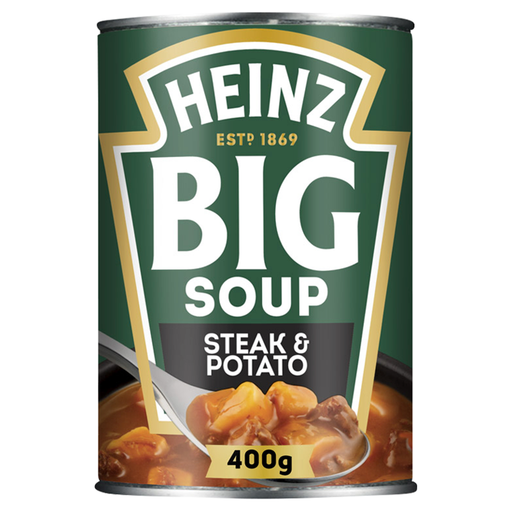
This steak-and-potato recipe is an option when you want a different style of cupboard soup from a smooth tomato or vegetable tin.
Check salt, carbohydrate and protein for the amount you intend to eat, and plan other food and fluids if it is part of a meal after a demanding ride.
 No image available
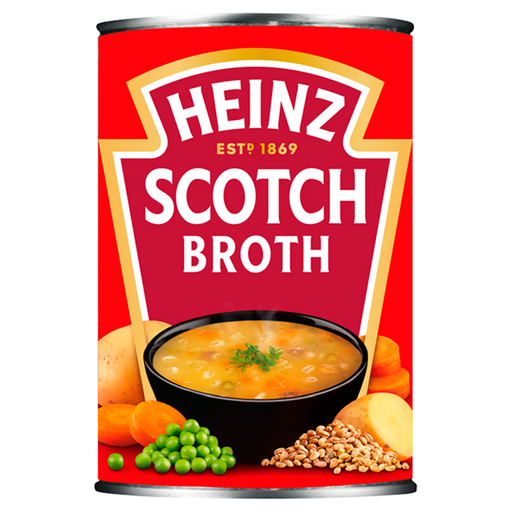
Scotch broth offers another recipe choice for a planned cupboard lunch. It contains gluten from barley and wheat, which matters if you need to avoid either ingredient.
Read the current label for the portion’s nutrition and decide what else belongs in the meal after intense or prolonged riding.
 No image available
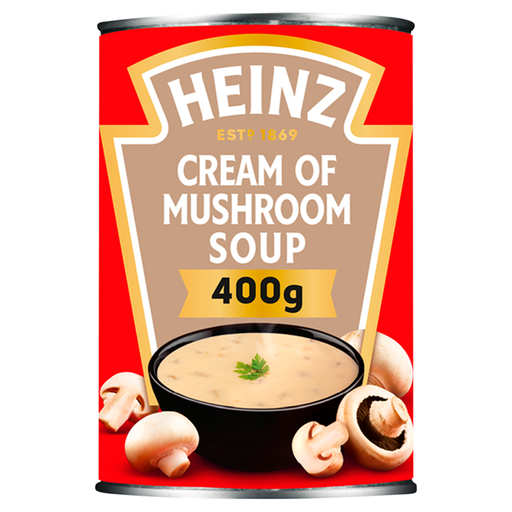
This cream-of-mushroom tin suits a meal plan built around a smooth soup. It contains milk and wheat; do not use the recipe name as a guide to allergen suitability.
Compare the nutrition for your intended portion before deciding which other foods to serve with it.
 No image available
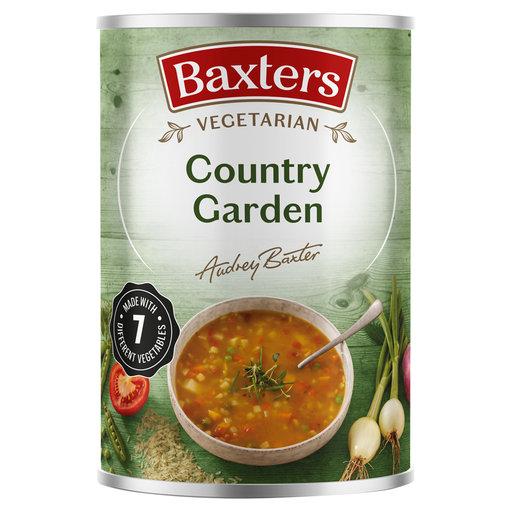
This vegetarian vegetable-and-rice soup is a cupboard option when you want a meal base without meat. It contains milk, so vegetarian suitability does not make it dairy-free.
Check the current can for preparation directions and the nutrition of the portion you plan to eat.
Yes, but do not assume a tin alone covers what you need after intense or prolonged exercise. UK Sports Institute guidance calls for carbohydrate, protein and fluids soon afterwards; check the soup’s contribution and plan other food and drink alongside it.
Compare salt per 100g between similar recipes, then check how much is in the portion you intend to eat. The NHS explains the per-100g basis used on nutrition labels, and the British Dietetic Association advises comparing brands rather than assuming similar soups contain the same amount.
Do not assume so from the name. The Heinz Cream of Tomato Soup described by Tesco and the M&S Cream of Tomato Soup both contain milk, even though they are described as vegetarian; check the current pack of the exact soup you are buying.
Look at energy, carbohydrate, protein and salt per 100g, then check the figures for the amount you will actually eat. NHS guidance says pre-packed-food nutrition information is given per 100g and may also include a per-portion column; the suggested portion need not be the portion you choose.