Desk workers with a microwave
If a microwave is your only way to heat lunch, a can with clear microwave directions helps you plan what bowl and heating steps you will need.


For a desk lunch with only a microwave, look for ready-to-heat soup with microwave directions on the can. Condensed soup needs dilution and stirring, so it makes more sense when you have the equipment and want a soup that can also be used in cooking. Compare salt per 100g and for the amount you plan to eat, then check the current can for allergens and leftover-storage instructions.
If a microwave is your only way to heat lunch, a can with clear microwave directions helps you plan what bowl and heating steps you will need.
Per-100g values help you compare cans, while the serving information helps you work out the figures for the amount you will actually eat.
Check the ingredients and allergen wording on the exact can. A vegetarian or vegan label does not answer a separate allergy question.
Start with the preparation method that works at your desk, then compare the portion, ingredients and instructions for any soup left over.
| Priority | What to check | Your needs |
|---|---|---|
| Preparation | Check whether the soup is ready to heat or condensed. Look for a microwave method, wattage and container instructions on the can; condensed soup may require added liquid and stirring. | With only a microwave at work, I want to know that I can heat lunch using the equipment available, without a dilution step. |
| Salt and portion | Compare salt per 100g, then check the declared serving size and number of servings per can. The NHS describes more than 1.5g salt per 100g as high and 0.3g or less as low. | If I will eat a whole two-serving can, the half-can nutrition figures alone will not describe my lunch. |
| Ingredients and allergens | Read the current ingredients, highlighted allergens and precautionary statements. Check dietary labels separately from allergy wording. | A vegan-recipe label may suit my ingredient preference, but I still need to check whether the can carries a relevant allergen warning. |
| Leftovers | Check how many servings the can contains and the pack directions for transferring, refrigerating and using opened soup. | When I eat half a can, I need a way to store the rest and use it within the period stated on that product. |
Ocado lists M&S Spiced Lentil & Tomato Soup as suitable for vegans, but its product information also says it may contain milk and egg and is not suitable for people with those allergies.
Read the ingredients and precautionary wording on the current can rather than relying on the recipe label alone.
A per-100g figure is useful for comparing soups, but a can labelled as two servings has different totals if you eat it all.
Use the per-100g panel to compare products, then account for the amount you expect to eat.
Tesco Groceries’ directions for Campbell's Condensed Cream of Tomato call for added water, or milk and water, and stirring before heating. That adds preparation compared with a ready-to-heat can.
Check the method before buying: choose condensed soup when you can manage the dilution step or want it for cooking too.
Opened-soup instructions differ by product. Tesco Groceries lists four days refrigerated for its Cream of Tomato, while Ocado lists two days for M&S Cream of Tomato.
Follow the current can’s transfer and refrigeration directions, and choose a serving pattern that lets you use any remainder in time.
These examples illustrate different soup formats and labels; check the particular can rather than applying one product’s details to a whole range.
Tesco Cream of Tomato is a ready-to-heat 400g option with directions for microwave preparation.
Heinz Cream of Tomato is a 400g soup for shoppers considering a familiar tomato variety.
Campbell's Condensed Cream of Tomato is a concentrated option when you also want soup for cooking.
The cited M&S examples include Cream of Tomato and a Spiced Lentil & Tomato recipe labelled suitable for vegans.
These cans offer soup options for a storecupboard desk lunch. If you depend on a workplace microwave, check the heating directions on the exact pack before choosing.
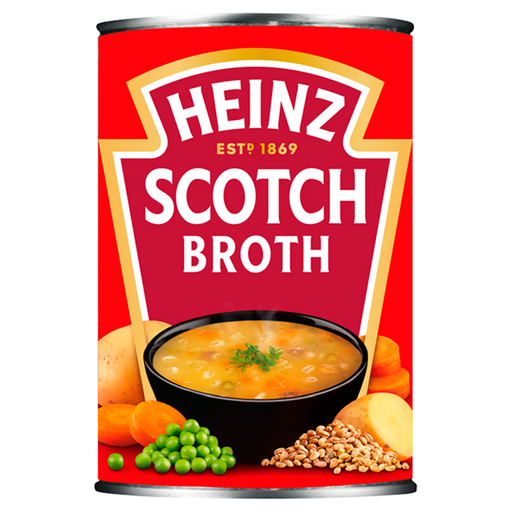 No image available
For a lunch with a microwave, follow the can’s 850W heating directions, including the stirring step. The soup contains barley and wheat, so check the current can if gluten matters to you.
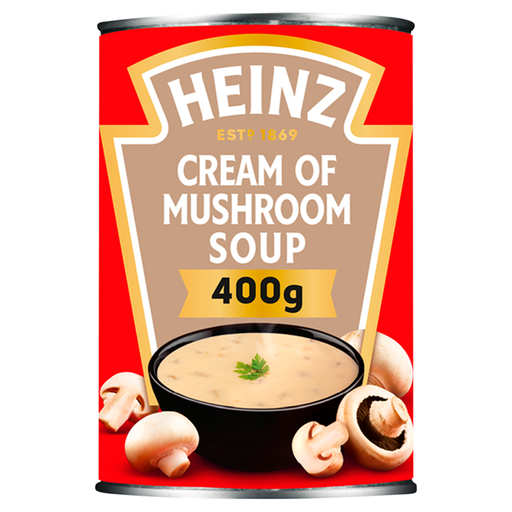 No image available
For a microwave lunch, its directions call for a covered microwave-safe bowl and give guidance at 850W. It contains milk and wheat; check the current can if either matters to you.
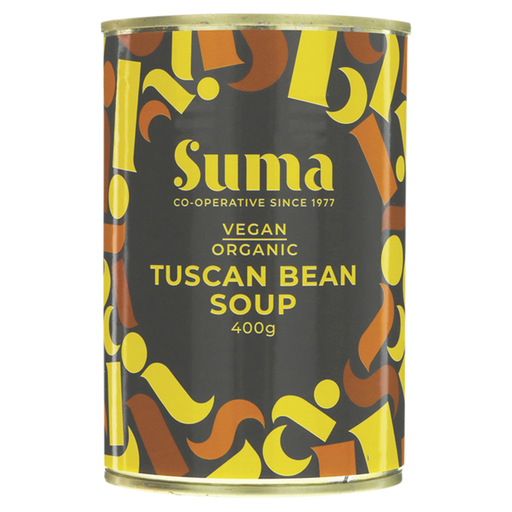 No image available
A bean-and-vegetable soup option for lunch. If a microwave is your only heating equipment, check the pack’s method and serving information before choosing it; the listed ingredients include celery.
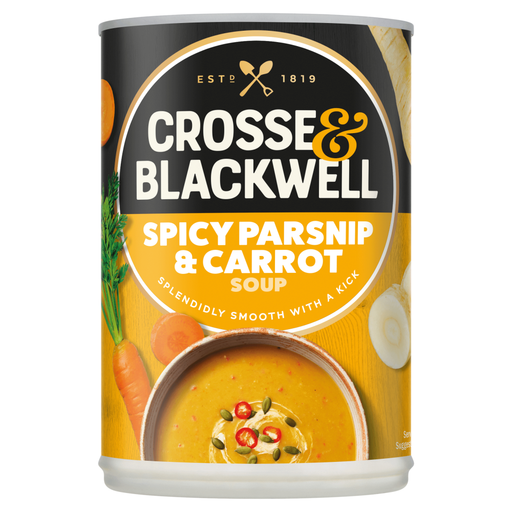 No image available
If this flavour appeals for a desk lunch, check the current pack’s microwave method and serving count against your plans. The listed allergens include celery, milk and wheat.
Use the preparation method on the exact can rather than assuming it can go in the microwave. The cited M&S microwave directions call for a microwave-safe container with a vented lid, not heating in the can.
Not necessarily: the cited Tesco and M&S 400g soups are labelled as two servings per can. Decide whether you will eat the whole can or refrigerate a remainder, and use nutrition figures for the amount you eat.
Compare salt per 100g first, then check the serving figure and how much soup you plan to eat. The NHS uses more than 1.5g per 100g for a high-salt label and 0.3g or less per 100g for a low-salt label.
No. Ocado lists M&S Spiced Lentil & Tomato as suitable for vegans, but its product information says it may contain milk and egg and is not suitable for people with those allergies. Check the current can’s allergen wording.
Follow the period and storage method on the particular can. Tesco Groceries says to transfer and refrigerate leftover Tesco Cream of Tomato and consume it within four days; Ocado lists two days after opening for M&S Cream of Tomato.