Choose tinned soup by the carbohydrate and salt in the amount you plan to eat, rather than assuming that a premium, vegetable-led or Eat Well description makes it suitable for your diabetes meal plan. Vegetable, pulse-based and meat-containing soups offer different ingredients and label values; check the current pack for portions and allergens, and use your established care plan if you count carbohydrates for insulin.
Who needs to check what?
People who count carbohydrates for insulin
Diabetes UK explains that carbohydrate counting can be used to match insulin to carbohydrate intake. If this is part of your established plan, use the carbohydrate value for the amount of soup you will actually eat, rather than assuming the tin contains one serving.
Shoppers planning a convenient lunch
A vegetable or pulse-based soup may appeal when you want those ingredients in a quick meal. Check the carbohydrate, salt, portion information and ingredients on the exact pack; a premium or low-fat description does not answer those questions.
Shoppers comparing salt
Salt is worth comparing across the flavours you would eat regularly. In a February 2026 analysis of 481 ready-to-eat soups, Action on Salt & Sugar found that 23% exceeded UK salt-reduction targets. That figure describes the soups analysed, not the proportion of shoppers concerned about salt.
What matters on a tinned soup label?
Compare soups per 100g first, then work out the figures for your bowl or the whole tin.
| Priority |
What to check |
Your needs |
| Carbohydrate and portion |
Read carbohydrate per 100g and any stated serving. Use the weight you intend to eat to calculate your portion, and account separately for bread or croutons. Diabetes UK advises using an individual plan when counting carbohydrates for insulin. |
I need the carbohydrate figure for my bowl, not just the manufacturer's suggested serving. If I add bread, that belongs in my meal calculation too. |
| Salt |
Compare salt per 100g, then calculate the amount in your portion. For example, Marks & Spencer lists 0.43g salt per 100g for its Spiced Lentil and Tomato Soup and 0.50g per 100g for its Chunky Vegetable Soup; check the current packs before choosing. |
When soup is a regular lunch, I want to compare the salt in the quantity I will eat, rather than judge it by the flavour or range name. |
| Ingredients and allergens |
Check the ingredient list for pulses, rice, barley or other ingredients relevant to your meal. Read the highlighted allergens on the exact pack, particularly if you must avoid milk, wheat or celery. |
A vegetable, bean or chicken soup might fit the meal I am planning, but I also need its ingredients and allergens to meet my requirements. |
Common soup-shopping mistakes
-
Taking a range name as diabetes-specific guidance
Premium, vegetable-led, Eat Well and low-fat descriptions do not tell you the carbohydrate in your portion. Diabetes UK notes that carbohydrate counting can matter for people matching insulin to food.
Read the carbohydrate value per 100g, calculate it for the amount you will eat and follow your established care plan.
-
Using the stated serving when you will eat more
A label's portion may differ from your bowl. Action on Salt reported suggested servings ranging from 147.5g to 500g in its 2026 review of ready-to-eat soups.
Compare products per 100g, then calculate carbohydrate and salt for your intended portion.
-
Assuming similar soups have similar salt levels
Action on Salt & Sugar found substantial variation among the 481 ready-to-eat soups in its February 2026 UK analysis; 23% exceeded UK salt-reduction targets.
Compare the salt figures on the exact flavours you are considering, using the same portion size.
-
Forgetting allergens and accompaniments
Ingredients vary between creamy and chunky soups, while bread or croutons add carbohydrate beyond what the soup label describes.
Check the current pack's highlighted allergens and include any sides when working out the carbohydrate in your meal.
Brand and retailer reference points
A brand or range can help narrow the flavours to inspect, but the nutrition panel and ingredients belong to the individual soup.
M&S Eat Well
Marks & Spencer lists Spiced Lentil and Tomato and Chunky Vegetable among its Eat Well tinned soups.
- Marks & Spencer says the Eat Well flower identifies products meeting criteria developed by its nutritionists.
- The flower is not a diabetes-specific indication. Check carbohydrate, salt, ingredients and allergens on the particular soup.
Heinz
Heinz offers different canned-soup recipes, including Cream of Tomato and Vegetable.
- The individual labels allow a recipe-by-recipe comparison: Joybuy lists 6.8g carbohydrate and 0.5g salt per 100g for Heinz Cream of Tomato, while Tesco lists 8.3g and 0.7g respectively for Heinz Vegetable.
- A low-fat description does not establish the carbohydrate or salt value of another Heinz recipe.
Tesco
Tesco's tinned-and-packet soup catalogue includes own-label and branded options.
- Comparing the nutrition panels of specific own-label and branded soups can help you choose between recipes.
- Use the current pack for the final ingredients, allergens and nutrition values.
Campbell's
Campbell's appears in Tesco's UK tinned-and-packet soup catalogue.
- For a condensed soup, check its preparation directions and the nutrition values relevant to the amount you will eat.
Baxters
Tesco places Baxters Cullen Skink, Lobster Bisque and Beef Consommé on its premium tinned-soup shelf.
- Premium shelf placement says nothing about a recipe's carbohydrate, salt or suitability for an individual meal plan; compare the exact pack.
Joybuy tinned soup options
These Joybuy options include creamy, vegetable, beef and bean-based 400g soups. Compare the current pack of each one with your intended portion and ingredient requirements; the range name alone does not indicate diabetes-specific suitability.
 No image available
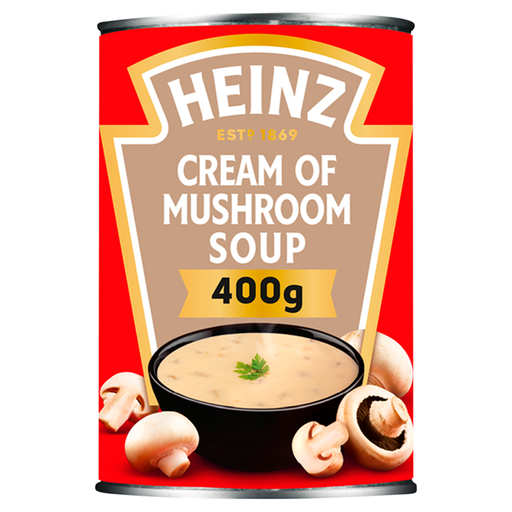
Heinz Cream of Mushroom Soup 400g
If you prefer a creamy mushroom soup, compare the current pack's carbohydrate and salt figures for your portion. Check its allergen declaration if milk or wheat is a concern.
View on Joybuy
 No image available
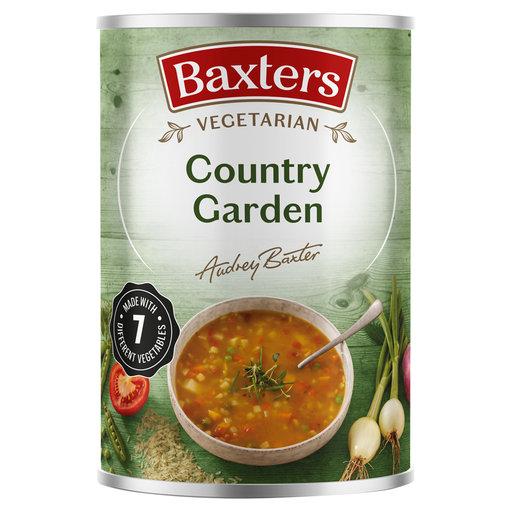
Baxters Vegetarian Country Garden Soup 400g
This vegetarian vegetable soup is an option when you want a meat-free recipe. Check the current pack's carbohydrate and salt for your portion, along with its ingredients and allergens.
View on Joybuy
 No image available
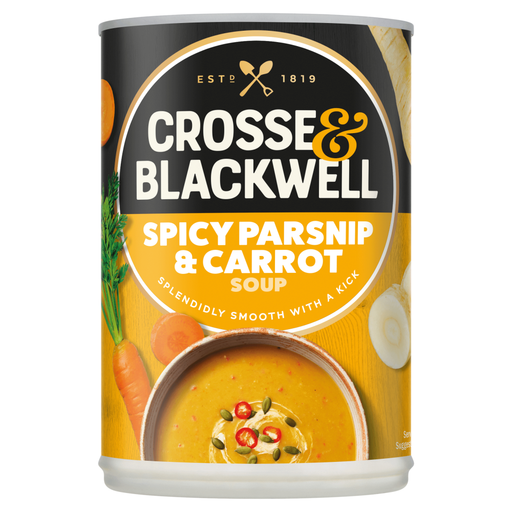
Crosse & Blackwell Best of British Spicy Parsnip & Carrot Soup 400g
For a parsnip-and-carrot flavour, check the carbohydrate and salt on the current pack for the quantity you will eat. Read the allergen declaration if celery, milk or wheat matters to you.
View on Joybuy
 No image available
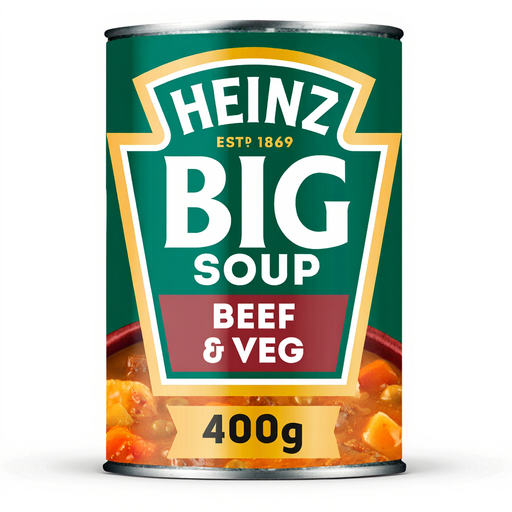
Heinz Big Soup Beef & Vegetable 400g
This beef-and-vegetable recipe offers a different ingredient choice from the creamy and vegetarian soups. Use the current pack to compare carbohydrate and salt for your portion, and check its allergens.
View on Joybuy
 No image available
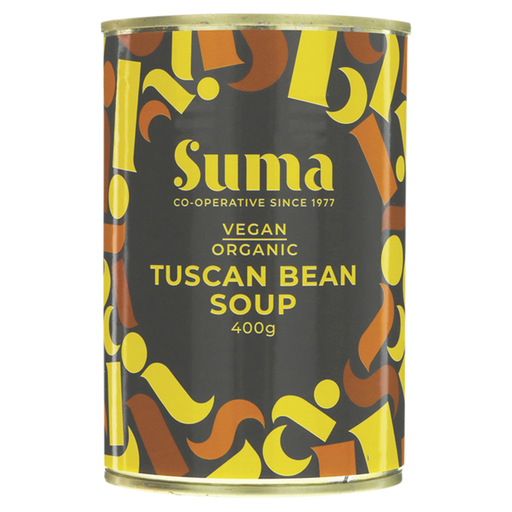
Suma Organic Tuscan Bean Soup 400g
If you want a bean-based soup, compare this recipe's current carbohydrate and salt values for the amount you will eat. Check the allergen declaration if celery is a concern.
View on Joybuy
Questions about choosing tinned soup
Does a low-fat label make a soup suitable for a diabetes meal plan?
No: low fat does not tell you the carbohydrate or salt in your portion. Tesco lists Heinz Vegetable Soup at 8.3g carbohydrate and 0.7g salt per 100g, so check the nutrition panel and the amount you intend to eat.
Should I use the whole tin or the stated serving for carbohydrate counting?
Use the amount you will actually eat: that may be a stated serving, a different-sized bowl or the whole tin. The NHS cautions that a manufacturer's portion may differ from yours; if you count carbohydrates for insulin, follow your individual diabetes care plan.
How can I compare salt between tinned soups?
Compare salt per 100g on the exact products, then calculate it for your portion. Action on Salt & Sugar found substantial variation in its February 2026 analysis of 481 ready-to-eat soups, with 23% exceeding UK salt-reduction targets; that survey does not determine the value on an individual tin.
Does the M&S Eat Well flower mean a soup is diabetes-specific?
No. Marks & Spencer says the flower identifies products meeting criteria developed by its nutritionists; it does not replace checking the particular soup's carbohydrate, salt, ingredients and allergens against your needs.


