Hosts serving guests with different dietary needs
Plan portions for the group, but check the dietary designation and allergen information on each soup you intend to serve. A vegetarian or vegan label does not, by itself, answer an allergy question.


Choose the soup by its place in the menu, then work out how many tins you need from the serving statement on the exact product rather than treating one tin as a family-size course. A ready-to-heat soup suits a starter, a chunky soup can form a more substantial course, and condensed soup makes sense when it is part of a planned dish. Check the current label against the dietary needs and allergies of everyone who will eat it.
Plan portions for the group, but check the dietary designation and allergen information on each soup you intend to serve. A vegetarian or vegan label does not, by itself, answer an allergy question.
A ready-to-heat soup keeps the starter separate from the main course. Use the selected tin’s serving statement and your guest count to plan the quantity.
Condensed soup can be used in a planned sauce or pasta dish instead of being served as the starter. Check the recipe ingredients as well as the soup label before cooking for the group.
Decide whether the soup is a starter, a larger course or a cooking ingredient; then check portions and the exact labels for the guests who will eat it.
| Priority | What to check | Your needs |
|---|---|---|
| Enough to serve | Read the serving statement and tin size. Sainsbury’s lists half a 400g tin as a serving for Heinz Minestrone; calculate the quantity from the soup you choose and the number of guests eating it. | I want everyone having soup to receive a planned portion, rather than assuming one tin will serve the family. |
| Menu role | Check whether the product is ready to heat, a chunky soup course or condensed soup for a recipe. Campbell’s describes its Condensed Cream of Chicken Soup as an ingredient for dishes including pasta and sauces. | Is soup a small starter, a more substantial course or part of the shared main dish? That choice affects what else I need to prepare. |
| Guest suitability | Check the current ingredient list, allergen information and dietary designation for each tin. The M&S minestrone listing identifies it as vegan but also lists gluten and restrictions for people with milk or egg allergy. | Guests need to be able to identify which dish fits their stated dietary needs; a flavour name or vegan label alone is not enough for an allergy decision. |
A 400g tin is a pack size, not a promise that it will feed a family. Sainsbury’s lists half a tin as a serving for Heinz Minestrone.
Count the guests having soup and calculate the number of tins from the serving statement on the product you select.
Sainsbury’s lists vegetarian Heinz Minestrone with wheat, egg, celery and celeriac. M&S lists its vegan minestrone with gluten and restrictions for milk and egg allergy.
Check the current label against each guest’s stated needs before deciding which soup they can be served.
Campbell’s presents its Condensed Cream of Chicken Soup as a cooking ingredient for uses including pasta and sauces. A dish built around it needs a recipe plan.
Choose condensed soup when it fits the dish you intend to make; choose a ready-to-heat soup if you want to serve soup on its own.
A sauce, bake or pasta dish may also call for other ingredients and preparation time.
Campbell’s warns that ingredients can change, which matters when a guest has an allergy or a specific dietary requirement.
Read the label on the tins you buy, and check it again before cooking or serving.
These examples illustrate different soup formats and label checks; each detail applies to the named product or range, not every soup carrying the brand.
Heinz has conventional and Big Soup-style tinned products in Tesco’s soup category. Its Minestrone 400g provides a specific example for starter portion planning.
Campbell’s Condensed Cream of Chicken Soup is a reference for using soup in a planned shared dish rather than choosing a ready-to-heat starter.
M&S lists both a 400g minestrone and a 400g chunky chicken and vegetable soup, illustrating different menu and dietary routes.
Tesco’s soup category lists own-label 400g varieties, including Cream of Tomato, Vegetable, Cream of Mushroom and Minestrone, alongside other brands.
Sainsbury’s tinned-soup category includes flavours such as tomato and mushroom for hosts considering a quick soup course.
These tinned soups are options to consider for a dinner-party starter or soup course. Compare their pack sizes, serving statements and current labels before deciding how many to serve.
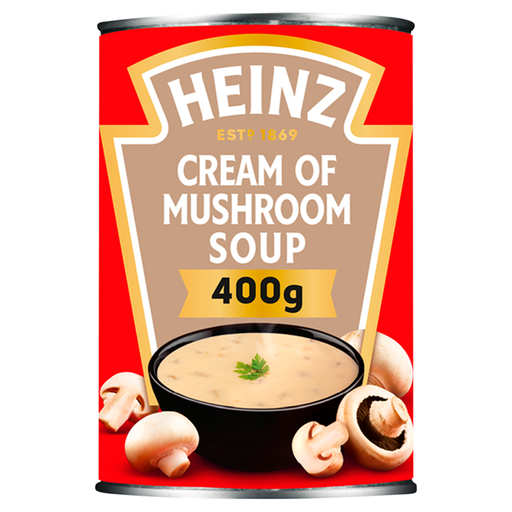 No image available
A mushroom soup to consider for a starter. Use its serving statement to plan portions, and check the milk and wheat allergen information against guests’ needs.
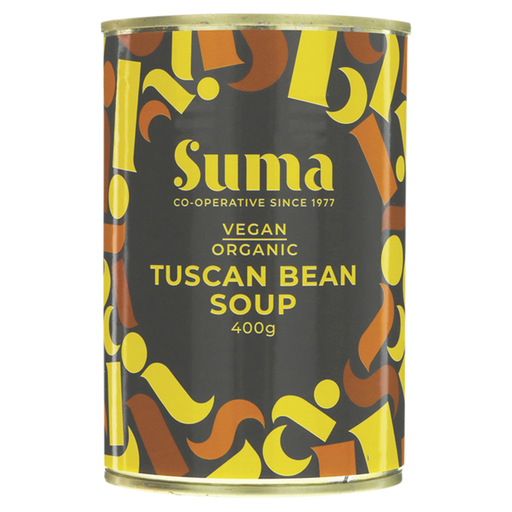 No image available
A bean soup to consider when soup has a larger role in the meal. Check the tin for its serving statement, celery allergen information and any dietary designation relevant to your guests.
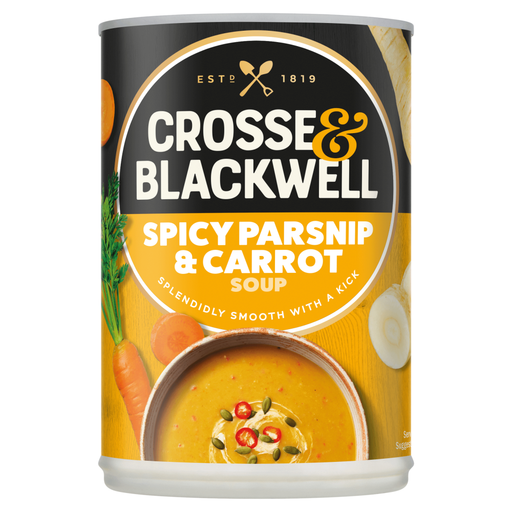 No image available
A parsnip and carrot flavour to consider for a starter. Confirm the serving statement and check the celery, milk and wheat allergen information on the tin before serving.
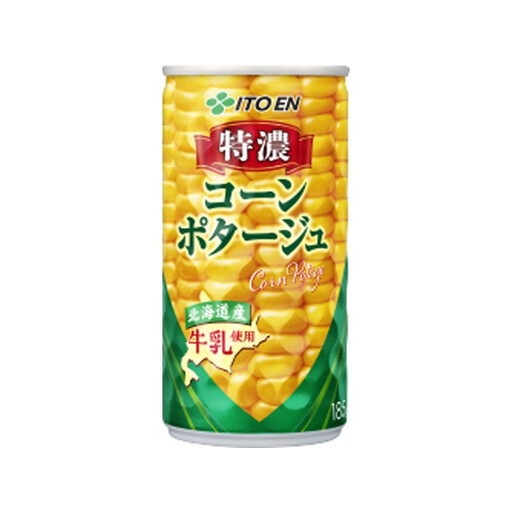 No image available
A smaller can to consider for a soup starter. Check its serving statement before planning quantities; its ingredient information lists milk and chicken bouillon flavouring, so confirm suitability for the guests receiving it.
Count the guests who will have soup and use the serving statement on the exact product to calculate the number of tins. Sainsbury’s lists half a 400g tin as a serving for Heinz Minestrone, but that serving basis should not be applied to other soups without checking.
Not necessarily: check each guest’s needs against the current product label. Sainsbury’s lists vegetarian Heinz Minestrone with wheat, egg, celery and celeriac; M&S lists its vegan minestrone with gluten and restrictions for people with milk or egg allergy.
Choose it for a starter only if the particular product’s directions suit how you plan to serve it. Campbell’s presents its Condensed Cream of Chicken Soup as a cooking ingredient for uses including pasta and sauces, so a dish made with it needs its other ingredients and preparation planned too.
Read the ingredient and allergen information on the exact tin before serving it to a guest with an allergy. Food Standards Scotland explains that the UK’s 14 declarable allergens are emphasised in the ingredient list when used in prepacked food; a vegetarian or vegan designation does not replace that check.
Follow the storage directions on the product you opened. The M&S minestrone and chunky chicken soup listings advise refrigerating opened contents and eating them within two days; check other tins for their own instructions.