Families stocking a first cupboard
If you are planning several quick meals, start with the servings stated on each tin and work out how many portions the household needs. A 400g tin is not automatically enough for everyone.


For a family’s first food shop, choose tinned soup by the portions you need, the recipes your household will eat and each person’s dietary requirements. Some checked 400g soups state two servings, so one tin may not cover a shared meal; compare the ingredient, allergen and salt labels before buying several of one flavour.
If you are planning several quick meals, start with the servings stated on each tin and work out how many portions the household needs. A 400g tin is not automatically enough for everyone.
If family members need different ingredients or must avoid particular allergens, check each flavour separately. A vegetable-based or vegetarian description does not replace the product’s ingredient and allergen information.
Smooth tomato soup and chunkier recipes offer different kinds of meal. Decide whether soup will be the whole meal or served with other food, then plan portions accordingly.
Plan the portions first, then compare recipes and labels tin by tin rather than assuming that soups with similar names are interchangeable.
| Priority | What to check | Your needs |
|---|---|---|
| Portions | Read the servings per tin and the serving size. Sainsbury’s Cream of Tomato Soup and M&S Chunky Vegetable & Chicken Soup are each listed as serving two. | Will one tin cover this meal, or do we need several tins or food alongside the soup? |
| Recipe | Compare smooth and chunky descriptions and read the actual ingredients. Check the serving statement even when a recipe contains larger pieces of meat or vegetables. | For a light meal, smooth soup might suit us; on another day, we may want a chunkier recipe. |
| Salt | Compare salt per 100g and per stated serving on the packs you are considering. The NHS states an adult maximum of 6g of salt a day. | If soup will appear often in our meals, I want to see how a serving fits alongside the other food we eat. |
| Ingredients and allergens | Read the dietary statement, ingredient list and allergen declaration for the exact flavour. Ocado’s M&S Minestrone listing describes a vegan recipe but also lists celery and wheat. | Our household needs the label checked for each person’s requirements, not just a reassuring-sounding flavour name. |
| Leftovers | Check the instructions for storing soup after opening and how soon it must be used. Sainsbury’s checked Cream of Tomato listing says to refrigerate opened soup and use it within two days. | If we will use only part of a tin, I need to know how to store the remainder. |
Several checked 400g soups state two servings. Counting tins without counting portions can leave too little soup for a shared meal.
Use the serving statement to plan each soup meal, including any other food you intend to serve with it.
Recipes differ even within a familiar soup range. Ocado’s M&S Minestrone listing, for example, describes a vegan recipe while listing celery and wheat.
Read the ingredient and allergen information for the exact flavour and pack before choosing it for someone with a dietary restriction.
Salt is listed for a measured quantity or serving, so flavour names alone do not tell you how the soups compare. The NHS states an adult maximum of 6g of salt a day.
Compare the packs’ salt figures per 100g and per serving, taking account of the rest of the meal.
GOV.UK distinguishes quality-related best-before dates from safety-related use-by dates. Opening a tin also brings the product’s own storage instructions into play.
Follow the date and storage wording on the pack. For leftovers, use its specific instructions for transferring, refrigerating and using the soup.
These are examples of recipes and labels to compare, not a judgement about every soup made by each brand.
Sainsbury’s checked listing identifies Heinz Cream of Tomato as a 400g vegetarian soup.
Tesco Groceries listed 400g own-label cream of tomato and vegetable soups.
The checked Sainsbury’s Cream of Tomato Soup is a 400g recipe listed as serving two.
The checked M&S listings include a two-serving Chunky Vegetable & Chicken Soup and a minestrone described as prepared to a vegan recipe.
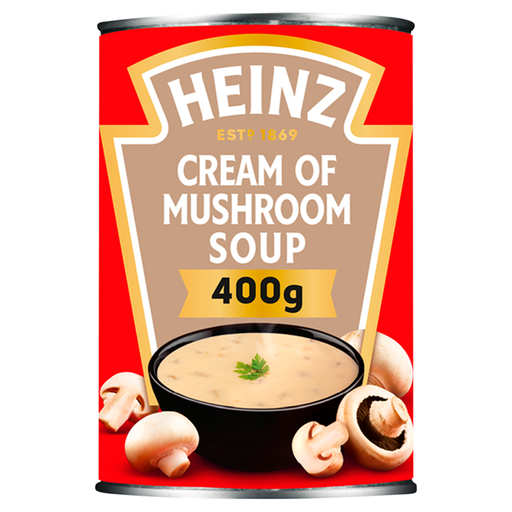
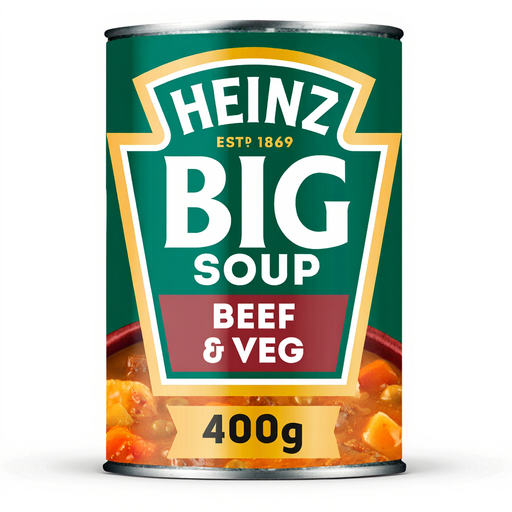
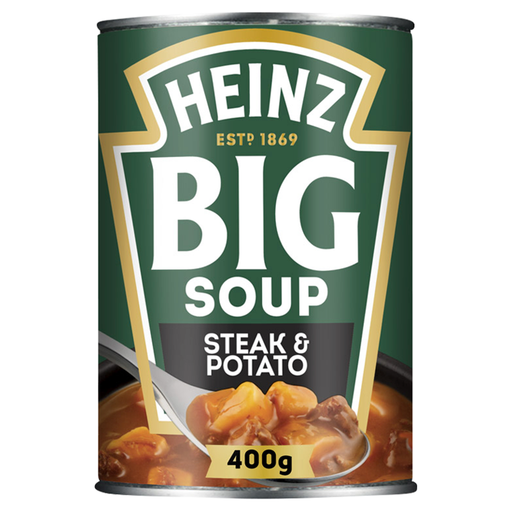
These Heinz 400g soups offer mushroom and beef-based recipes to consider for the first shop. Check the pack’s portions, format and dietary information against your household’s plans.
 No image available
A mushroom recipe to consider if your household wants an alternative to tomato soup. Check the current pack’s serving guidance and allergen label before planning meals for anyone with dietary restrictions.
 No image available
A beef-and-vegetable recipe to consider when choosing between meat-based and smooth soups. If your shop specifically requires tins, confirm the pack format; check its allergen label before buying for anyone with dietary restrictions.
 No image available
A steak-and-potato recipe for a meat-based soup meal. Check the pack’s serving guidance to work out how many cans your family would need, as well as its current ingredient and allergen information.
Work from the servings stated on the exact tin and the number of people eating. The checked Sainsbury’s Cream of Tomato and M&S Chunky Vegetable & Chicken soups each state two servings, so one of those tins alone would not provide a stated serving for more than two people.
No. A vegetarian description does not answer every allergen or ingredient question. Read the exact flavour’s label; Ocado’s checked M&S Minestrone, for example, is described as prepared to a vegan recipe but lists celery and wheat.
Follow that product’s opened-pack instructions. Sainsbury’s checked Cream of Tomato listing says to refrigerate opened soup and use it within two days; check the container and storage directions on the tin you actually open.
No. GOV.UK explains that a best-before date concerns quality, while a use-by date concerns food safety. Read the date wording and storage instructions on the particular product rather than treating the two dates as interchangeable.
Compare the salt figures per 100g for a like-for-like measure, then check the amount per stated serving for the portion you plan to eat. The NHS states an adult maximum of 6g of salt a day, so consider the serving alongside the rest of the day’s food.