Parents making a quick after-school tea
A ready-to-heat soup avoids the dilution required by condensed soup. If you choose a condensed can, allow for the liquid and preparation steps on its label.


A ready-to-heat tomato soup avoids the dilution step when tea needs to be quick; condensed soup calls for an extra preparation step but can also be used in cooking. Whichever format you choose, compare salt per 100g and the portion you intend to serve, check allergens on the can, and follow its preparation directions.
A ready-to-heat soup avoids the dilution required by condensed soup. If you choose a condensed can, allow for the liquid and preparation steps on its label.
Compare similar soups per 100g, then look at the amount you plan to serve. NHS Healthier Families notes that ready-made soup can contribute substantially to salt intake.
Read the current can’s ingredients before serving. The cited Heinz and M&S cream-of-tomato soups contain milk; the cited Campbell’s condensed cream-of-tomato soup contains milk and celery.
Decide whether you want to heat and serve or dilute the soup first, then check the label against the portion and preparation time you have in mind.
| Priority | What to check | Your needs |
|---|---|---|
| Salt | Compare salt per 100g across similar ready-to-heat soups, then check the salt in the portion you intend to serve. The NHS defines low salt as 0.3g or less per 100g; a lower figure than another soup does not necessarily meet that definition. | I want to account for the soup alongside the other foods at tea, rather than judging it by its flavour or brand. |
| Preparation | Check whether the soup is ready to heat or requires dilution. Campbell’s Condensed Cream of Tomato calls for one can of water, or a mixture of half milk and half water, before heating; follow the directions for the product you buy. | On a rushed evening, I would rather heat and serve. If I have time to add liquid, condensed soup may fit the meal instead. |
| Ingredients | Read the current pack’s ingredient and allergen information, particularly for milk or celery. Check a vegetarian designation separately from allergy suitability. | Where someone eating the soup has an allergy or intolerance, I need to check the exact can before serving it. |
| Leftovers | Check the opened-can storage directions and whether the can size fits what your household will use. The cited Heinz and M&S tomato soups say to refrigerate leftovers and use them within two days; Tesco Stockwell Tomato Soup specifies transfer to a non-metallic container, refrigeration and use within four days. | If one can will cover more than one serving, I want a realistic plan for the remainder. |
The NHS warns that ready-made soups can contain substantial salt. Asda Groceries lists 1.1g salt in a half-can serving of the cited Heinz Cream of Tomato Soup.
Compare similar soups per 100g, then check the amount in the portion you will serve and consider the rest of the meal.
Tesco Groceries lists Campbell’s condensed soup at 0.91g salt per 100g as sold, while its serving instructions call for added liquid. That figure alone does not describe the prepared portion.
Read the dilution directions and compare the amount of soup actually used for each serving before drawing a conclusion from nutrition panels.
An online description may not reflect the recipe on the can being served. This matters particularly when a child needs to avoid an ingredient.
Check the current physical pack’s ingredients and highlighted allergens each time, even if you have bought the soup before.
Opened-can instructions differ between the cited tomato soups: Heinz and M&S specify use within two days after refrigeration, while Tesco Stockwell specifies up to four days after transfer to a non-metallic container and refrigeration.
Choose a can size you expect to use and follow that product’s directions for storing leftovers.
These examples describe specific tomato soups, not every soup made by each brand.
The cited Cream of Tomato is a 400g ready-to-heat soup.
The cited 295g Condensed Cream of Tomato can be prepared with water, or with a mixture of milk and water, and can be used in cooking.
The cited Stockwell & Co Tomato Soup is a 400g ready-to-heat option.
The cited Cream of Tomato is a 400g ready-to-heat soup containing milk ingredients.
This 400g vegetarian-labelled soup is an option to consider for a tinned-soup tea; check its current can against your preparation, salt and allergen needs.
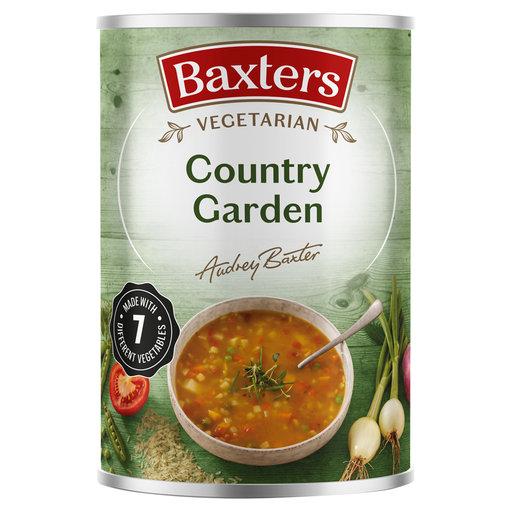 Image unavailable
For a tinned-soup tea, check this 400g can’s current salt label, ingredients and heating directions against the portion and preparation time you have in mind. A vegetarian name does not replace an allergen check.
Compare similar ready-to-heat soups per 100g, then check the salt in the amount you plan to serve. The NHS defines low salt as 0.3g or less per 100g and high salt as more than 1.5g per 100g. NHS Healthier Families gives maximum daily salt amounts of 3g for ages 4–6 and 5g for ages 7–10, so the portion and the rest of the day’s food matter too.
Do not assume a cream-of-tomato soup is suitable: the cited Heinz and M&S products contain milk, and the cited Campbell’s condensed product contains milk and celery. Check the ingredient and allergen information on the exact can before serving it.
Yes. The cited Campbell’s Condensed Cream of Tomato calls for one can of water, or half milk and half water, before heating. Follow its directions rather than treating the contents as a ready-to-heat soup; its nutrition figure per 100g refers to the product as sold.
Follow the directions on that soup’s label. The cited Heinz and M&S tomato soups specify refrigeration and use within two days; the cited Tesco Stockwell soup specifies transfer to a non-metallic container, refrigeration and use within four days.
No. A vegetarian designation does not tell you whether a soup contains an allergen. Read the current ingredient list and highlighted allergens for the exact product, particularly when choosing for someone with an allergy or intolerance.