Parents making lunch at home
A ready-to-heat tin can fit a short lunchtime routine. Check the stated portion, heating directions and what else you will serve with it.


For a quick lunch at home, choose a ready-to-heat soup when fewer preparation steps matter; choose condensed soup when you are happy to add liquid or want a base for cooking. Compare the portions, salt and allergens stated on each tin, and plan what to serve alongside the soup rather than assuming it will make the whole lunch.
A ready-to-heat tin can fit a short lunchtime routine. Check the stated portion, heating directions and what else you will serve with it.
Pack weight and declared servings help you work out how many tins to open. A condensed soup needs added liquid, so compare its preparation instructions rather than treating it as a ready-to-heat tin.
Vegetarian wording does not answer an allergy question. The creamy tomato examples discussed here contain milk, while the Campbell's condensed example also lists celery; check the exact product label before serving.
Start with how you will prepare the soup, then check the portion and label details that matter for the child eating it.
| Priority | What to check | Your needs |
|---|---|---|
| Portions and format | Check the tin weight and declared servings. For condensed soup, follow the instruction to add liquid before heating; its weight as sold does not describe the prepared soup. | I need to know how many people the tins will serve, particularly if lunch is for the whole household. |
| The rest of lunch | Decide what will accompany the soup. NHS Healthier Families suggests basing the main lunch item on foods such as bread, rice, pasta or potatoes, with fruit and vegetables also included. | If soup is the warm part of lunch, I can add a suitable starchy food and fruit or vegetables according to the child's appetite and dietary needs. |
| Salt | Read the amount per stated serving and its weight before comparing tins. NHS guidance gives daily salt limits of 3g for children aged 4 to 6 and 5g for those aged 7 to 10. | Salt matters to me when I am planning the child's other meals and snacks that day; a per-100g figure alone may not reflect the portion served. |
| Allergens and ingredients | Read the ingredients and allergen declaration on the exact tin. Campbell's identifies milk and celery in its condensed cream-of-tomato soup; vegetarian suitability is a separate check. | For a child with an allergy, I need the current label for the particular soup, not an assumption based on its flavour or vegetarian wording. |
| Preparation and leftovers | Check the hob or microwave directions and whether dilution is required. Follow that product's instructions for transferring, refrigerating and using any soup left after opening. | A short heating routine helps at lunchtime, but I also need to know what to do with an opened tin. |
A smaller condensed tin and a larger ready-to-heat tin have different preparation instructions. The amount in the tin is not, by itself, the amount of prepared soup you will serve.
Check weight, declared servings and any liquid to add before deciding how many tins the lunch requires.
Sainsbury's lists 0.89g salt per half-can for its cream-of-tomato soup, while Tesco lists 1.12g per half-can for its own example. The stated serving basis matters when reading either figure.
Compare the current labels on a like-for-like portion and consider the other foods served that day. NHS daily salt guidance varies by a child's age.
A portion of smooth soup may leave out the starchy main item and fruit or vegetables suggested in NHS Healthier Families lunchbox guidance.
Serve soup with a suitable bread, pitta, rice, pasta or potato item, and add fruit or vegetables as appropriate for the child.
The creamy tomato examples discussed here contain milk. Campbell's condensed cream-of-tomato soup also identifies celery, so vegetarian suitability does not establish allergy suitability.
Read the ingredients and allergen declaration on the exact tin each time, especially if the recipe or packaging has changed.
Tesco Cream of Tomato Soup is a 400g ready-to-heat own-label tin. Its product information presents half a can as the nutrition serving basis.
Sainsbury's Cream of Tomato Soup is a 400g ready-to-heat own-label tin labelled as two servings.
Heinz Cream of Tomato Soup is a 400g ready-to-heat option. The Heinz multipacks shown later are different soup flavours and should be assessed on their own labels.
Campbell's Cream of Tomato is a condensed soup that can also be used as a cooking ingredient.
M&S Cream of Tomato Soup is a 400g vegetarian tin to consider when visiting a Foodhall.
These six-can Heinz packs offer Scotch Broth and Cream of Chicken for a hot lunch at home. They are different from the tomato soups discussed above: check each flavour's ingredients and portion information on its own terms.
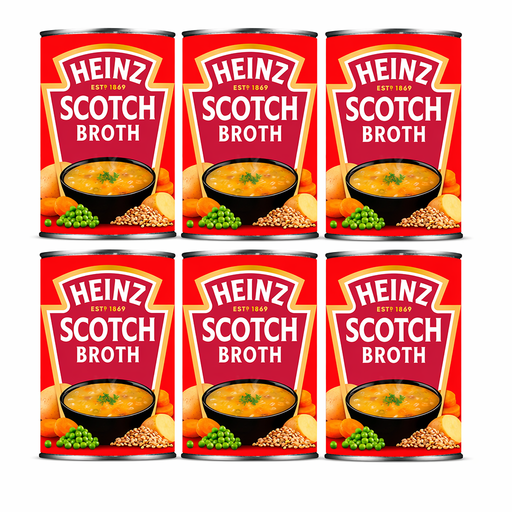 No image available
Hob and microwave directions make this a hot-soup option for lunch at home.
The product information lists 1.2g salt per half-can and identifies mutton, vegetables and barley. It contains gluten from barley and wheat, so check the label for dietary suitability. Plan any accompanying lunch foods separately.
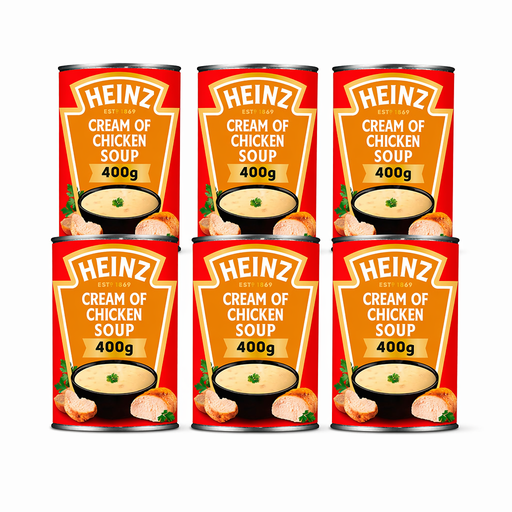 No image available
This pack offers soup with hob and microwave heating directions for an at-home lunch.
Its ingredients include chicken, and its allergen information identifies milk and wheat. Nutrition information is given per 100g and per can; check how much you intend to serve when using the salt figure. The product information says to refrigerate opened soup and use it within two days.
Plan tomato soup as one part of lunch rather than assuming a tin covers everything the child needs. NHS Healthier Families suggests a main lunch item based on foods such as bread, rice, pasta or potatoes, with fruit and vegetables included where practical; adjust what you serve to the child's appetite and dietary needs.
Compare the amount for the portion you intend to serve, checking whether the label gives it per 100g, half-can or can. NHS guidance sets maximum daily salt amounts of 3g for ages 4 to 6 and 5g for ages 7 to 10, so the rest of the day's food also matters.
A vegetarian label does not establish allergy suitability. The Tesco, Sainsbury's, M&S and Heinz cream-of-tomato examples discussed here contain milk, while Campbell's condensed cream-of-tomato soup identifies both milk and celery; check the exact current label and follow the child's allergy plan.
Follow the storage and use-within instructions for that particular soup rather than applying one rule to every tin. Check whether the label calls for transfer to another container and refrigeration; ASDA's listing for Campbell's condensed cream-of-tomato soup says to use it within two days after opening.