Parents planning a lighter soup-based tea
A lower-energy soup can be one part of tea time. Compare the portion you will serve, then consider whether other foods are needed to make the meal suitable for the child’s age and appetite.


For a child’s tea time, compare the calories and salt in the portion you intend to serve, then consider what else the meal needs. East Lancashire Hospitals NHS Trust notes that children need energy and nutrients for growth: a light tomato soup may need an accompaniment, while a soup containing pulses offers a different ingredient mix without necessarily making a complete meal.
A lower-energy soup can be one part of tea time. Compare the portion you will serve, then consider whether other foods are needed to make the meal suitable for the child’s age and appetite.
Ready-made soups can contribute salt, as NHS guidance notes. The salt figure for the bowl matters alongside other foods served that day.
Tomato, vegetable and pulse soups do not share one ingredient list. Check the exact can for dietary suitability and allergens, including milk or celery where relevant.
Start with the portion you plan to serve; use the per-100 g figures to compare different cans, then check ingredients and preparation.
| Priority | What to check | When it matters to me |
|---|---|---|
| Portion and meal | Compare calories for the portion served, not just per 100 g. Check protein and pulse ingredients, then consider the rest of the meal. Tesco Groceries lists 61 kcal and 1.3 g protein for a 200 g half-can of Tesco Low Fat Tomato Soup. | If soup is the main part of tea, I need to consider what will accompany it. East Lancashire Hospitals NHS Trust says children need regular meals and snacks that provide energy and nutrients for growth. |
| Salt | Compare grams of salt per 100 g and per portion. NHS guidance gives maximum daily amounts of 3 g for ages 4–6 and 5 g for ages 7–10; these are daily amounts, not targets for one bowl. | I want to account for the soup alongside other salty foods that day. A mild taste does not replace checking the salt figure. |
| Ingredients | Read the exact can’s ingredients, allergen information and dietary statements. Ocado’s Heinz Cream of Tomato listing includes milk ingredients; the Campbell’s condensed tomato listing on Joybuy identifies milk and celery. | For a child with an allergy, I need the current label for the particular soup, rather than assuming every tomato or vegetable recipe is alike. |
| Preparation and leftovers | Check whether nutrition is stated for soup as sold or prepared, especially for condensed soup. Follow the pack’s heating, serving and opened-can storage instructions. | If I am serving only part of a can, I need to know how to prepare that portion and store the remainder. |
A low calorie figure does not show what the whole tea-time meal provides. Tesco Groceries lists 1.3 g protein for a half-can of its Low Fat Tomato Soup; Marks & Spencer lists 2.1 g per 100 g for its Spiced Lentil and Tomato Soup, using a different portion basis.
Compare the amount you will serve, its ingredients and the foods alongside it, rather than treating either soup figure as a verdict on the complete meal.
NHS guidance identifies ready-made soup as a food to watch for salt. Ocado lists 1.1 g salt for a half-can of Heinz Cream of Tomato Soup.
Read salt per serving and consider it with the rest of the day’s food before adding salty toppings or sides.
The Campbell’s Condensed Cream of Tomato listing gives values for the concentrated soup; adding liquid changes the volume of the finished bowl, and added ingredients can change its nutrition.
Check the preparation instructions and work from the amount of soup and any other ingredients you will actually serve.
The Heinz Cream of Tomato listing includes milk ingredients, while the Campbell’s condensed tomato listing identifies milk and celery. A tomato-based name does not establish allergy suitability.
For a child with an allergy, read the current ingredients and allergen statement on the exact can before serving.
These named products illustrate different label and preparation checks; a brand name alone does not establish the nutrition or suitability of another soup in its range.
Tesco Groceries lists Low Fat Tomato Soup and Low Fat Lentil & Vegetable Soup in its UK low-fat tinned-soup range.
Heinz Cream of Tomato provides a ready-to-heat tomato option; the nutrition and ingredients here refer to that specific recipe.
M&S Spiced Lentil and Tomato Soup is a pulse-containing option stated to be vegan and vegetarian.
Campbell’s Condensed Cream of Tomato Soup is a concentrated format for preparation or cooking, rather than a direct ready-to-serve portion comparison.
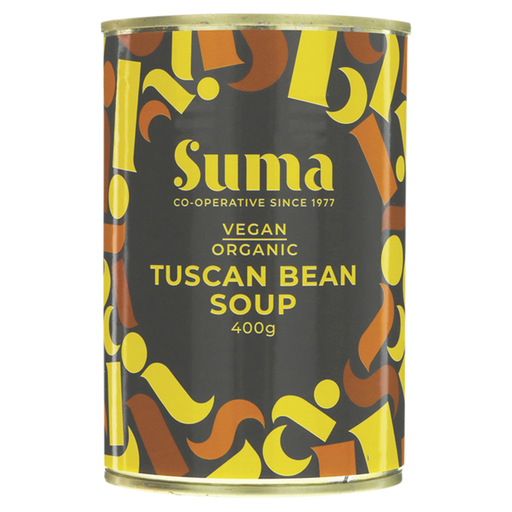
This bean soup is an option to consider if you want pulses in a tinned soup for tea time. Its inclusion does not make it a comparison of every soup style discussed above.
 No image available
A 400g bean soup to consider when pulses are part of the tea-time plan. Check the current can for ingredients and allergens, and compare the energy and salt for the portion you intend to serve.
Not necessarily. East Lancashire Hospitals NHS Trust says children need regular meals and snacks that provide energy and nutrients for growth. Check the soup’s serving size and consider whether it needs suitable foods alongside it.
Compare the salt in the portion you will serve, then consider other foods eaten that day. NHS guidance gives maximum daily amounts of 3 g for children aged 4–6 and 5 g for ages 7–10, and flags ready-made soups as a possible source of salt.
No. The Ocado listing for Heinz Cream of Tomato includes milk ingredients, and the Joybuy listing for Campbell’s Condensed Cream of Tomato identifies milk. For an allergy, check the current label of the exact can.
Follow that product’s storage instructions. The Joybuy listing for Heinz Cream of Tomato says to transfer unused soup to a covered container, refrigerate it and consume it within two days of opening.