For lunch on the go, compare basic own-label, branded and chunkier soups by the amount you plan to eat, their ingredients and how you can prepare them; a familiar label alone does not settle which tin suits your lunch. If soup is the whole meal, check the portion and recipe, then compare salt per 100 g and for the amount you will eat, along with allergens on the exact pack.
Who is choosing soup for lunch?
Office and commuter lunch shoppers
If you plan to heat soup away from home, check whether you will have a suitable bowl and the facilities required by the tin’s instructions. Compare the amount you would actually eat, rather than assuming tins of different sizes or formats make equivalent lunches.
Shoppers making soup their main lunch
A chunky recipe with ingredients such as vegetables, beans, pasta or meat may better match the meal you have in mind than a smooth soup. Check the portion, ingredients and allergens rather than relying on the word “chunky”.
Regular soup eaters checking labels
Compare salt for the portion you expect to eat, not just the suggested serving. Action on Salt’s 2026 assessment of 481 chilled and ambient soups sold in UK supermarkets found variation in salt content and suggested serving sizes.
What should you compare?
Start with the soup’s role in your lunch, then compare tins of the same format and check the exact product label. Condensed soup needs its preparation instructions considered separately from a ready-to-eat tin.
| Priority |
What to check |
Your needs |
| Lunch portion |
Check tin weight, suggested servings and whether the soup is ready to eat or condensed. For condensed soup, follow the dilution instructions before judging the prepared amount. |
I want to know whether the amount I plan to eat will serve as my whole lunch or whether I will bring something alongside it. |
| Recipe |
Compare the stated ingredients in smooth and chunky recipes. If soup is the main meal, check the portion and the protein and fibre values on the nutrition panel rather than assuming a particular texture will satisfy you. |
For a main lunch, I may prefer a recipe containing beans, pasta, vegetables or meat; for a smaller part of lunch, a smooth soup may fit. |
| Salt |
Compare salt per 100 g and for the amount you will eat. In its 2026 assessment of 481 UK chilled and ambient soups, Action on Salt found that 23% exceeded the Government’s voluntary maximum salt target and 11% contained more than 2 g salt in a suggested serving; suggested servings ranged from 147.5 g to 500 g. |
When I eat a full tin rather than the suggested serving, I need the salt figure for my actual portion. A front-of-pack traffic-light label, where present, is a starting point; the numerical values show what I am comparing. |
| Dietary fit |
Read the exact tin’s ingredients, emphasised allergens and any vegetarian or vegan designation. Do not transfer a statement from one flavour or variant to another. |
I need the soup I buy to match my dietary requirements, even if another recipe from the same brand has suited me before. |
| Heating |
Follow the product’s heating directions and check whether they call for a hob or a covered microwaveable bowl. Do not put a metal tin in the microwave. |
If I am eating at work, I need a way to prepare the soup with the facilities and container available there. |
Common buying pitfalls
-
Treating every tin as the same amount of soup
Tesco’s soup catalogue shows 400 g ready-to-eat tins alongside 295 g Campbell’s condensed tins. Tin weight alone does not tell you the prepared amount of a condensed soup.
Check the format, preparation instructions and portion you intend to eat before comparing the tins as lunches.
-
Assuming a familiar recipe has a particular salt level
Action on Salt’s 2026 assessment of 481 UK chilled and ambient soups found that 23% exceeded the Government’s voluntary maximum salt target. Sainsbury’s lists 1.1 g salt per half-can for Heinz Cream of Tomato and 1.2 g per half-can for Heinz Minestrone.
Use salt per 100 g to compare products, then calculate the figure for the amount you plan to eat.
-
Choosing a smooth soup without planning the rest of lunch
A smooth soup and a chunky recipe may play different roles in a lunch. A tin described as two servings may also differ from the portion you intend to eat.
Decide whether the soup is one part of lunch or the whole meal, then check its serving information and ingredients.
-
Relying on a brand or flavour name for dietary suitability
Recipes within a range differ. Marks & Spencer lists celery and pearl barley containing gluten in its Chunky Chicken and Vegetable Soup, while Sainsbury’s identifies its listed Heinz tomato and minestrone soups as suitable for vegetarians.
Read the ingredients, emphasised allergens and dietary statement on the exact current pack, particularly when changing variant.
Brand and range references
A brand name can help you locate a familiar recipe, but compare individual tins for format, ingredients and nutrition.
Heinz
Sainsbury’s lists 400 g Cream of Tomato and Minestrone tins; Tesco’s soup catalogue also includes Heinz Big Soup recipes.
- Sainsbury’s identifies the listed tomato and minestrone products as suitable for vegetarians.
- The listed salt differs between these examples: 1.1 g per half-can for Cream of Tomato and 1.2 g per half-can for Minestrone. Check the exact recipe and portion.
Tesco
Tesco’s catalogue includes own-label ready-to-eat soups, including Stockwell & Co Tomato and Tesco Plant Chef recipes.
- The listed recipes give shoppers own-label choices across tomato and plant-based styles.
- Check the particular tin’s weight, serving information and ingredients rather than treating the range as one recipe.
Campbell’s
Tesco’s catalogue includes 295 g Campbell’s condensed Cream of Mushroom and Cream of Chicken tins.
- The condensed format offers a different preparation option from a ready-to-eat tin.
- Check the dilution directions and prepared yield before comparing its portion with ready-to-eat soup.
M&S
The Marks & Spencer tinned-soup catalogue includes smooth and chunky recipes, such as Tomato and Basil, Chunky Vegetable and Chunky Chicken and Vegetable.
- The listed recipes offer different ingredient combinations for a lighter component or a meal-style lunch.
- Marks & Spencer lists celery and pearl barley containing gluten in its Chunky Chicken and Vegetable Soup. Check each recipe’s label for dietary suitability.
Tinned soup options on Joybuy
These tins include Scotch broth and other meal-style recipes, alongside a smooth mushroom soup. Compare their portions, ingredients and heating instructions according to how you plan to eat lunch.
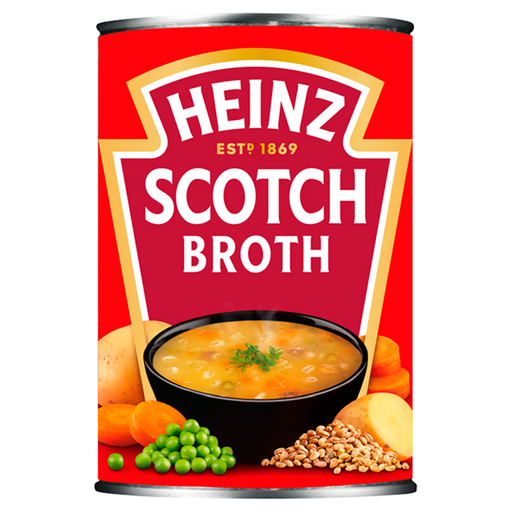 Image unavailable
Heinz Scotch Broth Soup 400 g
Consider this broth if you want a 400 g tin for a meal-style lunch. Its preparation information calls for a covered microwaveable bowl when using a microwave; the product information identifies barley and wheat as gluten-containing ingredients, so check the exact pack if these matter to you.
View on Joybuy
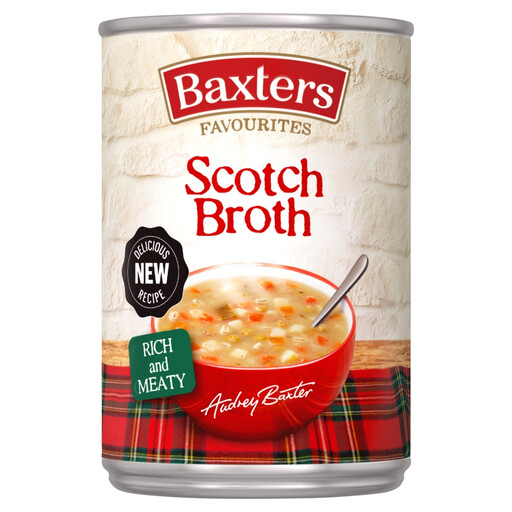 Image unavailable
Baxters Favourite Scotch Broth 400 g
This 400 g Scotch broth is another option to assess for a meal-style lunch. Check the exact pack if you need to avoid barley; microwave preparation calls for a suitable covered container.
View on Joybuy
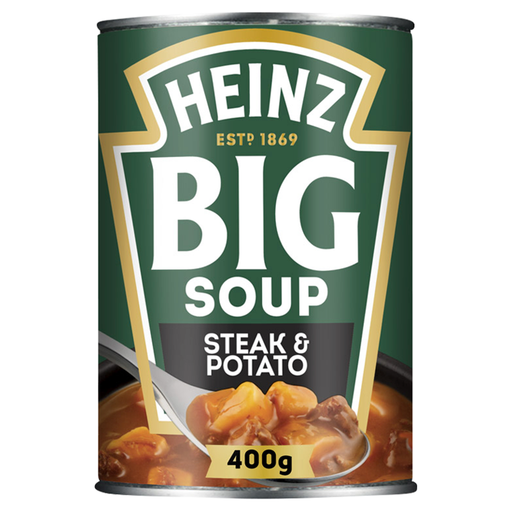 Image unavailable
Heinz Big Soup Steak & Potato 400 g
The steak-and-potato recipe offers a different meal-style choice from a smooth soup. Check the pack’s serving information and heating directions before planning to prepare the 400 g tin away from home.
View on Joybuy
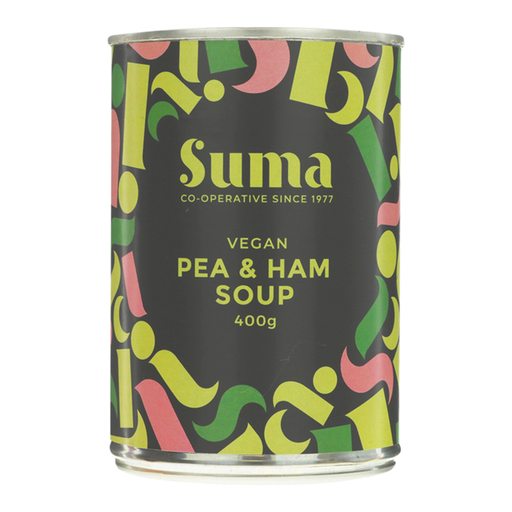 Image unavailable
Suma Pea & Vegan Ham Soup 400 g
The pea-and-ham-style recipe may appeal if you want a different soup for lunch, but do not rely on its vegan wording for dietary suitability. The product information conflicts on that designation and lists milk, soy and wheat in its ingredient or allergen information; check the exact pack before choosing it.
View on Joybuy
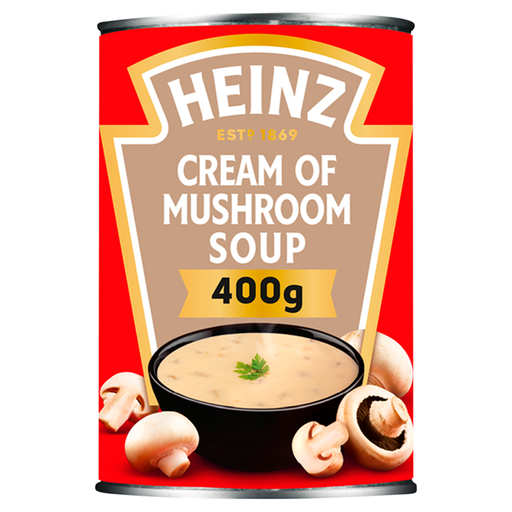 Image unavailable
Heinz Cream of Mushroom Soup 400 g
For a smooth soup, check whether the stated two servings per 400 g tin match the portion you want for lunch. The product information identifies it as suitable for vegetarians and lists milk and wheat; microwave directions call for a covered microwaveable bowl.
View on Joybuy
Questions about tinned soup lunches
Can one tin of soup be my whole lunch?
It depends on the tin’s portion information and the role you want soup to play in your lunch. Check the amount you expect to eat and the ingredients: a smooth soup may suit one part of lunch, while a chunky recipe may better match a meal-style plan.
How do I compare salt between tins?
Compare salt per 100 g, then work out the amount in the portion you will actually eat. Action on Salt’s 2026 assessment of 481 chilled and ambient soups sold in UK supermarkets found suggested servings ranging from 147.5 g to 500 g, so the printed serving may differ from your lunch portion.
Is tomato or vegetable soup always vegetarian or vegan?
No: check the exact product’s ingredients and dietary designation. Sainsbury’s lists its Heinz Cream of Tomato and Minestrone examples as suitable for vegetarians, but that does not establish the status of another recipe or a vegan designation.
Can I heat soup in its tin at work?
Do not put a metal tin in a microwave; follow the soup’s own preparation instructions. Sainsbury’s directions for Heinz Cream of Tomato, for example, say to transfer it to a covered microwaveable bowl before microwave heating.


