What should you check?
Start with the texture the eater can manage, then compare the ingredients and label information on soups that fit that requirement. A preference for less chewing is different from a prescribed dysphagia texture level.
| Priority | What to check | Your needs |
|---|
| Texture |
Look for pieces, skins, toppings and liquid that separates from solids. For a prescribed level, check the prepared soup using the required IDDSI tests at its serving temperature. |
I want soup I can manage without difficult pieces. If I have a prescribed swallowing plan, it must meet that plan—not merely sound smooth on the label. |
| Flavour and additions |
Compare the recipe and serving suggestions. Treat bread, croutons and other toppings as separate texture choices. |
A more distinctive flavour appeals to me, but I do not want to rely on crunchy accompaniments to make the meal enjoyable. |
| Salt and portion |
Compare salt per 100 g, the tin’s weight and the amount likely to be eaten. Do not treat a suggested serving as the amount everyone will eat. |
If salt matters to my choice, I want to compare the amount in the portion I will actually serve, not just the figure for 100 g. |
| Ingredients |
Read the current ingredient and allergen information for the exact flavour. Check separately for alcohol-containing ingredients where relevant. |
I need to know whether the chosen recipe contains ingredients the eater avoids, especially in cream- or seafood-based soups. |
| Format and storage |
Confirm that the product is a cupboard tin rather than chilled soup. Follow its unopened and after-opening storage instructions. |
I am buying a soup to keep in the cupboard, so a chilled product would not meet the same storage need. |
A tinned soup option on Joybuy
This lobster bisque is an option to consider when choosing a premium-style tin for someone who can safely manage ordinary smooth foods. Its description does not establish suitability for a prescribed texture-modified diet.
 No image available
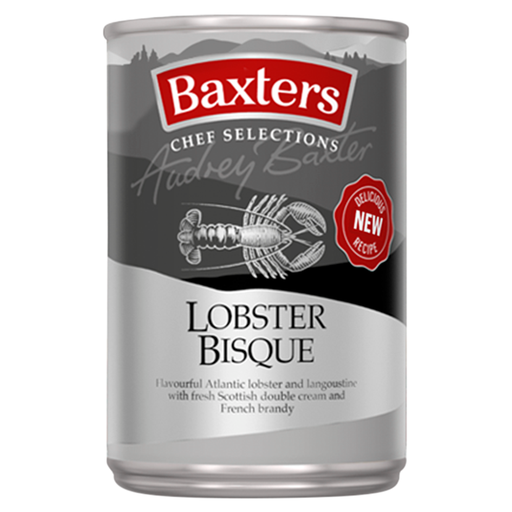
Baxters Lobster Bisque Chef's Selection Soup 400g
For an ordinary low-chew meal, consider this bisque if its prepared texture suits the eater. Baxters describes the recipe as smooth and identifies double cream, wine and brandy; check the current tin for ingredients and allergens. A smooth description alone does not establish an IDDSI level.
View on Joybuy
Questions about choosing and serving soup
Is a smooth tinned soup suitable for a dysphagia diet?
Not on the strength of its description alone. Follow the eater’s prescribed IDDSI level and check the prepared soup under its intended serving conditions. Oxford University Hospitals NHS Foundation Trust describes Level 4 puréed food as smooth, without lumps or liquid separating from solids, and not sticky.
Can I serve bread or croutons with an easy-chew soup?
Only if the eater can safely manage them. Bread and toppings add textures that may be difficult to chew or inconsistent with a prescribed swallowing plan, even when the soup itself is smooth.
How do I compare salt across different tin sizes?
Compare the salt figures per 100 g, then use the amount you expect to eat to assess the portion. A suggested serving and a whole tin are not necessarily the same amount.
What should I read on the tin before buying?
Check the exact product’s ingredients, allergens, nutrition information, quantity, date marking and relevant storage instructions. UK food-labelling guidance from the Department for Environment, Food & Rural Affairs and the Food Standards Agency identifies these as information provided for prepacked food; the current pack is the practical reference when recipes or online descriptions change.
Can an opened tin of soup go back in the cupboard?
Follow the chosen soup’s after-opening instructions rather than treating an opened tin like an unopened cupboard product. Check how the manufacturer says to store leftovers and when to use them.


