Dinner-first soup buyers
If soup will be the main dish, consider how much you intend to serve and whether you will add bread or another side. M&S lists Collection tins at 550g and 560g, while Sainsbury's Spiced Pumpkin is a 400g tin.


When soup is the centre of dinner, choose by recipe and intended portion rather than the premium label alone. M&S Collection lists 550–560g French onion and mushroom-and-truffle tins, while Sainsbury's Spiced Pumpkin comes in a 400g tin; check the exact pack for ingredients, allergens, nutrition and serving instructions before deciding which suits your meal.
The right tin depends on whether the soup is the main part of the meal, the flavour you want and any ingredients you need to avoid.
If soup will be the main dish, consider how much you intend to serve and whether you will add bread or another side. M&S lists Collection tins at 550g and 560g, while Sainsbury's Spiced Pumpkin is a 400g tin.
A distinctive recipe may be the reason to choose a particular tin. M&S describes its French Onion Soup with beef stock and wine; Sainsbury's Spiced Pumpkin combines pumpkin and sweet potato with double cream, lime and red chilli. Decide which ingredients appeal to the people eating dinner.
Recipe names do not tell you everything about suitability. If dairy, meat ingredients, alcohol or allergens matter to you, read the ingredients and declarations on the exact tin rather than relying on its flavour name.
Start with the meal you plan to serve, then compare the recipe, label and pack instructions.
| Priority | What to check | Your needs |
|---|---|---|
| Portion and format | Compare net weight, stated servings and preparation instructions. A condensed tin and a ready-to-heat soup need not make the same finished portion. | If soup is my main dish, I need to know how much will reach the bowl and whether I plan to serve anything alongside it. |
| Recipe and flavour | Read the ingredients behind the flavour name. M&S describes beef stock and wine in its French Onion Soup; Sainsbury's lists pumpkin, sweet potato, cream, lime and red chilli in its Spiced Pumpkin Soup. | For this dinner, would I prefer a savoury onion soup or a creamy pumpkin recipe with chilli? The ingredients matter more to my choice than the word “premium”. |
| Dietary suitability | Check the exact tin's ingredients, emphasised allergens and suitability statements. Do not assume a vegetable-led flavour excludes dairy, meat stock or other ingredients you avoid. | I need everyone eating the soup to be able to use the same recipe, so its current label has to answer my dietary questions. |
| Nutrition | Compare the nutrition panel per 100g and for the portion you intend to eat. Where traffic-light labelling appears, read it alongside the serving size. | I want to compare salt, fat and saturates for the amount I would serve. In the Food Standards Agency and Ipsos Northern Ireland's survey of 601 Northern Ireland adults in September–November 2023, 43% said they actively used traffic-light labels when shopping for food. |
| Leftovers and heating | Read the pack's heating directions and its instructions for storing soup after opening. Plan portions before heating if some of the tin may be left over. | When I am cooking for one or saving part of a tin, I need instructions that work for that particular soup. |
Ingredients such as double cream can be part of the recipe, but a premium label does not tell you the salt, fat or saturates in your portion.
Use the nutrition panel to compare the amount you would actually serve, as well as the figures per 100g.
M&S describes beef stock and wine in its French Onion Soup, while Sainsbury's lists double cream in its Spiced Pumpkin Soup. Those details may matter even when vegetables feature prominently in the name.
Check the ingredients and allergen declarations for the exact product before buying or serving it.
Tesco lists Campbell's condensed soup in 295g tins; M&S lists Collection soups at 550g and 560g. Pack weight alone does not tell you the finished portion of a condensed soup.
Check whether preparation adds liquid, how many servings the pack states and what else you intend to put on the table.
Opening and reheating directions can differ by recipe. A plan to save half a tin depends on the instructions for the soup you have bought.
Read the storage and heating directions before opening, and follow the current pack when handling leftovers.
These examples show different soup formats and recipes; a brand name or retailer category does not make the products interchangeable.
The M&S Collection range includes French Onion Soup in a 550g tin and Calabrian Mushroom and Truffle Soup in a 560g tin, according to M&S.
Sainsbury's Taste the Difference Spiced Pumpkin Soup is a 400g recipe listing pumpkin, sweet potato, double cream, lime and red chilli.
Tesco's premium tinned-soup category lists Heinz Big Soup Chicken & Bacon in a 400g tin.
Campbell's UK lists condensed Cream of Chicken, Cream of Mushroom and Cream of Tomato soups; Tesco lists 295g condensed tins.
Tesco's soup listings include branded products such as Heinz Big Soup and Campbell's condensed tins.
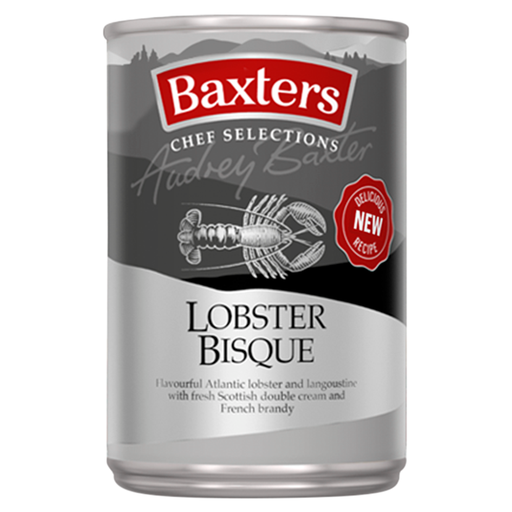
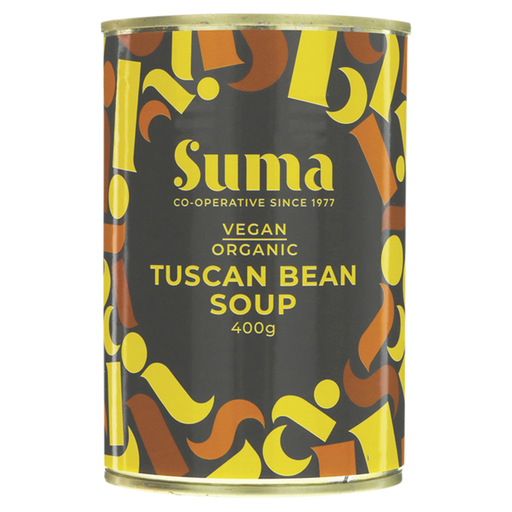
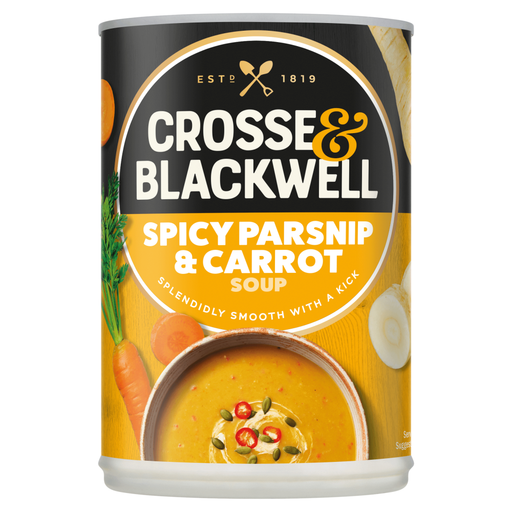
These tins offer three different directions for a comfort dinner: lobster bisque, Tuscan bean soup and spiced parsnip and carrot soup. Check the portion and ingredients of the one you plan to serve.
 No image available
Consider this 400g lobster bisque for a seafood-based dinner. Check the current pack for crustaceans, milk, sulphites and celery, and whether the stated wine and brandy suit your requirements.
 No image available
If a bean soup appeals for dinner, check whether this 400g tin makes the portion you want. The product information identifies celery as an ingredient to check on the current label.
 No image available
This 400g spiced parsnip and carrot soup is an option when that flavour suits the meal. Check the serving guidance if it will be the main dish, and read the current label for celery, milk and wheat.
No. M&S describes beef stock and wine in its Collection French Onion Soup, and Sainsbury's lists double cream in its Spiced Pumpkin Soup. Check the ingredients, allergen declarations and suitability statements on the exact tin.
No. Vegetarian and gluten-free describe different requirements. Food Standards Agency guidance defines a “gluten-free” claim as no more than 20mg/kg gluten in food as sold to the final consumer; look for the specific declaration and check the current label.
Read that soup's instructions for storage after opening before you decide how much to serve. Follow its directions for handling leftovers and heating rather than applying another product's instructions.
No conclusion about salt or fat follows from the flavour name or premium label. Compare the nutrition panels per 100g, then consider the portion you intend to eat; recipes and tin sizes differ.