Diners seeking a lighter hot lunch
Compare calories for the amount served, especially when a 400 g can displays nutrition for a 200 g half-can.


For a workplace canteen lunch, compare tinned soups using the portion actually served: a whole can and a half-can serving are not equivalent. Tesco Groceries lists Heinz Weight Watchers Chicken Soup at 92 kcal and 1.9 g salt per 295 g can; its Tesco Low Fat Tomato Soup lists 61 kcal and 0.69 g salt per 200 g serving, or 122 kcal and 1.38 g salt for the whole 400 g can. Check whether the portion suits the planned lunch, then confirm ingredients and allergens on the current pack.
Compare calories for the amount served, especially when a 400 g can displays nutrition for a 200 g half-can.
Keep vegetarian tomato or lentil-and-vegetable soups distinct from chicken options, and check each product’s current ingredient and allergen declaration.
Check salt for the served portion rather than assuming a lower-calorie soup is also lower in salt. The NHS advises adults to have no more than 6 g of salt a day.
Start with the portion the canteen will serve, then compare nutrition and dietary suitability on that same basis.
| Priority | What to check | Your needs |
|---|---|---|
| Served calories | Check the pack weight and whether kcal are stated per can, per 100 g or per half-can. Double half-can figures only when serving the whole can. | I want the figure for my actual lunch, not just the label’s serving. Tesco Groceries lists 61 kcal per 200 g serving for Tesco Low Fat Tomato Soup, making 122 kcal for its 400 g can. |
| Salt | Compare grams of salt per served portion as well as per 100 g. The NHS advises adults to have no more than 6 g a day. | I would check salt even on a lower-calorie option: Tesco Groceries lists 1.9 g in a 295 g can of Heinz Weight Watchers Chicken Soup. |
| Lunch portion | Check the amount served, the ingredient list and stated protein. Protein figures provide a comparison point, not a promise that a soup will keep someone full. | For lunch, I may prefer a soup with lentils and vegetables or chicken and vegetables rather than a smaller portion; the choice still needs to fit the diner’s dietary requirements. |
| Dietary suitability | Check the current vegetarian declaration, ingredients and named allergens. Keep allergen information tied to the exact product being served. | If I need a vegetarian option or must avoid an ingredient, I need the declaration for this can—not an assumption based on its flavour or another soup in the range. |
Several 400 g soups state nutrition for a 200 g serving. Serving the entire can gives twice the stated half-can calories and salt.
Set the menu portion first, then use the nutrition figures for that weight.
According to Tesco Groceries, Heinz Weight Watchers Chicken Soup has 92 kcal and 1.9 g salt per 295 g can. A calorie figure alone does not describe its salt content.
Compare salt across the complete portions you intend to serve, including any accompaniments.
Vegetarian suitability and allergen information answer different questions; a vegetarian soup can still contain ingredients a diner needs to avoid.
Check the exact can’s current ingredients and allergen declaration, and do not substitute a chicken soup for a vegetarian menu option.
A changed recipe or pack can make earlier portion, ingredient or storage information unsuitable for the product being served.
Check the physical can or current supplier specification when approving the menu, including its storage instructions after opening.
The Weight Watchers Chicken Soup and classic Cream of Tomato are different can sizes and should be compared by the portion served.
Its 400 g Low Fat Tomato and Low Fat Lentil & Vegetable soups offer different tomato and lentil-and-vegetable choices.
Be Good To Yourself Tomato & Spicy Lentil Soup is a 400 g can with two stated servings.
Chunky Chicken and Vegetable Soup is a chicken-containing alternative to the tomato and lentil options.
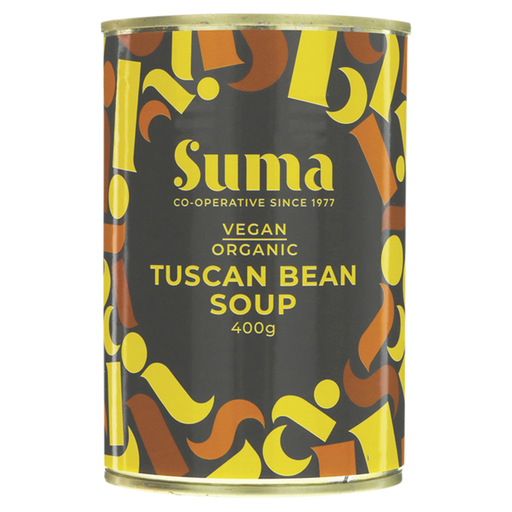
This Joybuy option is a 400 g bean soup to assess against the portion and ingredients planned for a workplace lunch.
 No image available
For a workplace lunch using this 400 g can, calculate nutrition for the amount served from the current pack label. Confirm its ingredient, allergen and vegetarian declarations before including it in a canteen menu.
Use the figures for the amount served. Tesco Groceries lists 61 kcal and 0.69 g salt per 200 g serving for Tesco Low Fat Tomato Soup; serving its whole 400 g can gives 122 kcal and 1.38 g salt.
No. Tesco Groceries lists Heinz Weight Watchers Chicken Soup at 92 kcal but 1.9 g salt per 295 g can. Check both figures for the portion being served rather than using calories as a guide to salt.
Check the exact soup’s current ingredients and allergen declaration, then provide accurate allergen information for the food served. Food Standards Agency guidance says retail and catering food businesses must provide allergen information for both prepacked and non-prepacked food and drink.
No UK-wide conclusion follows from the England-only rules. Department of Health and Social Care guidance says England’s out-of-home calorie-labelling regulations apply to food offered for sale by qualifying large businesses with 250 or more employees in that sector. Check the canteen’s operator, food service and nation before deciding whether those rules apply.